12. LP W12 Q3 Salient points: the Internet, democracy & the people

In order to properly answer the LP Week 12 Question 3 task it seemed necessary to first reflect on, describe, and then consider again the context of this complicated question. The result is a preamble posted in Forum 3.2, Discussion Board, dated Friday, 29 May, 2015.

List of Points that may affect credibility. If the Web in the future:

  • presents issues of exchange, or as (North, March, 1993) says: “the problem of creating institutions that can credibly commit the players to solve problems of exchange”
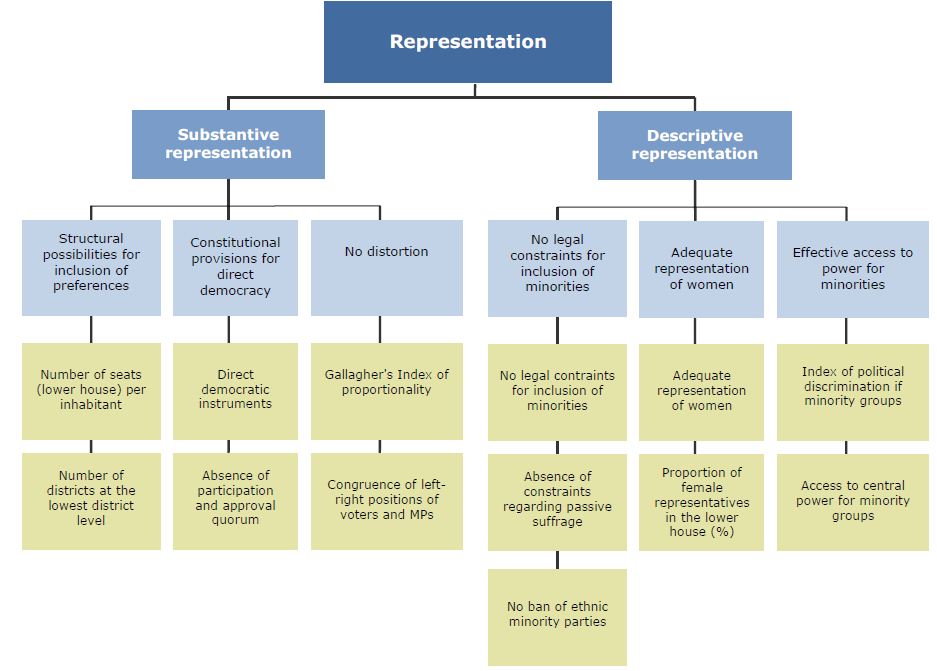
  • accepts the need for “liberal” and “participatory… democracy” (The Democracy Barometer, 2011)
  • supports “’democracy…[as]  a complex phenomenon, where minimalist measurement” is never enough (The Democracy Barometer, 2011)
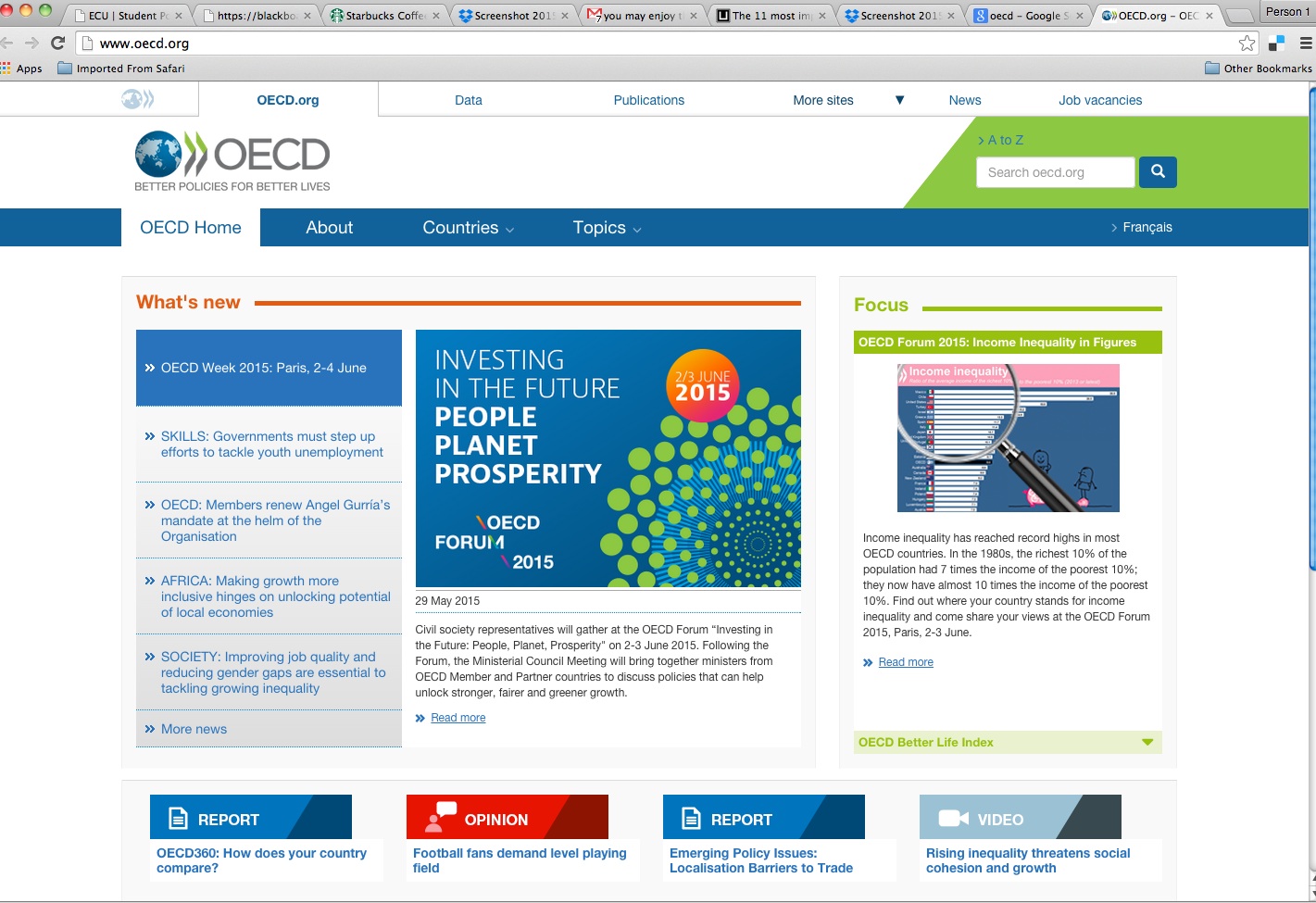
  • encourages and supports free and open public discussion about the development of democracy, such as in  Image 1, below, (The Democracy Barometer, 2011)
  • incorporates the demands for mass media communication accountability, (as is again being demanded of journalism), and “to take Citizen Demands into account: the complaints and wishes of citizens” (van der Wurff & Schoenbach, 20 June, 2014)
  • radically changes so the overall, fundamental ethos and operation of certain parts of the Internet are sheltered and away from persuasion and marketing
  • makes parts of the Internet “ad-free” environments (Webb, December, 2006)
  • commits to expend effort to understand, and incorporates and fully presents the populace’s most salient issues, and to support the people’s hierarchy of these issues
  • transparently presents important outcomes and welcomes discussion of matters such as those emanating from lack of ” trust in government”,  the “electoral process and democracy” (Hollander, 24 July 2014)
  • makes other, effective, channels of public, local and global communication available, free of charge, bias, and oppression
  • ensures equal, fair and widespread presentation of all types of websites – such as minority-owned, woman-owned and alternative.
Image 1. democracy barometer. 2014.

 Reference

Fogg, B. J. (2003). Credibility and the World Wide Web: Persuasive technology: Using computers to change what we think and do. Amsterdam: Morgan Kaufman Publishers.

Giddens, A. (1991). Modernity and Self: Identity: Self and society in the late modern age. Cambridge: Polity Press.

Hollander, B, A, (24 July, 2014). The Surprised Loser. The Role of Electoral Expectations and News Media Exposure in Satisfaction with Democracy. College of Journalism and Mass Communication, University of Georgia, 120 Hooper Street, Athens, GA 30602, USA. Journalism & Mass Communication Quarterly.  91(4), 651-668 doi: 10.1177/1077699014543380

Howard, P. N., & Smith, S. (2007 June) Channeling Diversity in the Public Spectrum: Who Qualifies to Bid for Which FCC Licenses?. 84 (2), 215-230. doi:10.1177/107769900708400202

Mayer, K. U. (19 November, 2004). Whose Lives? How history, societies, and institutions define and shape life courses. Research in Human Development, 1(3), 2004 161-187. doi 10.1207/s15427617rhd0103_3

North, D. C. (March, 1993). Institutions and credible commitment. Journal of Institutional and Theoretical Economics (JITE) / Zeitschrift für die gesamte Staatswissenschaft, 149(1). Retrieved from http://www.jstor.org/stable/40751576

OECD Statistics Portal. (2015). Definition of non-profit. OECD Glossary of Terms. Retrieved from https://stats.oecd.org/glossary/detail.asp?ID=1822

The Business Directory. (2015). Organization. Retrieved from http://www.businessdictionary.com/definition/organization.html#ixzz3bQuExgCa

The Business Directory. (2015). Website. Retrieved from http://www.businessdictionary.com/definition/website.html

The Democracy Barometer. (2011). Retrieved from http://www.democracybarometer.org/Images/img_feb13/RE_en.JPG

The Democracy Barometer. (2014). Retrieved from http://www.democracybarometer.org/

van der Wurff, R. & Schoenbach, K. (20 June, 2014). Civic and citizen demands of news media and journalists: What does the audience expect from good journalism? School of Communication Research, University of Amsterdam. Journalism & Mass Communication Quarterly. Doi 10.1177/1077699014538974

Webb, S. M. (December, 2006). The narrative of core traditional values in Reiman magazines. Journalism & Mass Communication Quarterly, 83(4), 865-882 doi 10.1177/107769900608300409

Aside

11. LP W12 Q2 Wikipedia

Wikipedia calls itself “a special kind of website” (2015). When researching many subjects today it is common to find this special website occupying top positions in many Google results. Yet, as as Ducet Rand (2010) says:

the encyclopedia is openly edited by registered users. Wikipedia editors can edit their own and others entries, and some abuse of      this editorial power has been unveiled. Content editors have also   been criticized for publishing less than accurate content.

This is possibly why, for some years now, ECU has banned the use of Wikipedia, which is also an application.  Haque and Ahamed (November, 2006) say:

The usability and expansion of pervasive computing applications depends greatly on the security and reliability provided by the applications… as pervasive devices become incorporated in our day-to-day lives, security will increasingly become a common concern for all users – though for most it will be an afterthought – like many other computing functions.

Haque and Ahamed (November, 2006) continue with an analysis of security:

CIA (Confidentiality, Integrity, Availability) is the term commonly used to describe the required characteristics of security. Confidentiality ensures information is not exposed to any unauthorized user. Integrity indicates information has not been altered or falsified by an unauthorized user.

Wikipedia security has been of concern to many for some time.  Kittur, Chi, Pendleton, Suh & Mytkowicz (2006), say the situation is extremely complex. They explain, initially, (until 2004), individuals they describe as “elite users” carried out the majority of the work constructing Wikipedia. At that point a noticeable change occurred as “common users” took over and the “influence of the elite” fell away. Then also, a process of removing more words than contributing commenced, for the first time.

It seems Wikipedia problems may have developed as the “always readily available” Internet developed (Haque & Ahamed, 2006).  Wikipedia supplied Haque and Ahamed a vital reference in 2006, when “Wikipedia defines security as a “… platform, designed so that agents (users or programs) can only perform actions that have been allowed. This involves specifying and implementing a security policy””. However, as Haque and Ahamed go on to explain:

security in pervasive computing has been termed pervasive security.     Though pervasive security includes all the characteristics and requirements of computer security, it introduces some novel vulnerabilities and security rifts due to a few unique characteristics of pervasive computing.

Haque and Ahamed team the Wikipedia definition with Microsoft’s: “The protection of information assets through the use of technology, processes, and training” – on a vast system with unique, ubiquitous “vulnerabilities”. where Wikipedia itself may be a ubiquitous “mobile or embedded in the environment… security rift”  (Haque & Ahamed, 2006).

Haque and Ahamed (2006) discusses the  “transparent interaction of these computational devices with the users”, but, given the Wikipedia editorial abuse,  Now Wikipedia seems the opposite of the Haque and Ahamed (2006) view in that it now is capable of delivering a unique, ubiquitous type of “virtual reality” information service.

Reference

Doucet Rand. (2010). Mediating at the student-Wikipedia intersection. .Journal of Library Administration. 50 (7-8) 2010. 923-932  doi 10.1080/01930826.2010.488994

Haque, M., and Ahamed, S. I. November, (2006). Availability of Security in Pervasive Computing: Current Status and Open Issues. Marquette University. International Journal of Network Security 3  203–214 . Retrieved from http://www.researchgate.net/profile/Md_Haque23/publication/45728848_Security_in_Pervasive_Computing_Current_Status_and_Open_Issues/links/00b4952cc56091881b000000.pdf

Kittur, A.; Chi, E. H,; Pendleton, B. A. ; Suh, B. ; Mytkowicz, T. (2007).  Power of the few vs. wisdom of the crowd: Wikipedia and the rise of the bourgeoisie. Retrieved from https://www.parc.com/publication/1749/power-of-the-few-vs-wisdom-of-the-crowd.html

Wikipedia. (2015). What is Wikipedia? Retrieved from http://en.wikipedia.org/wiki/Wikipedia:Introduction

Aside

10. LP W12 Q1

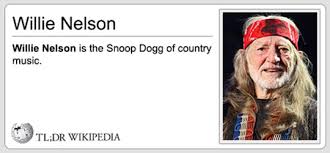
While on the Web, Wikipedia memes, (Images 1& 2) and discussion of same (Wikija, 2015) rightly amuse many, the many scholarly articles about  “a lack of credibility” on the Web, (World Wide Web),

Image 1. Lolz. Wikipedia mem, 2015.


Image 2. Quickmeme,Keanu Reeves image, 2015.
Image 2. Quickmeme, Keanu Reeves image, 2015.

and how this situation might be combated (Ribiero, Carmo, & de Caravalho, 2013) are an entirely different matter. The Oxford English Dictionary defines credibility as “the quality of being trusted and believed in; the quality of being convincing or believable”.

As “flaws and negative external influences” in key information appear on the Web, this quality, previously one of Western society’s most valued and defining characteristics, is  degraded,  The Web is the major mass media medium of this era so this problem affects anyone who wishes to learn or to be informed. This is because the Web is, as Kevin Kelly, founder of Wired magazine, said in 2005:

the largest, most complex, most surprising event on the planet.

Weaving nerves out of glass and radio waves, our species began

wiring up all regions, all processes, all facts and notions into a

grand network. From this embroyonic net was born a

collabororative interface for our civilization, a sensing, cognitive

device with power that exceeded any previous invention.

As Western society’s main communications channel the Web is tremendously important. Yet the stated rationale of Fogg’s (2003) paper is primarily to “persuade”, and the article by Ribiero, Carmo and de Caravalho (2013) appears, fundamentally, only to make the Web more efficient as a marketing machine. A Web cluttered with material biased solely towards  persuasion or marketing is counter-productive for any student – and unlikely to regain credibility.

Reference.

Fogg, J. (2003). Credibility and the World Wide Web. Persuasive Technolgy: Using computers to change what we think and do. Amsterdam: Morgan Kaufman Publishers. Retrieved from Learning Portfolio, S1, 2015.

Kelly, K. (2005). We are the Web. Wired. Issue 13.8. [On-line Magazine]. Retrieved from http://archive.wired.com/wired/archive/13.08/tech.html

Lolzbook. (2015). Meme using Willy Nelson image. Retrieved from http://lolzbook.com/page/1749/

Oxford Dictionaries. (2015). Credibility. Retrieved from http://www.oxforddictionaries.com/definition/english/credibility

Quickmeme. (2015). Meme using Keanu Reeves image. Retrieved from http://www.quickmeme.com/meme/35ficb

Ribiero, A. M., Carmo, C. H. S., & de Caravalho, L. N. G. (2013). Environmental disclosure: does regulation solve the lack of comparability and objectivity? Journal of accounting and organisations. Retrieved from  http://dx.doi.org/10.11606%2Frco.v7i17.56667

Wikja. (2015). Conspiracy Keanu: The Funniest Wiki. Retrieved from http://thefunnyist.wikia.com/wiki/Conspiracy_Keanu

Aside

9. LP W11 A Three design examples

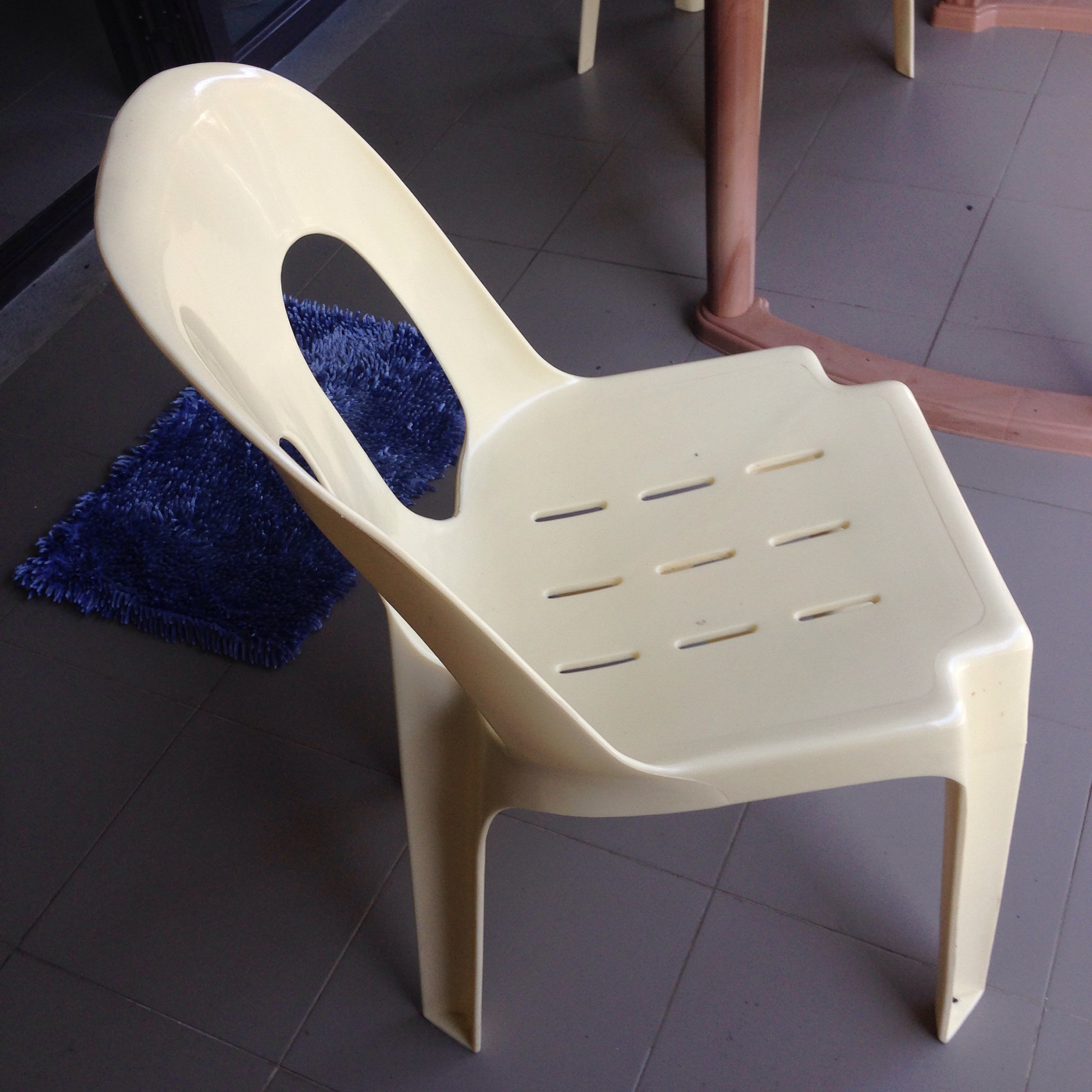
Little effort, mental or physical, is needed to use the  “virgin polypropylene” Pipee stacking chair (image 1). As it is extraordinarily light (Lifetime Industries website, 2015)  this chair fits the “kinematic… performance load” description (Lidwell, Holden and Butler 2003) . The chair design  is so familiar, so usable, that the makers can rely entirely on retained, long-term memories. The chair complies with “cognitive… performance load” – and the Lidwell, Holden and Butler “usability” criteria. As this is one of a set of four identical chairs it somehow fits these writers’ “consistency” definition. While touted as durable, ‘recycle’ appears nowhere on chairs or website. Aesthetics appears an alien concept, and Stahel’s (1982) “cradle to cradle” care and thought is probably unheard of .

Image 1. Pipee chair. S. Harford personal image, 2015.
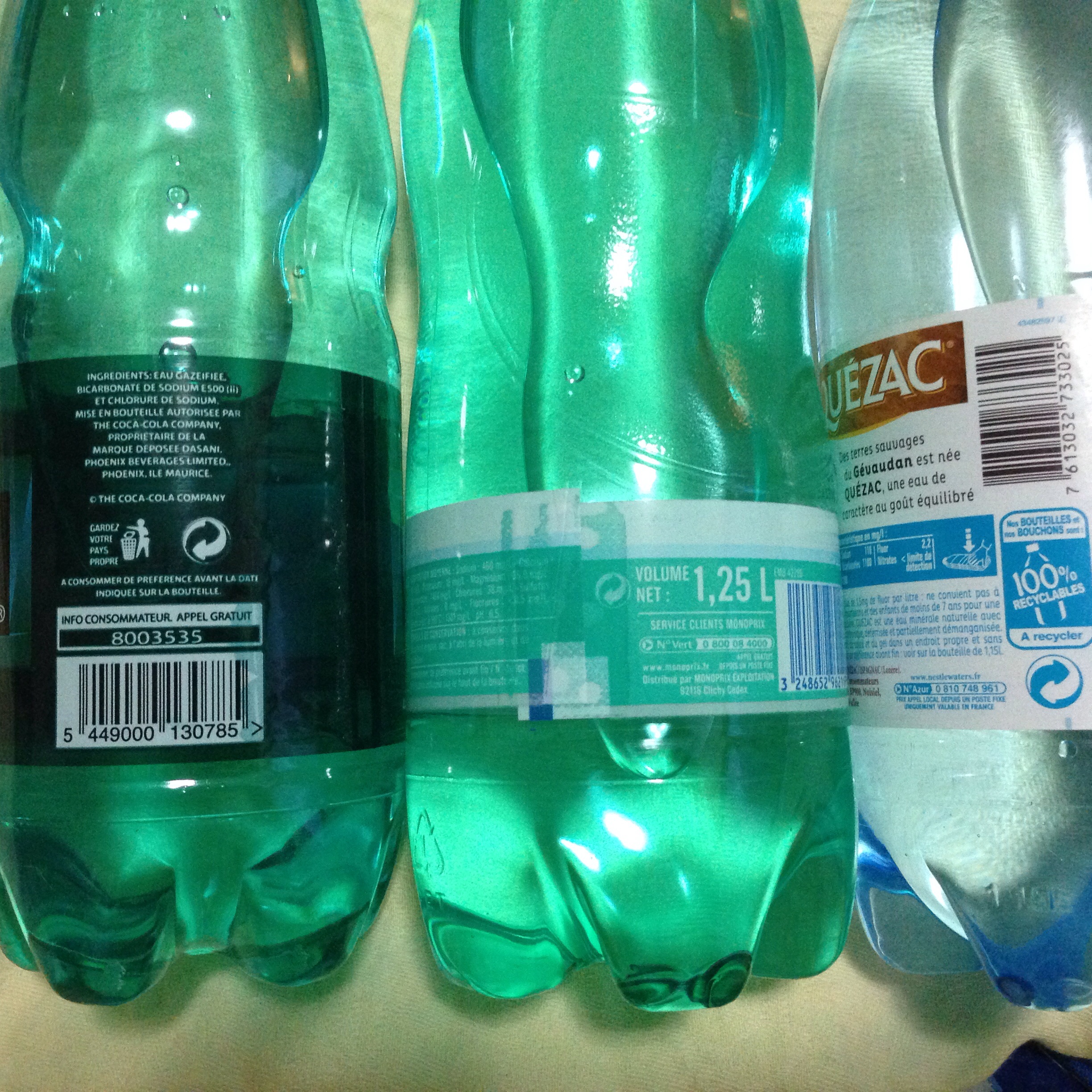
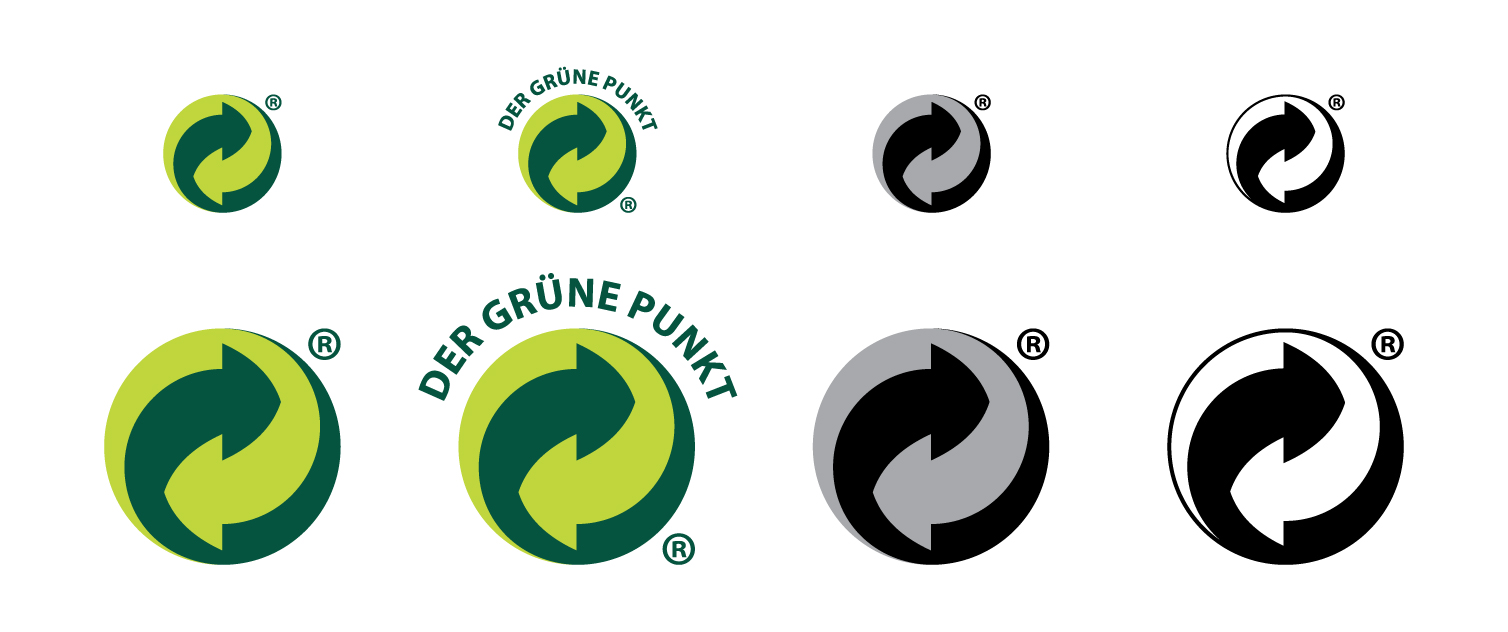
Image 2. The Green Dot. S. Harford personal image, 2015.


An enigmatic Green Dot Symbol (2015)  is in evidence (images 2 & 3) on the backs of three slightly-different-but-same and-performing-the-same plastic bottles of water. Symbols such as the Green Dot function like a logo – they carry a certain message. These messages are always “perceived” – correctly or incorrectly – in a certain way. So  this small symbol lightens, (for better or worse),  “mental … cognitive…  performance load”  (Lidwell, Holden & Butler, 2003).

Image 3. The Green Dot Symbol, 2015.


Image 3. Mauritius vongole. S. Harford personal image, 2015.
Image 4. Mauritius vongole. S. Harford personal image, 2015.

Image 4 shows is the former house of a most delicious creature. Always recognisable, all the same shape, colour and texture. The seeker’s performance, or cognitive load, is lessened, as, once seen and enjoyed they are forever recognisable. Regarding performance or kinematic load, again little effort is required.  Although these creatures may vary slightly in shape, all fit beautifully into the palm of a human hand and can easily be gathered into a bucket, and quickly pried open to eat, raw. Kinematic -performance load can be further reduced if steamed. Then all open obligingly – for ready access to their tasty  meat.

Reference 

Lifetime Industries. (2015). Pipee Stacking Chair. Website. Retrieved from http://www.lifetime.net.au/detail/pid/18/id/11/pipee-stacking-chairs

Harford, S. (2015). Personal images.

Stahel, W. R. (1982). The 30th. anniversary of Walter R. Stahel’s Prize-winning paper “The Product-Life-Factor”. Retrieved from http://www.product-life.org/en/the-30th-anniversary-of-walter-r-stahel-prize-winning-paper-the-product-life-factor

The Green Dot Symbol. (n.d.). Symbols.com. Retrieved May 25, 2015, from http://www.symbols.com/symbol/2025.

Aside

8. LP W11 Q3 Design and Psychology


 When considering whether psychology is necessary in the human world of design it is useful to read the APA, or American Psychological Association (2015) definition of psychology: the study of the mind and behavior… [which] embraces

all aspects of the human experience — from the functions of the

brain to the actions of nations, from child development to care for

the aged. In every conceivable setting from scientific research

centers to mental healthcare services,

“the understanding of behavior”

is the enterprise of psychologists.

Budd says all people already have automatic “psychological shortcuts… to basically avoid thinking” (cited by Richardson Taylor, n.d.). Thus it seems clear psychology has a role in anything – at all – designed for human use. Psychology in design is entrenched, as shown by the APA website (2015), which now has an entire section on Design Psychologists.

Lidwell, Holden and Butler (2003) also say “every major design concept” is based on universal principles of design which “influence [people’s] perception” and “increase [design] appeal”. Davis (cited by Richardson Taylor, n.d.) says:

psychology has a huge impact. Unlike artists, designers

have to make something for effect; an artist can start a

project without a brief, but a designer has to have a

purpose.

The successful designer considers, writer-psychologist Don Norman (2013) says: “the needs of users and the principles of cognitive psychology”. Norman supplies some simple rules:

make things visible, exploit natural relationships that couple

function and control, and make intelligent use of constraints.

The goal: guide the user effortlessly to the right action…

at the right time.

This advice is reinforced by James Digby-Jones, who says: “awareness of psychology can inform good design in very tangible ways” (cited by Richardson Taylor, n.d.).

Whether  psychology in design is necessary is irrelevant at this advance stage of psychological control of design. It may not be – in this age of “no commitments… no one idea is inherently better than any other” (Fuller, cited by Crouch, 1991, p. 169).. Furthermore, Lewington says (1 April, 2014), when discussing web design that psychologists  have identified trust as a key area in design success. Trust is hard to build and easily eroded. Today, human trust – in psychology’s part in human design – has probably  disappeared.

Reference

Crouch, C. (1991). Modernism in art, design & architecture. London: Palgrave Macmillan

American Psychological Association. (2015) Definition. Website. Retrieved from        http://www.apa.org/support/about/apa/psychology.aspx#answer.

Lewington, H. (1 April, 2014). The importance of psychology in web design. Issue 24, Net magazine. [On-line Magazine]. Retrieved from http://www.creativebloq.com/web-design/importance-psychology-7135530

Lidwell, W., Holden, K., & Butler, J. (2003). Aesthetic-Usability Effect. Universal principles of design. Massachusetts: Rockport. Retrieved from Learning Portfolio, S1, 2015.

Norman, D. (2013). The Design of Everyday Things. Revised and expanded edition. New York, NY, USA: Basic Books.

Richardson Taylor, A. (n.d.) The psychology of design explained. Digital Arts Online. [On-line Magazine]. http://www.digitalartsonline.co.uk/features/graphic-design/psychology-of-design-explained/

8. LP W11 Q3 Design and Psychology

7. LP WK 11 Q 2 Chunks

Cooper (December, 1998), says “Cognitive Science… is an instructional theory… [covering] the mental processes of learning, memory and problem solving”. He quotes some early theorists, “(e.g. Sweller, 1988; 1994)… the fundamental tenet of cognitive load theory is that the quality of instructional design will be raised if greater consideration is given to the role and limitations of working memory.”

Cooper (December, 1998) explains the design process does not rely on any “underlying meaning or logic” and  provides examples where if these “can be identified”  the meaning can be communicated in “chunks” of information.  This plan can be linked to the  “three metaphors of communication: transmission of information; ritual; transformation” (Pea, cited by Wilson & Cole, 1996). Pea says  transmission is “the dominant idea”  in the ritual of communication, where the content of the message is often less important than the medium and style of expression”.

These ideas about ritual, medium and style of delivery in some ways reflect the concept of aesthetic usability, including visual, in design – or, as Donald Norman (2002) says: “aesthetics matter… attractive things work better”. Cooper (December, 1998) explains when designing ‟a large set of elements to remember it is often helpful to combine the elements to form a smaller number of groups“.  In this “chunking” process Cooper (December, 1998) says each interior group becomes ‟a chunk“.

When chunking “sets of information” the consistency concept may be useful to consider, as  Lidwell, Holden and Butler, (20013) say “aesthetic consistency” can sometimes create an individual identity for information which helps it be remembered.So, in using  internal and external consistency (Lidwell, Holden and Butler, 20013) a styled transformation of the message may allow (both “the “sender” and) “receiver” of the information to open themselves up… to [further] inquiry, observation, and reflection” (Wilson & Cole, 1996). By incorporating aesthetic consistency into the information chunking process,  the chance of being “remembered  [in the important long-term memory may] be greatly enhanced”.

 Reference

Cole, P. and Wilson, B. G. (1996). Cognitive Teaching Models. New York, NY, USA: Scholastic Press.

Cooper, G. (December, 1998). Improving traditional instruction: Cognitive Load theory. Research into Cognitive Load Theory and Instructional Design at UNSW. Retrieved from           http://dwb4.unl.edu/Diss/Cooper/UNSW.htm

Lidwell, W., Holden, K., & Butler, J. (2003). Aesthetic-Usability Effect. Universal principles of design. Massachusetts: Rockport. Retrieved from Learning Portfolio Module 2, S1, 2015.

Norman, D. (2002). Emotion and design: Attractive things work better. Interactions Magazine. [On-line Magazine]. I (4), 36-42. Retrieved from jnd.org.

Wilson, B. G. & Cole, P. (1996). Cognitive teaching models. In D. H. Jonassen (ed.), Handbook of research for educational communications and technology. New York: Simon & Schuster MacMillan.


7. LP WK 11 Q 2 Chunks

6. LP W11 Q1: Performance Load

The article (Lidwell, Holden & Butler, 2003) is part of an established discourse of how

complicated tasks are more difficult to carry out successfully than are less complicated

tasks. However, Hall (1996, p. 292) says:

a discourse can be produced by many individuals in

different institutional settings (like families, prisons, hospitals

and asylums). Its integrity or `coherence´ does not depend

on whether or not it issues from one place or from a single

speaker or `subject´. Nevertheless, every discourse constructs

positions from which alone it makes sense.

While Lidwell, Holden and Butler (2003) explain how to “reduce cognitive load by… reduc[ing

and] “chunking information… automating… [and providing aids to assist] memory tasks”, and

so describe  “performance load” there is no consideration for the artistic view of work

(personal experience and conversations, 1957-2015). The previously-established data, for

example,  Miller (1956) “compare[s] results obtained in quite different

experimental situations”, and demonstrates the two types of performance load, cognitive

and kinematic,  discusses a subject that is also of deep enrichment to artisans, artists and

others (personal experience and conversations, 1957-2015). So Lidwell, Holden and Butler (2003) may

have overlooked those defined by the Government of Canada (2015) as:

primarily engaged in creating visual art and craft works… artistic

and cultural objects… made in small quantities, of any material.

The typical labour force is an artist, artisan or craftsperson,

sometimes assisted by other artists, artisans, craftspersons or

apprentices… independent photographers and journalists included.

In addition, while Brockman (5 July, 2015) quotes Coveney, that: “people have to go around

measuring… [work] … there’s a deep relationship between the two” this is not the only

viewpoint. Oxford Dictionaries (2015) defines the noun “”cognitive as “the mental action or process of acquiring knowledge

and understanding through thought, experience, and the senses”, Artistic individuals may want to immerse themselves in deep thought about their

occupation (personal experience and conversations, 1957-2015).


This situation also applies to the second performance factor, “kinematic” (Lidwell, Holden & Butler, 2003). A “plural

noun” defined by Oxford Dictionaries (2015) as “the branch of mechanics concerned with

the motion of objects without reference to the forces which cause the motion”.


Lidwell, Holden & Butler, 2003  provide techniques for kinematic load reduction. This they say

lessens “steps… [of] overall motion… [and automates] tasks”. Artisans and others may enjoy

and gain benefit from the many tasks their industry involves. They may reject the

performance load concept of work (personal experience and conversations, 1957-2015)

as the performance load reduction concept is not a primary concern for “those who

understand that their very nature is that of an artist” (McManus, 2014).

Reference

Brockman, (7 May, 2015). Popper versus Bacon. A conversation with Peter Coveney Edge. [On-line Magazine]. Retrieved from http://edge.org/
Government of Canada. (2015). Independent Visual Artists and Artisans Definition.Canadian Industry Statistics. Retrieved from https://strategis.ic.gc.ca/app/scr/sbms/sbb/cis/definition.html?code=711511&lang=eng
Hall, S. (1996). The West and the Rest. Formations of Modernity. Modernity: An introduction to modern societies. Hoboken, New Jersey, USA: John Wiley and Sons.
Lidwell, W., Holden, K., & Butler, J. (2003). Aesthetic-Usability Effect. Universal principles of design. Massachusetts: Rockport. Retrieved from Learning Portfolio Module 2, S1, 2015.
McManus, R. (2014). The Artisan Soul: Crafting your life into a work of art. New York, NY, USA: Harper One.
Miller, G. A. (Mar 1956). The magical number seven, plus or minus two: some limits on our capacity for processing information. Psychological Review. 63(2) 81-97. Retrieved from http://dx.doi.org/10.1037/h0043158
Oxford Dictionaries. (2015). Cognitive. Retrieved from http://www.oxforddictionaries.com/definition/english/cognition
Oxford Dictionaries. (2015). Kinematic. Retrieved from http://www.oxforddictionaries.com/definition/english/kinematics
6. LP W11 Q1: Performance Load

4. LP W10 Q1: Consistency

Lidwell, Holden and Butler (2003) state consistency can be achieved amongst various commodities when the same component, or components, are used in each of the products. Then a component looks the same, or similar, and operates similarly. This strategy is an “elaborate and systematic plan of action” (Princeton University, cited by Butler, 2012) with potential to make commodities easier to identify and use. Then one component and the associated knowledge may be consistently applied to all types of objects, in diverse circumstances. Lidwell, Holden and Butleridentify four types and provide examples: aesthetic, functional, external and internal consistency.

A key to achieving consistency is the aesthetics of an object or image (Crouch, 1999). This is a subjective idea, a vital “intellectual thread” about how objects appear to the viewer or user. Aesthetic consistency is potentially in conflict with “sudden chang[es] in technology” ((Butler, 2012) like “the first successful synthesis of three distinct types of devices”. This might lead designers to load “content into impenetrable shells”. Crouch (1999) says, when designing or creating an item to

understand how… [an audience’s] culture works in order to

communicate successfully to… [that] audience. Unless those

engaged in acts of communication, in this case visual, understand

the expectations of their audience, unless they have carefully

considered who their audience might be, unless they are aware that

they have… created a complex dialogue, then the objects they create

will have resonance for themselves but not necessarily for others.

Conversely, the function of an object or image Crouch (1999) says is based on an objective idea. It is the “practical aspect of an object or building”. These “can be tested [in a practical manner] against a reality”. Crouch also explains that the “designer works primarily in the economic base [of a culture], designing or making objects which can be commodified”. A functionally consistent, commoditiy is emergency housing like that recently designed in New York: “prefabricated walls… to customize or expand dwellings… not site-specific.. easy to move” (Denhoed, May 14, 2015).

Internal consistency, which develops trust (Butler, 2012), is a balanced combination of an object’s aesthetics (or form) and its function, and allows the user to focus on the task. This commonality is then, diversely, extended outwards to other, similar and diverse, systems of external consistency. .Lidwell, Holden and Butler (2003) recommend the use of established standards where available. Usability expert Jakob Neilsen recommends “recognition over recall” for game theory (cited by Minor, 31 January, 2012), and consistency or “modularity” shows in the extraordinary, only 3-component Bosse interior fitments and furniture range (Bosse, Acrchitonic, 2015).

These aims all comply with the modernist aim of simultaneous “uniformity and collaboration… [with] dialogue between the individual and the universal” (Crouch, 1999) as  one type of component, and/or commodity, design (similar in aesthetics and function) is applied to a number of items in a system

Bosse. (2015). Architonic [On-line Magazine] http://www.architonic.com/ntsht/the-unique-modular-furniture-system/7000954

Butler, C. (2012). The Strategic Web Designer: how to confidently navigate the web design process. Blue Ash, Ohio, USA: HOW Books.

Crouch, C. (1999). Modernism in art, design and architecture. London: Palgrave.

Denhoed, A. (May 14, 2015). Making Space for the Homeless. The New Yorker. [On-line Magazine] Retrieved from http://r20.rs6.net/tn.jsp?f=001KDSK4s2bUGWhBxZJKjaYQccvc7y2AduCihe10S-yKn8dUmmSBsFVFARsneHS2ibi-zLQ3uJd0HP73uQz0Q6B6l6s8EatkryMtZgh2b_NF1QCbrjIZEeZ13acpCcw0-7rQeumOBFWmfUEl247qBVTKDKWeaw128cyvi80_xfY7tQUTf4w3jGNkOBx5NjzzmJ79l8sUe_a6MmMHeE_jzGRPNpwV7ARooC1SVPak_7HO4W9OlvZB0ROcQ==&c=7gYy4kwlRe8sZlh37uIb8cuH0gT0q8qHQgqBfNSMSpbfsWtY238Z-w==&ch=X5AMo0oIRt9-sv8oJ9p_e3sQHOoCx8k0cEO6A971RNeYEqpJik3eKg==

Lidwell, W., Holden, K., & Butler, J. (2003). Aesthetic-Usability Effect. Universal principles of design. Massachusetts: Rockport. Retrieved from Learning Portfolio Module 2, S1, 2015.

Minor, T. (31 January, 2012). Total Memory Recall. UX Booth. [On-line Newsletter] Retrieved from http://www.uxbooth.com/articles/total-memory-recall/

4. LP W10 Q1: Consistency

5. LP W10 Q2: Three Consistent Examples

In 1973, the University of Southern California Signal and Image Processing Uni scanned a cropped 512 x 512 pixel image from a current Playboy magazine (Matthews, 11 May, 2015). This (image 1) relied on “aesthetic consistency to establish [its] unique identit[y] that can be recognized” (Lidwell, Holden and Butler, 20013). Matthews (11 May, 2015) says with “a resolution of 100 lines per inch, the resulting image was the perfectly cropped head and shoulders image 512 x 512 in size”. This image was/is consistent and “simplif[ies] usability and ease of learning” (Lidwell, Holden and Butler, 20013). The image has “variety” and “composition” (Evans & Thomas, 2004, p. 5), its details, “colour, focus, textures, reflections and flat regions… [which make] it amenable for testing a wide range of image processing algorithms” (Matthews, 11 May, 2015). In a huge, global marketplace this image, now one of the most viewed in the world, is aesthetically and functionally consistent.

Image 1. The original Lenna test image from the University of Southern California Signal and Image Processing Institute. SIPI image Database - 20150507. (Matthews, 11 May, 2015).
Image 1. The original Lenna test image from the University of Southern California Signal and Image Processing Institute. SIPI image Database – 20150507. (Matthews, 11 May, 2015).

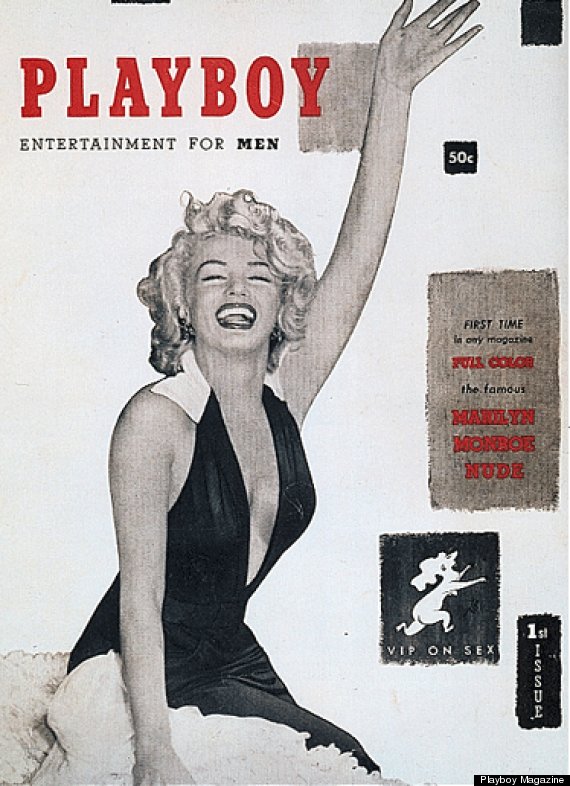
Today many consider this image sexist and offensive. Yet, in its aesthetically consistent original form this image delighted and amused many women. At that time women refuted the novel and functionally consistent Playboy magazine’s sexist underpinnings. What they did accept was that, in an era when relaxed censorship allowed women’s beauty to be celebrated Playboy (Image 2.)

Image 2.
Image 2. Playboy Magazine, December, 1953. Huffington Post, May 23, 2015.
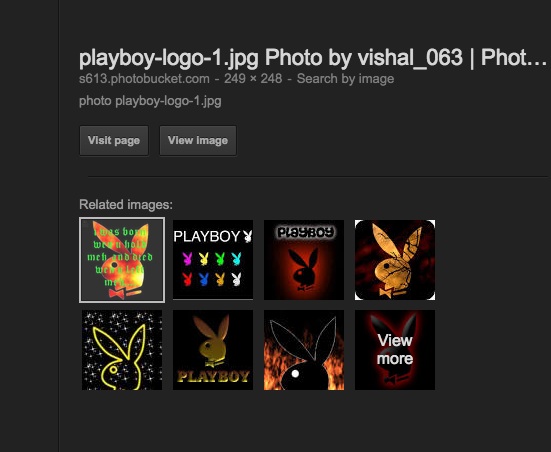
Image 3.
Image 3. Playboy logo, Google search, Screen shot, 2015.
Image 4.
Image 4. Playboy T-shirts, Brelhan, 12 February, 2009, Pitchfork.

also showcased her rights, her independence, her sexual liberty, and her brains. (personal experience and conversations, 1970s-2015). Playboy’s Bunny “logo” (Image 3, Designboom, 2000), succeeded in signaling fun and personal liberty – aesthetic consistency (Lidwell, Holden & Butler, 2013). Now more than 60 years continuously published, Playboy’s famous logo (Image 4, Brelhan, 12 February, 2009), and magazine, are still successfully functioning consistently (Playboy Enterprises, 2015). From Image 5, through to Image 1, and today, Playboy continues in the: “elaboration of functionally complete objects for the sake of visual pleasure”Trilling (2001). By this process Playboy is still aesthetically consistent in  “raising eyebrows, changing history and innovating style” (Playboy Enterprises, 2015).

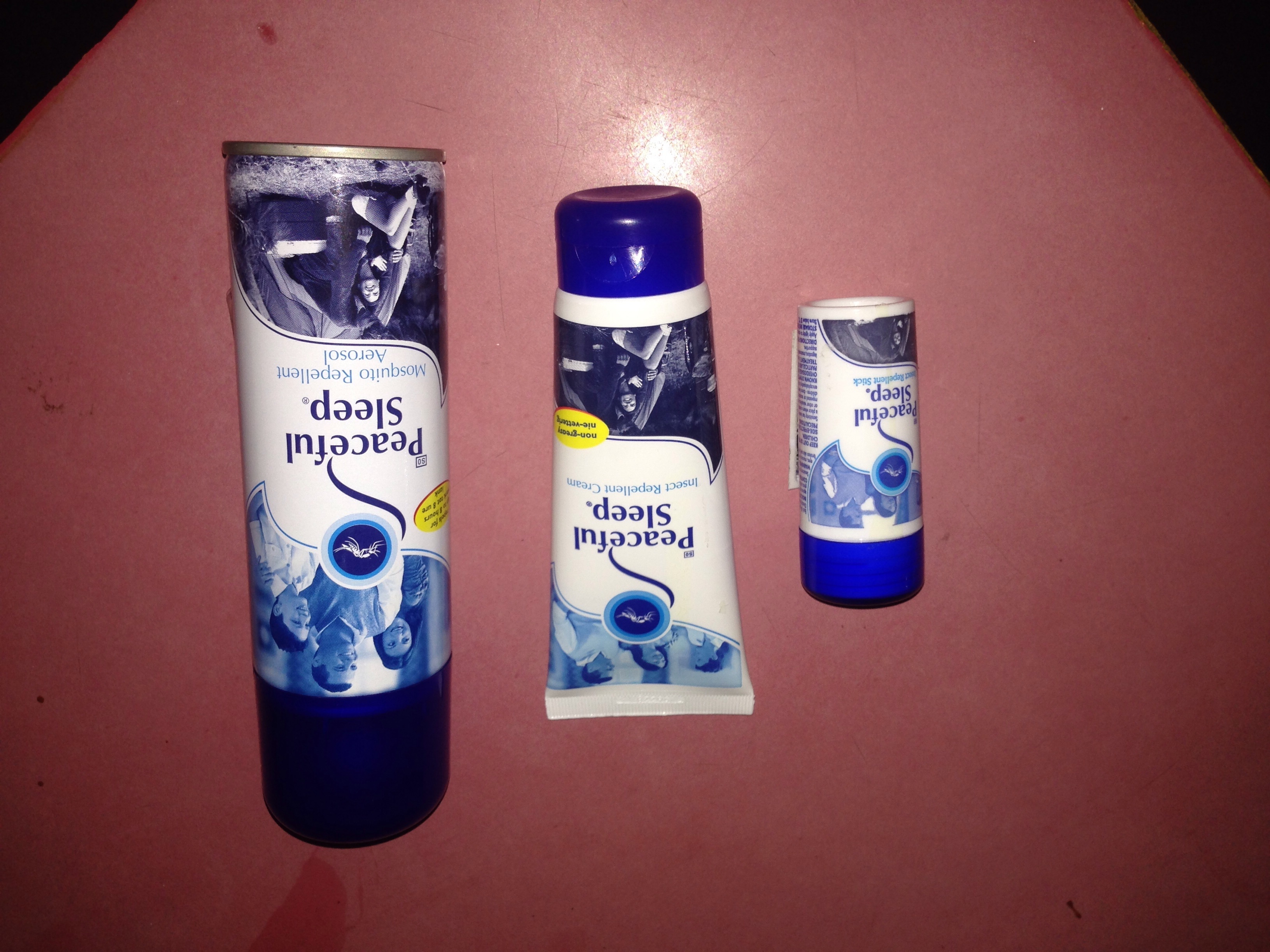
Now, another aesthetically and functionally consistent logo and product. Peaceful Sleep’s (image 4) consistent approach ensures it is an un-forgetable product. Consistent shapes, sizes, and mechanisms (Lidwell, Holden & Butler, 2003) are already long familiar: the roll-on deodorant and shaving stick; squeeze tube sunblock and antiseptic creams, and spray cans of many previous insect repellents. Internally, the consistent creams and sprays look and feel attractive and reliably repel biting insects. – in any environment (Fodor’s Travel, 2015).

Image 4. Peaceful sleep. Personal image, 2015.

Great packaging restful blue and clean white colour contributes to the message. They demonstrate Evans’ and Thomas’ (2004, p. 26):  “colour heightens the emotional and psychological dimensions of any visual image”.


Image 5. 1st Playboy logo, Designboom, 2015.

Reference

Brelhan, T. (12 February, 2009). Screenshot. Jay Reatard, MGMT, Diplo, Q-Tip, Design Playboy Tees. News. Pitchfork. Mikal Cronin MCIII. [On-line Newsletter]. Retrieved from http://pitchfork.com/news/34608-jay-reatard-mgmt-diplo-q-tip-design-playboy-tees/

Design Boom. (2000). FAQ on the Playboy logo. [On-line Magazine]. Retrieved from http://www.designboom.com/portrait/playboy.html

Evans, P. & Thomas, M. A. (2004). Exploring the Elements of Design. Clifton Park, New York, USA: Delmar Learning.

Fodor’s Travel. (2015). Africa & the Middle East Forum. [On-line Newsletter] Retrieved from http://www.fodors.com/community/africa-the-middle-east/

Google Search. (2015). Screenshot of Playboy logos. Retrieved from s613photobucket.com

Harford, S. (2015). Image: Peaceful Sleep. Personal Image, 2015.

Huffington Post. (23 August, 2013).Image from: What the first issue of Playboy looked like.[On-line Newspaper]. Retrieved from http://www.huffingtonpost.com/2013/08/23/playboy-first-issue_n_3803465.html

Lidwell, W., Holden, K., & Butler, J. (2003). Aesthetic-Usability Effect. Universal principals of design. (pp.   18-19). Massachusetts: Rockport.

Matthews, R. (11 May, 2015). The Playboy centerfold at the centre of computer science. The Conversation.[Online Magazine]. Retrieved from http://theconversation.com/the-playboy-centrefold-at-the-centre-of-computer-science-41457 utm_medium=email&utm_campaign=Latest+from+The+Conversation+for+11+May+2015+-+2792&utm_content=Latest+from+The+Conversation+for+11+May+2015+-+2792+CID_39a6831839551a8e19b2a85f455fe9c5&utm_source=campaign_monitor&utm_term=The%20Playboy%20centrefold%20at%20the%20centre%20of%20computer%20science

Playboy Enterprises. (2015). Website. Retrieved from http://www.playboyenterprises.com/

Playboy Jazz Festival. (March – May 2010). Logo.[On-line Magazine]. Retrieved from http://www.smoothvibes.com/movabletype/archives/2010_04.html

Trilling, J. (2001). The Language of Ornament. London: Thames & Hudson.

5. LP W10 Q2: Three Consistent Examples