6. LP W11 Q1: Performance Load

The article (Lidwell, Holden & Butler, 2003) is part of an established discourse of how

complicated tasks are more difficult to carry out successfully than are less complicated

tasks. However, Hall (1996, p. 292) says:

a discourse can be produced by many individuals in

different institutional settings (like families, prisons, hospitals

and asylums). Its integrity or `coherence´ does not depend

on whether or not it issues from one place or from a single

speaker or `subject´. Nevertheless, every discourse constructs

positions from which alone it makes sense.

While Lidwell, Holden and Butler (2003) explain how to “reduce cognitive load by… reduc[ing

and] “chunking information… automating… [and providing aids to assist] memory tasks”, and

so describe  “performance load” there is no consideration for the artistic view of work

(personal experience and conversations, 1957-2015). The previously-established data, for

example,  Miller (1956) “compare[s] results obtained in quite different

experimental situations”, and demonstrates the two types of performance load, cognitive

and kinematic,  discusses a subject that is also of deep enrichment to artisans, artists and

others (personal experience and conversations, 1957-2015). So Lidwell, Holden and Butler (2003) may

have overlooked those defined by the Government of Canada (2015) as:

primarily engaged in creating visual art and craft works… artistic

and cultural objects… made in small quantities, of any material.

The typical labour force is an artist, artisan or craftsperson,

sometimes assisted by other artists, artisans, craftspersons or

apprentices… independent photographers and journalists included.

In addition, while Brockman (5 July, 2015) quotes Coveney, that: “people have to go around

measuring… [work] … there’s a deep relationship between the two” this is not the only

viewpoint. Oxford Dictionaries (2015) defines the noun “”cognitive as “the mental action or process of acquiring knowledge

and understanding through thought, experience, and the senses”, Artistic individuals may want to immerse themselves in deep thought about their

occupation (personal experience and conversations, 1957-2015).


This situation also applies to the second performance factor, “kinematic” (Lidwell, Holden & Butler, 2003). A “plural

noun” defined by Oxford Dictionaries (2015) as “the branch of mechanics concerned with

the motion of objects without reference to the forces which cause the motion”.


Lidwell, Holden & Butler, 2003  provide techniques for kinematic load reduction. This they say

lessens “steps… [of] overall motion… [and automates] tasks”. Artisans and others may enjoy

and gain benefit from the many tasks their industry involves. They may reject the

performance load concept of work (personal experience and conversations, 1957-2015)

as the performance load reduction concept is not a primary concern for “those who

understand that their very nature is that of an artist” (McManus, 2014).

Reference

Brockman, (7 May, 2015). Popper versus Bacon. A conversation with Peter Coveney Edge. [On-line Magazine]. Retrieved from http://edge.org/
Government of Canada. (2015). Independent Visual Artists and Artisans Definition.Canadian Industry Statistics. Retrieved from https://strategis.ic.gc.ca/app/scr/sbms/sbb/cis/definition.html?code=711511&lang=eng
Hall, S. (1996). The West and the Rest. Formations of Modernity. Modernity: An introduction to modern societies. Hoboken, New Jersey, USA: John Wiley and Sons.
Lidwell, W., Holden, K., & Butler, J. (2003). Aesthetic-Usability Effect. Universal principles of design. Massachusetts: Rockport. Retrieved from Learning Portfolio Module 2, S1, 2015.
McManus, R. (2014). The Artisan Soul: Crafting your life into a work of art. New York, NY, USA: Harper One.
Miller, G. A. (Mar 1956). The magical number seven, plus or minus two: some limits on our capacity for processing information. Psychological Review. 63(2) 81-97. Retrieved from http://dx.doi.org/10.1037/h0043158
Oxford Dictionaries. (2015). Cognitive. Retrieved from http://www.oxforddictionaries.com/definition/english/cognition
Oxford Dictionaries. (2015). Kinematic. Retrieved from http://www.oxforddictionaries.com/definition/english/kinematics
6. LP W11 Q1: Performance Load

4. LP W10 Q1: Consistency

Lidwell, Holden and Butler (2003) state consistency can be achieved amongst various commodities when the same component, or components, are used in each of the products. Then a component looks the same, or similar, and operates similarly. This strategy is an “elaborate and systematic plan of action” (Princeton University, cited by Butler, 2012) with potential to make commodities easier to identify and use. Then one component and the associated knowledge may be consistently applied to all types of objects, in diverse circumstances. Lidwell, Holden and Butleridentify four types and provide examples: aesthetic, functional, external and internal consistency.

A key to achieving consistency is the aesthetics of an object or image (Crouch, 1999). This is a subjective idea, a vital “intellectual thread” about how objects appear to the viewer or user. Aesthetic consistency is potentially in conflict with “sudden chang[es] in technology” ((Butler, 2012) like “the first successful synthesis of three distinct types of devices”. This might lead designers to load “content into impenetrable shells”. Crouch (1999) says, when designing or creating an item to

understand how… [an audience’s] culture works in order to

communicate successfully to… [that] audience. Unless those

engaged in acts of communication, in this case visual, understand

the expectations of their audience, unless they have carefully

considered who their audience might be, unless they are aware that

they have… created a complex dialogue, then the objects they create

will have resonance for themselves but not necessarily for others.

Conversely, the function of an object or image Crouch (1999) says is based on an objective idea. It is the “practical aspect of an object or building”. These “can be tested [in a practical manner] against a reality”. Crouch also explains that the “designer works primarily in the economic base [of a culture], designing or making objects which can be commodified”. A functionally consistent, commoditiy is emergency housing like that recently designed in New York: “prefabricated walls… to customize or expand dwellings… not site-specific.. easy to move” (Denhoed, May 14, 2015).

Internal consistency, which develops trust (Butler, 2012), is a balanced combination of an object’s aesthetics (or form) and its function, and allows the user to focus on the task. This commonality is then, diversely, extended outwards to other, similar and diverse, systems of external consistency. .Lidwell, Holden and Butler (2003) recommend the use of established standards where available. Usability expert Jakob Neilsen recommends “recognition over recall” for game theory (cited by Minor, 31 January, 2012), and consistency or “modularity” shows in the extraordinary, only 3-component Bosse interior fitments and furniture range (Bosse, Acrchitonic, 2015).

These aims all comply with the modernist aim of simultaneous “uniformity and collaboration… [with] dialogue between the individual and the universal” (Crouch, 1999) as  one type of component, and/or commodity, design (similar in aesthetics and function) is applied to a number of items in a system

Bosse. (2015). Architonic [On-line Magazine] http://www.architonic.com/ntsht/the-unique-modular-furniture-system/7000954

Butler, C. (2012). The Strategic Web Designer: how to confidently navigate the web design process. Blue Ash, Ohio, USA: HOW Books.

Crouch, C. (1999). Modernism in art, design and architecture. London: Palgrave.

Denhoed, A. (May 14, 2015). Making Space for the Homeless. The New Yorker. [On-line Magazine] Retrieved from http://r20.rs6.net/tn.jsp?f=001KDSK4s2bUGWhBxZJKjaYQccvc7y2AduCihe10S-yKn8dUmmSBsFVFARsneHS2ibi-zLQ3uJd0HP73uQz0Q6B6l6s8EatkryMtZgh2b_NF1QCbrjIZEeZ13acpCcw0-7rQeumOBFWmfUEl247qBVTKDKWeaw128cyvi80_xfY7tQUTf4w3jGNkOBx5NjzzmJ79l8sUe_a6MmMHeE_jzGRPNpwV7ARooC1SVPak_7HO4W9OlvZB0ROcQ==&c=7gYy4kwlRe8sZlh37uIb8cuH0gT0q8qHQgqBfNSMSpbfsWtY238Z-w==&ch=X5AMo0oIRt9-sv8oJ9p_e3sQHOoCx8k0cEO6A971RNeYEqpJik3eKg==

Lidwell, W., Holden, K., & Butler, J. (2003). Aesthetic-Usability Effect. Universal principles of design. Massachusetts: Rockport. Retrieved from Learning Portfolio Module 2, S1, 2015.

Minor, T. (31 January, 2012). Total Memory Recall. UX Booth. [On-line Newsletter] Retrieved from http://www.uxbooth.com/articles/total-memory-recall/

4. LP W10 Q1: Consistency

5. LP W10 Q2: Three Consistent Examples

In 1973, the University of Southern California Signal and Image Processing Uni scanned a cropped 512 x 512 pixel image from a current Playboy magazine (Matthews, 11 May, 2015). This (image 1) relied on “aesthetic consistency to establish [its] unique identit[y] that can be recognized” (Lidwell, Holden and Butler, 20013). Matthews (11 May, 2015) says with “a resolution of 100 lines per inch, the resulting image was the perfectly cropped head and shoulders image 512 x 512 in size”. This image was/is consistent and “simplif[ies] usability and ease of learning” (Lidwell, Holden and Butler, 20013). The image has “variety” and “composition” (Evans & Thomas, 2004, p. 5), its details, “colour, focus, textures, reflections and flat regions… [which make] it amenable for testing a wide range of image processing algorithms” (Matthews, 11 May, 2015). In a huge, global marketplace this image, now one of the most viewed in the world, is aesthetically and functionally consistent.

Image 1. The original Lenna test image from the University of Southern California Signal and Image Processing Institute. SIPI image Database - 20150507. (Matthews, 11 May, 2015).
Image 1. The original Lenna test image from the University of Southern California Signal and Image Processing Institute. SIPI image Database – 20150507. (Matthews, 11 May, 2015).

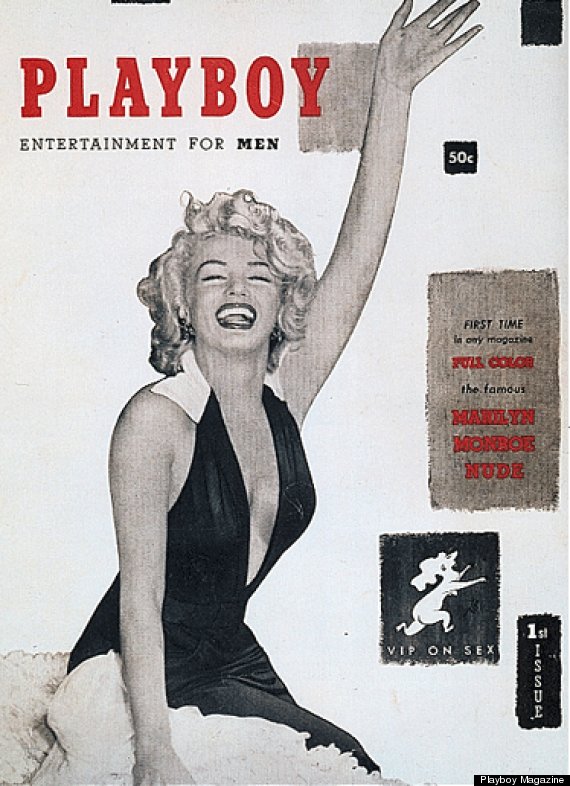
Today many consider this image sexist and offensive. Yet, in its aesthetically consistent original form this image delighted and amused many women. At that time women refuted the novel and functionally consistent Playboy magazine’s sexist underpinnings. What they did accept was that, in an era when relaxed censorship allowed women’s beauty to be celebrated Playboy (Image 2.)

Image 2.
Image 2. Playboy Magazine, December, 1953. Huffington Post, May 23, 2015.
Image 3.
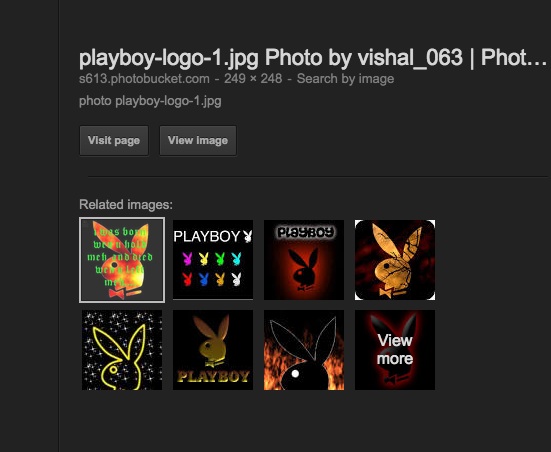
Image 3. Playboy logo, Google search, Screen shot, 2015.
Image 4.
Image 4. Playboy T-shirts, Brelhan, 12 February, 2009, Pitchfork.

also showcased her rights, her independence, her sexual liberty, and her brains. (personal experience and conversations, 1970s-2015). Playboy’s Bunny “logo” (Image 3, Designboom, 2000), succeeded in signaling fun and personal liberty – aesthetic consistency (Lidwell, Holden & Butler, 2013). Now more than 60 years continuously published, Playboy’s famous logo (Image 4, Brelhan, 12 February, 2009), and magazine, are still successfully functioning consistently (Playboy Enterprises, 2015). From Image 5, through to Image 1, and today, Playboy continues in the: “elaboration of functionally complete objects for the sake of visual pleasure”Trilling (2001). By this process Playboy is still aesthetically consistent in  “raising eyebrows, changing history and innovating style” (Playboy Enterprises, 2015).

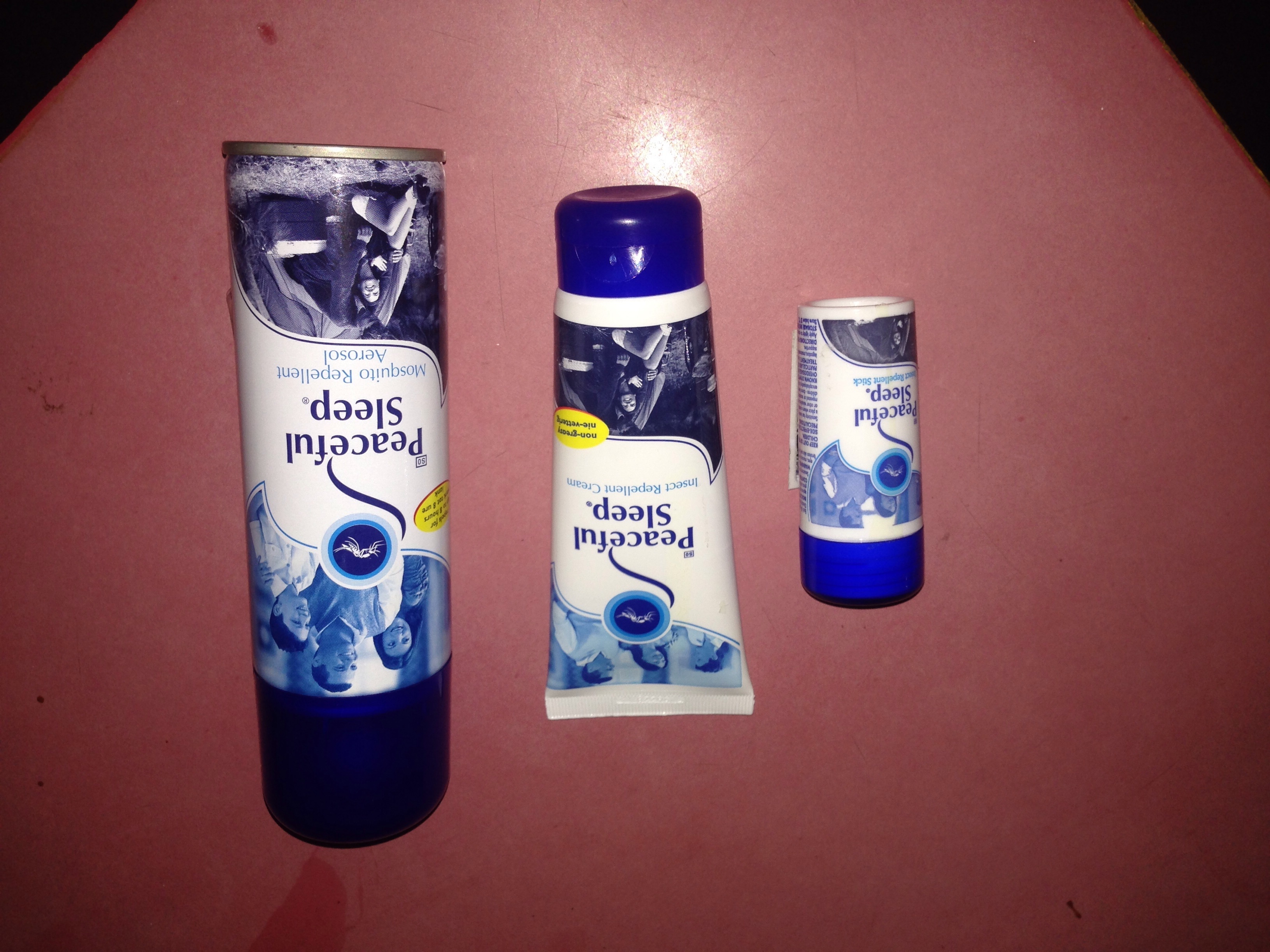
Now, another aesthetically and functionally consistent logo and product. Peaceful Sleep’s (image 4) consistent approach ensures it is an un-forgetable product. Consistent shapes, sizes, and mechanisms (Lidwell, Holden & Butler, 2003) are already long familiar: the roll-on deodorant and shaving stick; squeeze tube sunblock and antiseptic creams, and spray cans of many previous insect repellents. Internally, the consistent creams and sprays look and feel attractive and reliably repel biting insects. – in any environment (Fodor’s Travel, 2015).

Image 4. Peaceful sleep. Personal image, 2015.

Great packaging restful blue and clean white colour contributes to the message. They demonstrate Evans’ and Thomas’ (2004, p. 26):  “colour heightens the emotional and psychological dimensions of any visual image”.


Image 5. 1st Playboy logo, Designboom, 2015.

Reference

Brelhan, T. (12 February, 2009). Screenshot. Jay Reatard, MGMT, Diplo, Q-Tip, Design Playboy Tees. News. Pitchfork. Mikal Cronin MCIII. [On-line Newsletter]. Retrieved from http://pitchfork.com/news/34608-jay-reatard-mgmt-diplo-q-tip-design-playboy-tees/

Design Boom. (2000). FAQ on the Playboy logo. [On-line Magazine]. Retrieved from http://www.designboom.com/portrait/playboy.html

Evans, P. & Thomas, M. A. (2004). Exploring the Elements of Design. Clifton Park, New York, USA: Delmar Learning.

Fodor’s Travel. (2015). Africa & the Middle East Forum. [On-line Newsletter] Retrieved from http://www.fodors.com/community/africa-the-middle-east/

Google Search. (2015). Screenshot of Playboy logos. Retrieved from s613photobucket.com

Harford, S. (2015). Image: Peaceful Sleep. Personal Image, 2015.

Huffington Post. (23 August, 2013).Image from: What the first issue of Playboy looked like.[On-line Newspaper]. Retrieved from http://www.huffingtonpost.com/2013/08/23/playboy-first-issue_n_3803465.html

Lidwell, W., Holden, K., & Butler, J. (2003). Aesthetic-Usability Effect. Universal principals of design. (pp.   18-19). Massachusetts: Rockport.

Matthews, R. (11 May, 2015). The Playboy centerfold at the centre of computer science. The Conversation.[Online Magazine]. Retrieved from http://theconversation.com/the-playboy-centrefold-at-the-centre-of-computer-science-41457 utm_medium=email&utm_campaign=Latest+from+The+Conversation+for+11+May+2015+-+2792&utm_content=Latest+from+The+Conversation+for+11+May+2015+-+2792+CID_39a6831839551a8e19b2a85f455fe9c5&utm_source=campaign_monitor&utm_term=The%20Playboy%20centrefold%20at%20the%20centre%20of%20computer%20science

Playboy Enterprises. (2015). Website. Retrieved from http://www.playboyenterprises.com/

Playboy Jazz Festival. (March – May 2010). Logo.[On-line Magazine]. Retrieved from http://www.smoothvibes.com/movabletype/archives/2010_04.html

Trilling, J. (2001). The Language of Ornament. London: Thames & Hudson.

5. LP W10 Q2: Three Consistent Examples

3. LP W8 Q2: Aesthetic Usablility

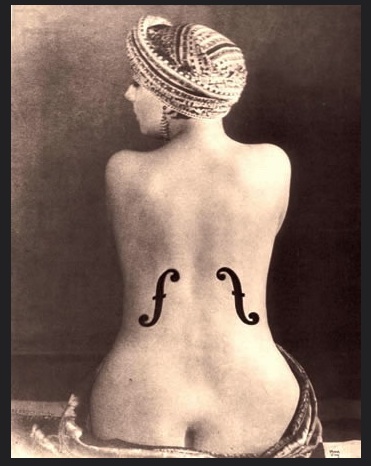
In a surreal, human body-inhuman machine, “aesthetic usability“ encounter (Lidwell, Holden & Butler, 2003), Man Ray’s 1924 visual image transforms “Kiki’s body into a musical instrument“ (Image 1).

Image 1
Image 1. Man Ray, 1924, J. Paul Getty Museum, Getty Images, 2015.

A normal, everyday encounter is the human hand playing a violin. Katz calls the human hand “a beautiful tool” (cited by Shaw Wilgis, 2014, p.15) and today, as always ”beauty is no quality in things themselves: It exists merely in the mind which contemplates them; and each mind perceives a different beauty” (Hume, 1792, davidhume.org). In this cyber/robotics-dominated era hands (image 1) are sublimely beautiful and useful – still.

The human hand fits the aesthetic-usability criteria (Lidwell, Holden & Butler, 2003). Katz says: “there is something poetic about the human hand. The beautiful synergy is of its form and function is indeed the “visible part of the brain”, and Shaw Wilgis (2014) describes the hand as “more sophisticated, more varied, and more productive than any other part of our body”.

My daughter’s fingers are long, elegant and tapered yet her hand is strong, her movements precise and productive. Her hands “interact” with her “environment”, is the “delicate instrument that… makes it possible for… [her] to knead dough” (Shaw Wilgis, 2014) for superb bread, or to play her violin beautifully (image 2.).

daughter & violin
Image 2. My daughter’s hands & violin, S. Harford Personal image, 2015.

My daughter believes her violin (image 2) is beautiful, and creates beautiful music. So her violin is aesthetically usable (Lidwell, Holden & Butler, 2003). Joseph Curtin (February, 2007) describes his personal aesthetic-usability encounter fifteen years ago, when he put a particular 300-year old Stradivarius violin under his chin and played. Curtin’s experience involved two key human senses, sight and touch. Parts of his body, principally his eyes, skin and hands, engaged to produce music with this “Jackson” – its “aesthetic-usability” marker-nickname (Lidwell, Holden, & Butler, 2003).

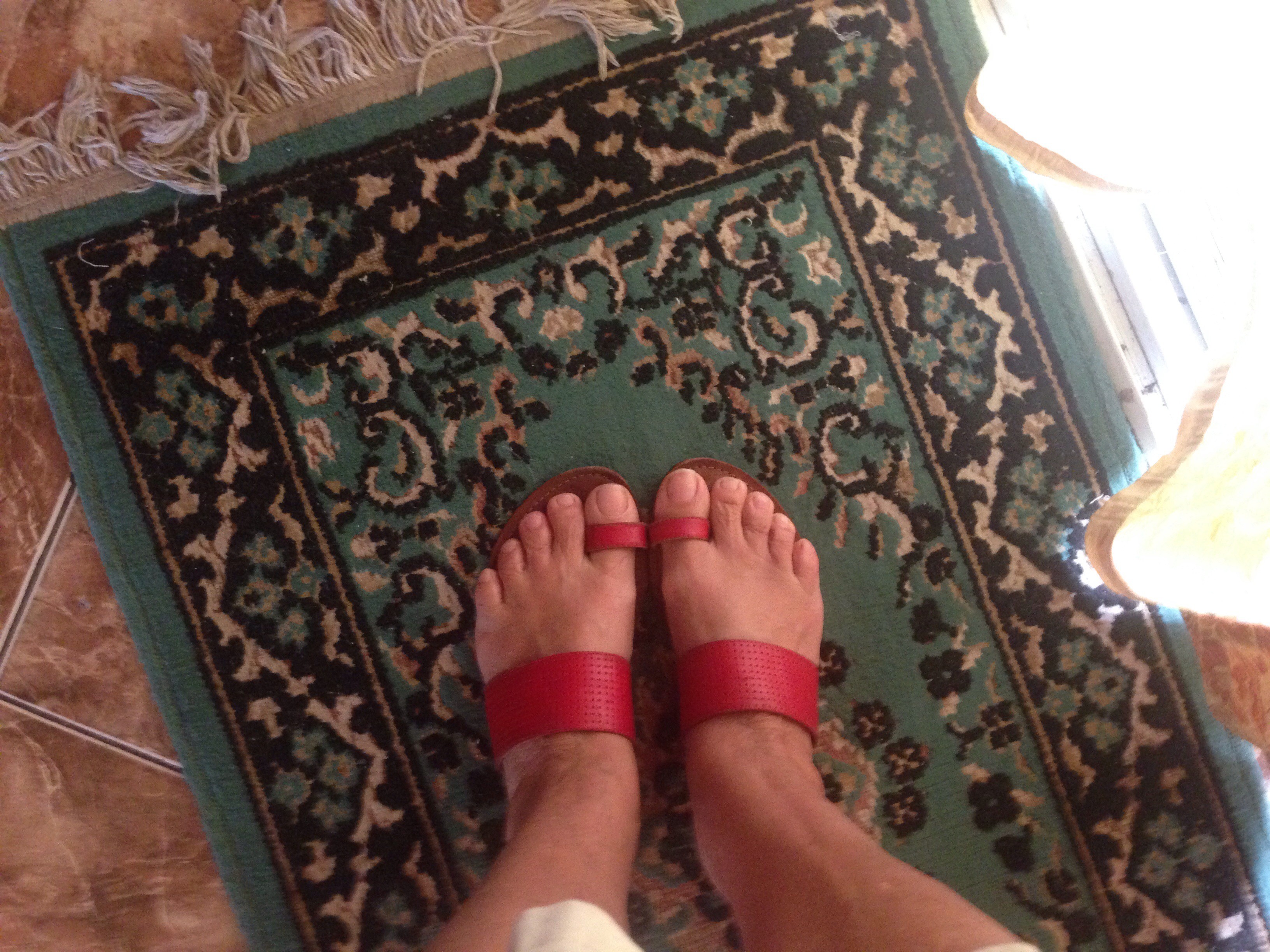
Like the hand and violin, encounters between my feet and my red thongs (image 3.) create an aesthetic usability relationship. My red thongs demonstrate the aesthetic usability concept; like designer Romero, at the recent Milan Design Week exhibition of ″exclusive 3D-printed shoes”, says, they are

the old and the new, natural and man-made and the              connection between the human body, the earth, and the            universe — working together to become simultaneously             timeless and forward-looking….intersection of architecture,               art, and design (cited by Designboom, April 2015).

Image 3.
Image 3. my red thongs, S. Harford personal image, 2015.

My two year-old red thongs clearly demonstrate aesthetic-usability: I love the way their leather looks and equally love their comfort. So good to wear, “appealing enough for [me] to buy” (Kurosu & Kashimura, 1995). Yet the conclusions of Lidwell, Holden and Butler (2003) fall short. All three items – the hands and violin, my thongs faithfully retain their aesthetic usability appeal:  their colour and shape, even while they tramp, with me, through brambles and bushes, rocky headlands, and wander, with me, through stony, watery coral reefs at low tide. It’s the whole package – looks and performance – that appeals.

Reference

Curtin, J. (February, 2007). Innovation and creation in the violin-making world: a Q & A with Violonetto. http://josephcurtinstudios.com/article/joseph-curtin-innovation-and-creation-in-the-violin-making-world/
Designboom. (14 April, 2015). United nude + 3D systems present re-inventing shoes during milan design week. [On-line Newsletter.] Retrieved from http://www.designboom.com/design/united-nude-3dsystems-re-inventing-shoes-milan-design-week-04-14-2015/?utm_campaign=monthly&utm_medium=email&utm_source=subscribers
Harford, S. (2015). Image 2 and 3.
Hume, D. (1741-41, 1777). Essays, Moral and Political. Davidhume.org. Retrieved from http://davidhume.org/texts/emp.html
Kurosu, M., & Kashimura, K. (1995). Conference Companion. Design Center, Hitachi Limited.
Lidwell, W., Holden, K., & Butler, J. (2003). Aesthetic-Usability Effect. In universal principals of design. (pp. 18-19). Massachusetts: Rockport.
Man Ray. (1924). Image. J. Paul Getty Museum, Getty Images. Le violon d’Ingres, 1924. Free to use image Retrieved from http://flatrock.org.nz/topics/society_culture/dementia.htm

Man Ray. (1924). Le violon d’Ingres. 1924.J. Paul Getty Museum. Getty Images. (2015). Retrieved from http://www.getty.edu/art/collection/objects/54733/man-ray-le-violon-d%27ingres-ingres%27s-violin-american-1924/

Merivale, A. and Milligan, P. (2015). David Hume. Essays, Moral and Political (1741-42, 1777).
Shaw Wilgis, E. F. Ed.(2014). The Wonder of the Human Hand: Care and Repair of the body’s most marvelous instrument. Baltimore, Maryland, USA: John Hopkins University Press.
3. LP W8 Q2: Aesthetic Usablility

2. LP W8 Q1: Reading Week 9

The Week 9 reading discusses Web pages and harmony, how good and bad online marketers appear on the Web, and the effect of lack of balance between function and form. Evans and Thomas (2004, p. 12) say design balance is “visual distribution of elements in a composition… [and] “physical balance is a functional demand of three-dimensional design” and perhaps interactive, online screen design considers both. This article observes that visuals are considered to be the key website element although text still plays a vital part. A recent example is the profound effect of the Charlie Hedbo cartoons. Spiegelman (cited by Salyer, 6 May, 2015) says while visuals like Charlie Hedbo cartoons “use the same tools, symbolism, irony, metaphor” they create “immediate” impact as they carry a “deceptive directness” and are loaded with “visceral power”.

Image 1. Rickman, 8 January, 2015.


Dillon (July, 1999) says:

images work via a second communicative system,
one fully as expressive as natural language, but
separate and structured independently of it. Others
find visual and verbal meanings more dissimilar than
similar, with the visual lacking a kind of determinacy
or which verbal language seems better suited.

The article says electronic message construction, to considerable extent, relies upon classic design parameters and elements. The medium is complicated as visuals may be “encoded redundantly”, and while concrete concepts in certain “words, sentences and paragraphs” may create visual ideas text occupies a lesser place and abstract text concepts are not easily comprehended.

The article discusses the speed of technological change, saying digital screen design competency is essential, and provides useful information about avenues to “focus, rivet attention, integrate old and new information and ways to navigate” these online communication products. Donald Norman (2002) says: “Aesthetics matter. Attractive things work better”, and the reading uses thirteen headings to describe how to properly understand and implement visual screen design.

The reading obliquely reflects Norman, who says “the field of usability takes root in the cognitive sciences”. The article identifies new and emerging components including personal digital assistants, wireless markup language, accessibility guidelines. The Web’s “long term goals” – such as universal “website usability… semantics… legal, commercial and social issues” are mentioned. The article is impartial and provides no comment about the ethics involved, the validity of the medium, or its possible long-term effects, positive, or negative, on humanity.

Reference

Dillon, G. L. (July, 1999). Art and the semiotics of images: Three questions about visual meaning. University of Washington. Retrieved from http://faculty.washington.edu/dillon/rhethtml/signifiers/sigsave.html
Evans, P. and Thomas, M. A. (2004). Exploring the elements of design. Clifton Park, NY. USA: Delmar Learning.
Norman, D. (2002). Emotion and design: Attractive things work better. Interactions Magazine. [On-line Magazine]. Ix (4),36-42. Retrieved from jnd.org.
Rickman, D. (8 January, 2015). Cartoon. These cartoons are poignant tributes to the victims of the Charlie Hedbo attack. i100 The Independent. [On-line Magazine]. Retrieved from Salyer, K. (6 May 2015). Art Spiegelman: Je Suis CharlieBut I’m Not Pamela Geller. Time Magazine. [On-line magazine]
Salyer, K. (6 May, 2015).Art Spiegelman: Je Suis Charlie – But I’m not Pamela Geller. Time Magazine.[On-line Magazine]
Retrieved from http://time.com/3849465/art-spiegelman-je-suis-charlie-but-im-not-pamela-geller/
Week 9 Reading. (S1, 2015). ECU CCA1108. Retrieved from Learning Portfolio Assessment S1, 2015.
2. LP W8 Q1: Reading Week 9