10. LP W12 Q1

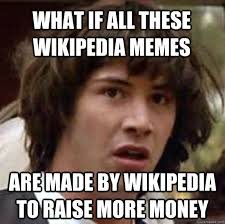
While on the Web, Wikipedia memes, (Images 1& 2) and discussion of same (Wikija, 2015) rightly amuse many, the many scholarly articles about  “a lack of credibility” on the Web, (World Wide Web),
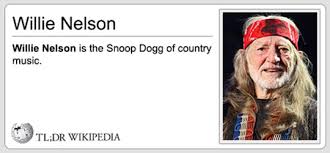
Image 1. Lolz. Wikipedia mem, 2015.


Image 2. Quickmeme,Keanu Reeves image, 2015.
Image 2. Quickmeme, Keanu Reeves image, 2015.

and how this situation might be combated (Ribiero, Carmo, & de Caravalho, 2013) are an entirely different matter. The Oxford English Dictionary defines credibility as “the quality of being trusted and believed in; the quality of being convincing or believable”.

As “flaws and negative external influences” in key information appear on the Web, this quality, previously one of Western society’s most valued and defining characteristics, is  degraded,  The Web is the major mass media medium of this era so this problem affects anyone who wishes to learn or to be informed. This is because the Web is, as Kevin Kelly, founder of Wired magazine, said in 2005:

the largest, most complex, most surprising event on the planet.

Weaving nerves out of glass and radio waves, our species began

wiring up all regions, all processes, all facts and notions into a

grand network. From this embroyonic net was born a

collabororative interface for our civilization, a sensing, cognitive

device with power that exceeded any previous invention.

As Western society’s main communications channel the Web is tremendously important. Yet the stated rationale of Fogg’s (2003) paper is primarily to “persuade”, and the article by Ribiero, Carmo and de Caravalho (2013) appears, fundamentally, only to make the Web more efficient as a marketing machine. A Web cluttered with material biased solely towards  persuasion or marketing is counter-productive for any student – and unlikely to regain credibility.

Reference.

Fogg, J. (2003). Credibility and the World Wide Web. Persuasive Technolgy: Using computers to change what we think and do. Amsterdam: Morgan Kaufman Publishers. Retrieved from Learning Portfolio, S1, 2015.

Kelly, K. (2005). We are the Web. Wired. Issue 13.8. [On-line Magazine]. Retrieved from http://archive.wired.com/wired/archive/13.08/tech.html

Lolzbook. (2015). Meme using Willy Nelson image. Retrieved from http://lolzbook.com/page/1749/

Oxford Dictionaries. (2015). Credibility. Retrieved from http://www.oxforddictionaries.com/definition/english/credibility

Quickmeme. (2015). Meme using Keanu Reeves image. Retrieved from http://www.quickmeme.com/meme/35ficb

Ribiero, A. M., Carmo, C. H. S., & de Caravalho, L. N. G. (2013). Environmental disclosure: does regulation solve the lack of comparability and objectivity? Journal of accounting and organisations. Retrieved from  http://dx.doi.org/10.11606%2Frco.v7i17.56667

Wikja. (2015). Conspiracy Keanu: The Funniest Wiki. Retrieved from http://thefunnyist.wikia.com/wiki/Conspiracy_Keanu
Aside

9. LP W11 A Three design examples

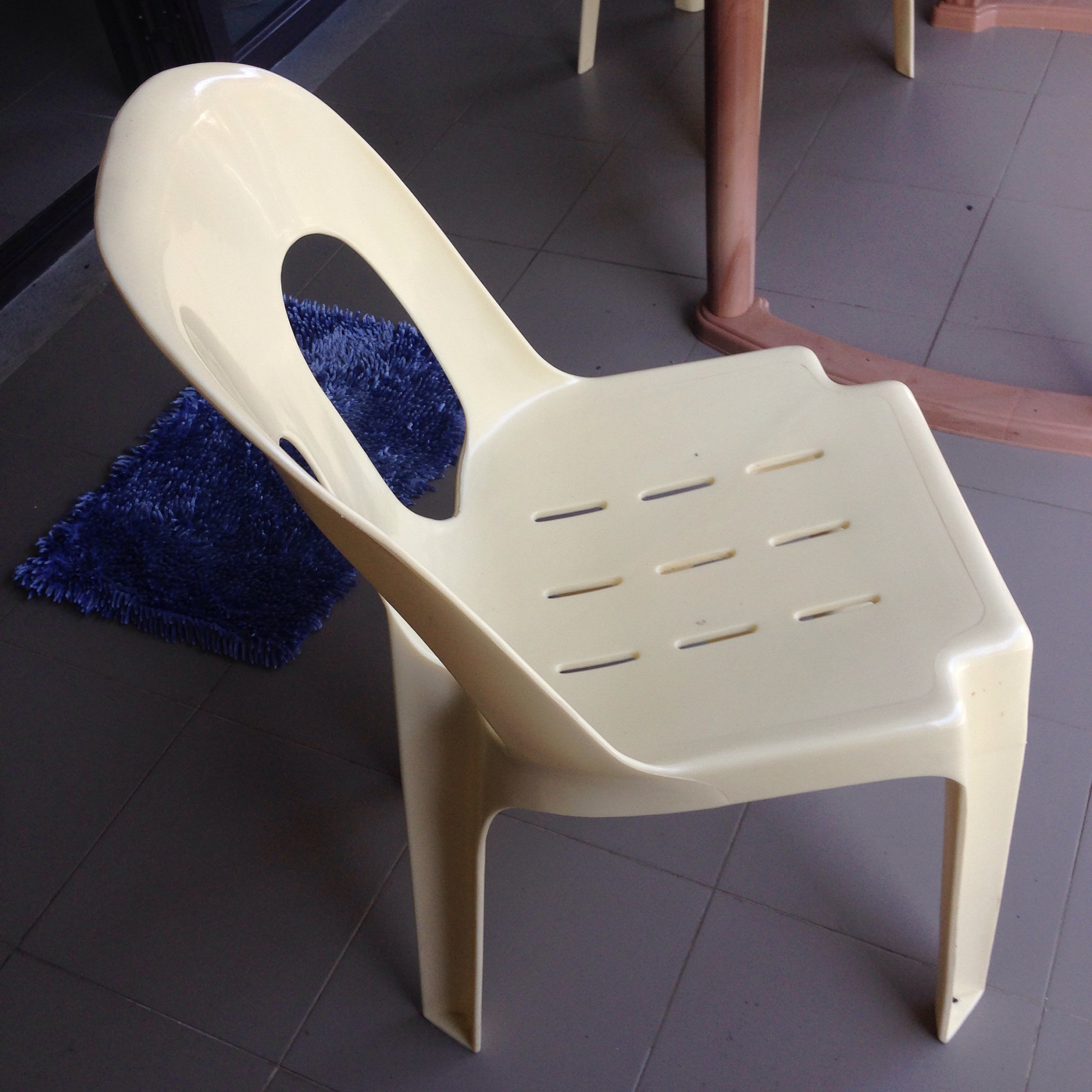
Little effort, mental or physical, is needed to use the  “virgin polypropylene” Pipee stacking chair (image 1). As it is extraordinarily light (Lifetime Industries website, 2015)  this chair fits the “kinematic… performance load” description (Lidwell, Holden and Butler 2003) . The chair design  is so familiar, so usable, that the makers can rely entirely on retained, long-term memories. The chair complies with “cognitive… performance load” – and the Lidwell, Holden and Butler “usability” criteria. As this is one of a set of four identical chairs it somehow fits these writers’ “consistency” definition. While touted as durable, ‘recycle’ appears nowhere on chairs or website. Aesthetics appears an alien concept, and Stahel’s (1982) “cradle to cradle” care and thought is probably unheard of .

Image 1. Pipee chair. S. Harford personal image, 2015.
Image 2. The Green Dot. S. Harford personal image, 2015.


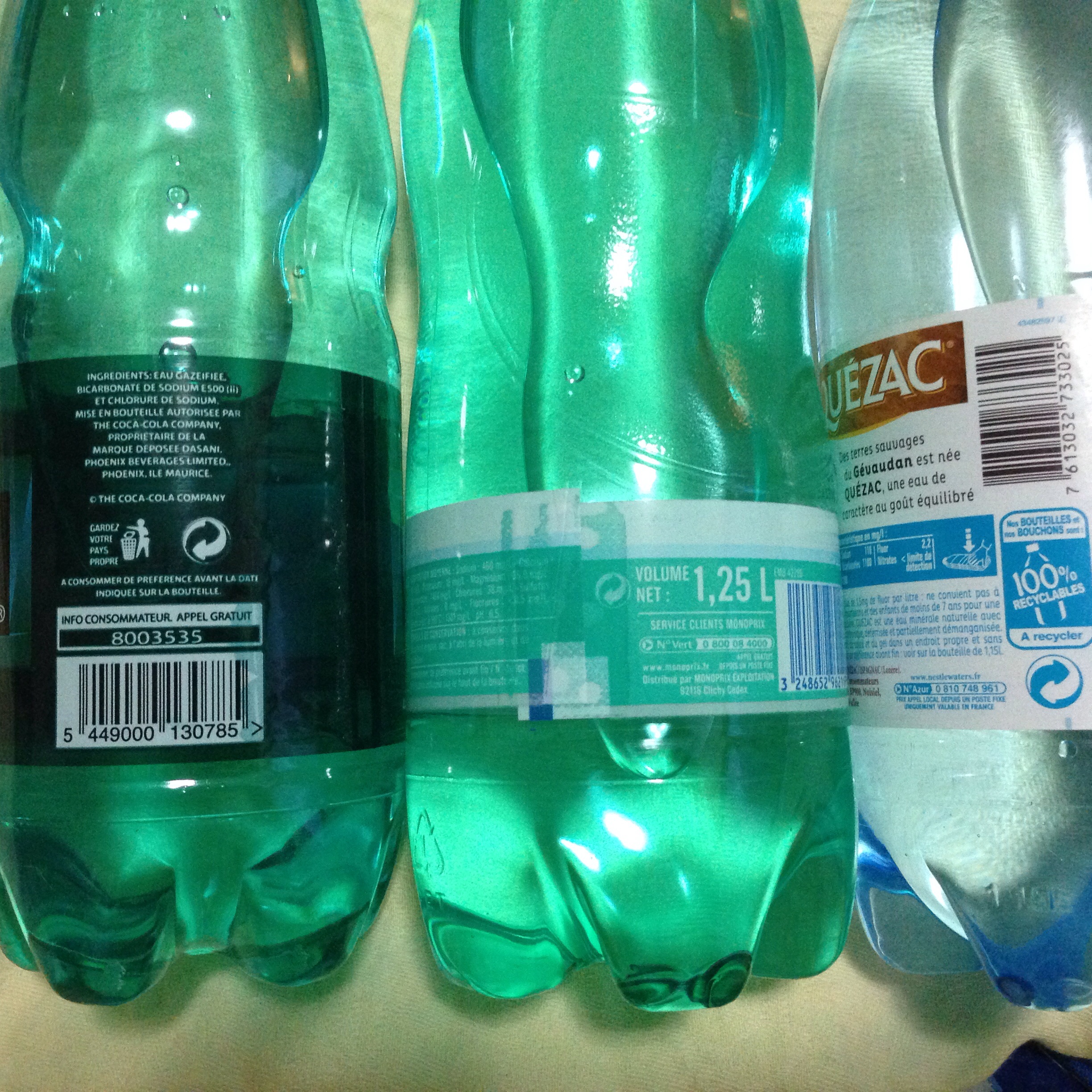
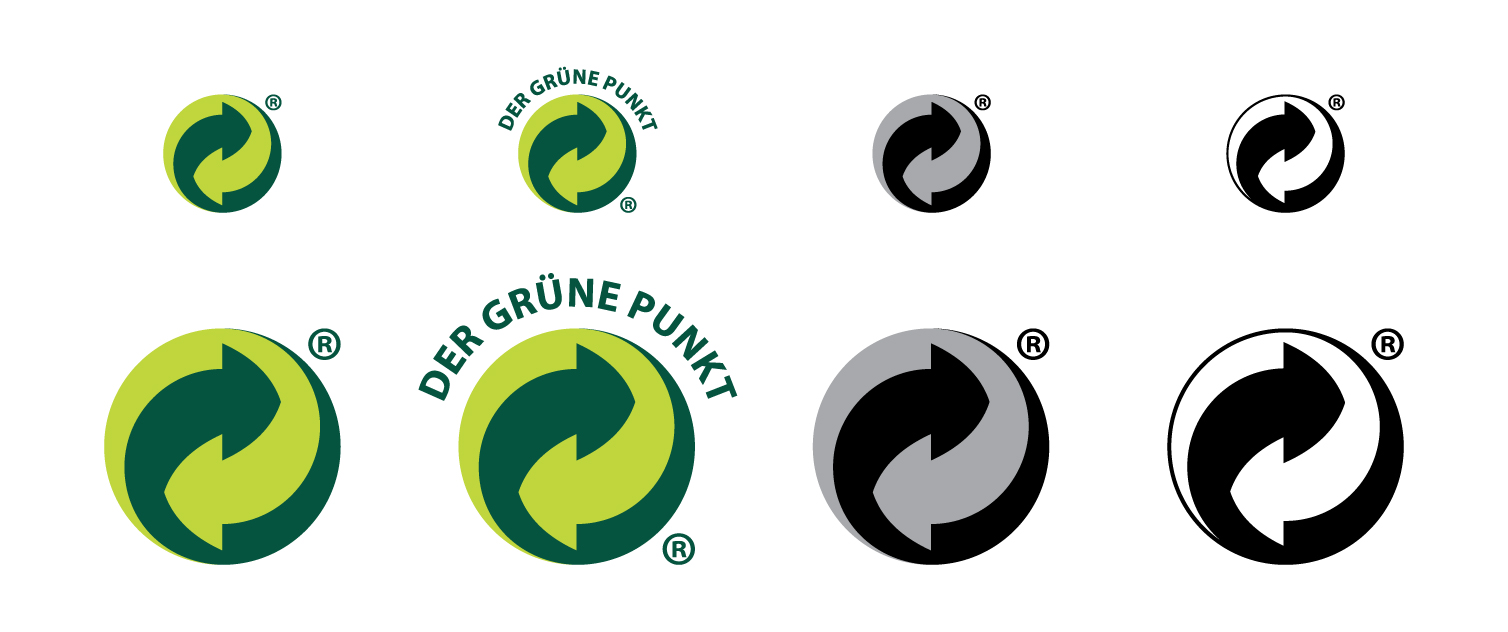
An enigmatic Green Dot Symbol (2015)  is in evidence (images 2 & 3) on the backs of three slightly-different-but-same and-performing-the-same plastic bottles of water. Symbols such as the Green Dot function like a logo – they carry a certain message. These messages are always “perceived” – correctly or incorrectly – in a certain way. So  this small symbol lightens, (for better or worse),  “mental … cognitive…  performance load”  (Lidwell, Holden & Butler, 2003).

Image 3. The Green Dot Symbol, 2015.


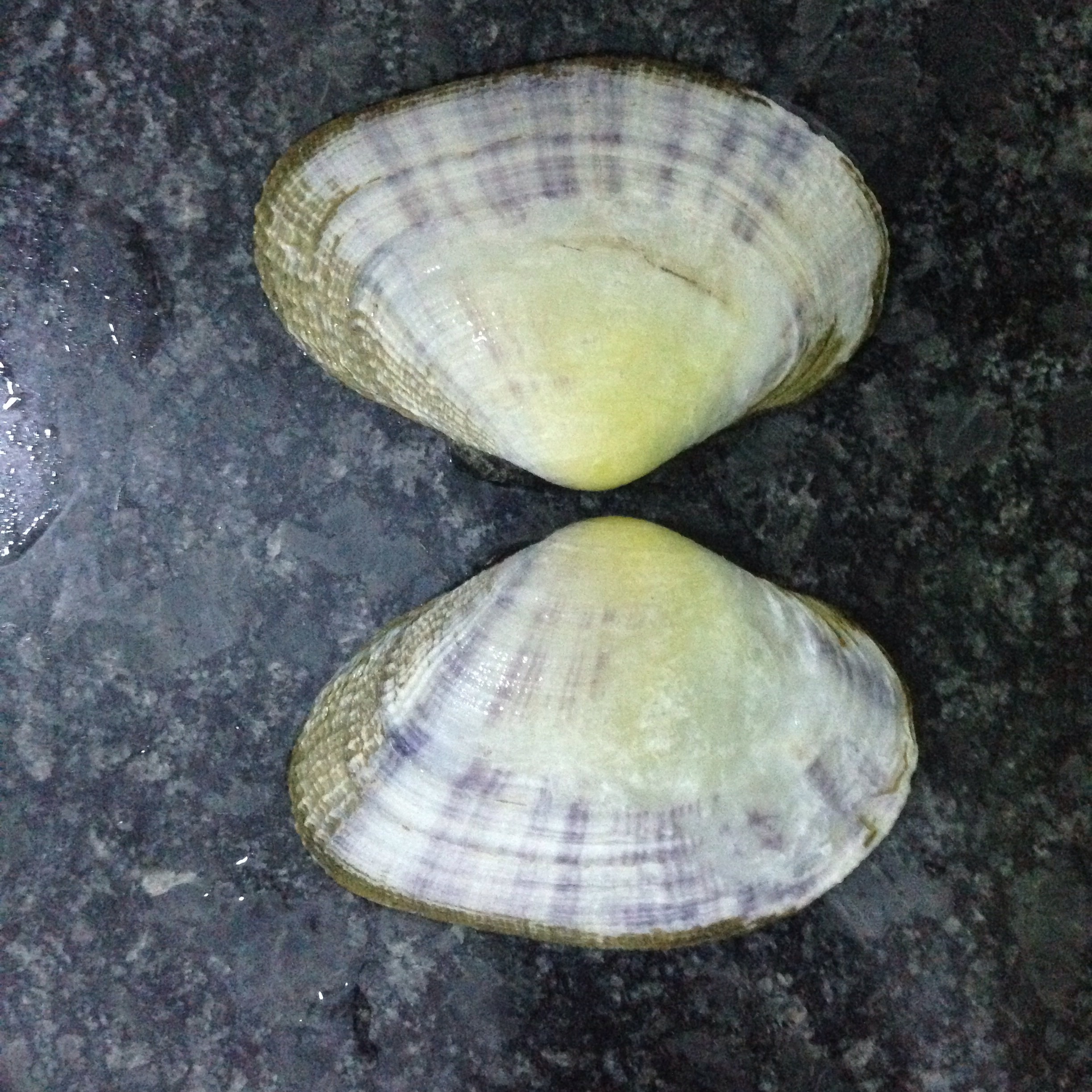
Image 3. Mauritius vongole. S. Harford personal image, 2015.
Image 4. Mauritius vongole. S. Harford personal image, 2015.

Image 4 shows is the former house of a most delicious creature. Always recognisable, all the same shape, colour and texture. The seeker’s performance, or cognitive load, is lessened, as, once seen and enjoyed they are forever recognisable. Regarding performance or kinematic load, again little effort is required.  Although these creatures may vary slightly in shape, all fit beautifully into the palm of a human hand and can easily be gathered into a bucket, and quickly pried open to eat, raw. Kinematic -performance load can be further reduced if steamed. Then all open obligingly – for ready access to their tasty  meat.

Reference 

Lifetime Industries. (2015). Pipee Stacking Chair. Website. Retrieved from http://www.lifetime.net.au/detail/pid/18/id/11/pipee-stacking-chairs

Harford, S. (2015). Personal images.

Stahel, W. R. (1982). The 30th. anniversary of Walter R. Stahel’s Prize-winning paper “The Product-Life-Factor”. Retrieved from http://www.product-life.org/en/the-30th-anniversary-of-walter-r-stahel-prize-winning-paper-the-product-life-factor

The Green Dot Symbol. (n.d.). Symbols.com. Retrieved May 25, 2015, from http://www.symbols.com/symbol/2025.

Aside