3. LP W8 Q2: Aesthetic Usablility

In a surreal, human body-inhuman machine, “aesthetic usability“ encounter (Lidwell, Holden & Butler, 2003), Man Ray’s 1924 visual image transforms “Kiki’s body into a musical instrument“ (Image 1).
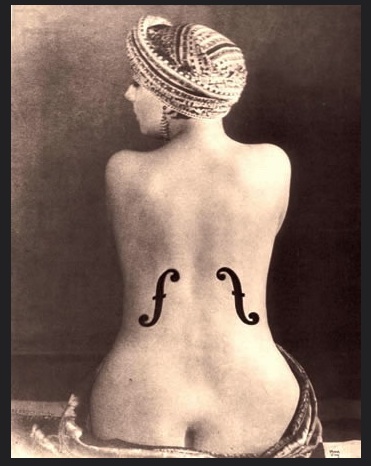
Image 1
Image 1. Man Ray, 1924, J. Paul Getty Museum, Getty Images, 2015.

A normal, everyday encounter is the human hand playing a violin. Katz calls the human hand “a beautiful tool” (cited by Shaw Wilgis, 2014, p.15) and today, as always ”beauty is no quality in things themselves: It exists merely in the mind which contemplates them; and each mind perceives a different beauty” (Hume, 1792, davidhume.org). In this cyber/robotics-dominated era hands (image 1) are sublimely beautiful and useful – still.

The human hand fits the aesthetic-usability criteria (Lidwell, Holden & Butler, 2003). Katz says: “there is something poetic about the human hand. The beautiful synergy is of its form and function is indeed the “visible part of the brain”, and Shaw Wilgis (2014) describes the hand as “more sophisticated, more varied, and more productive than any other part of our body”.

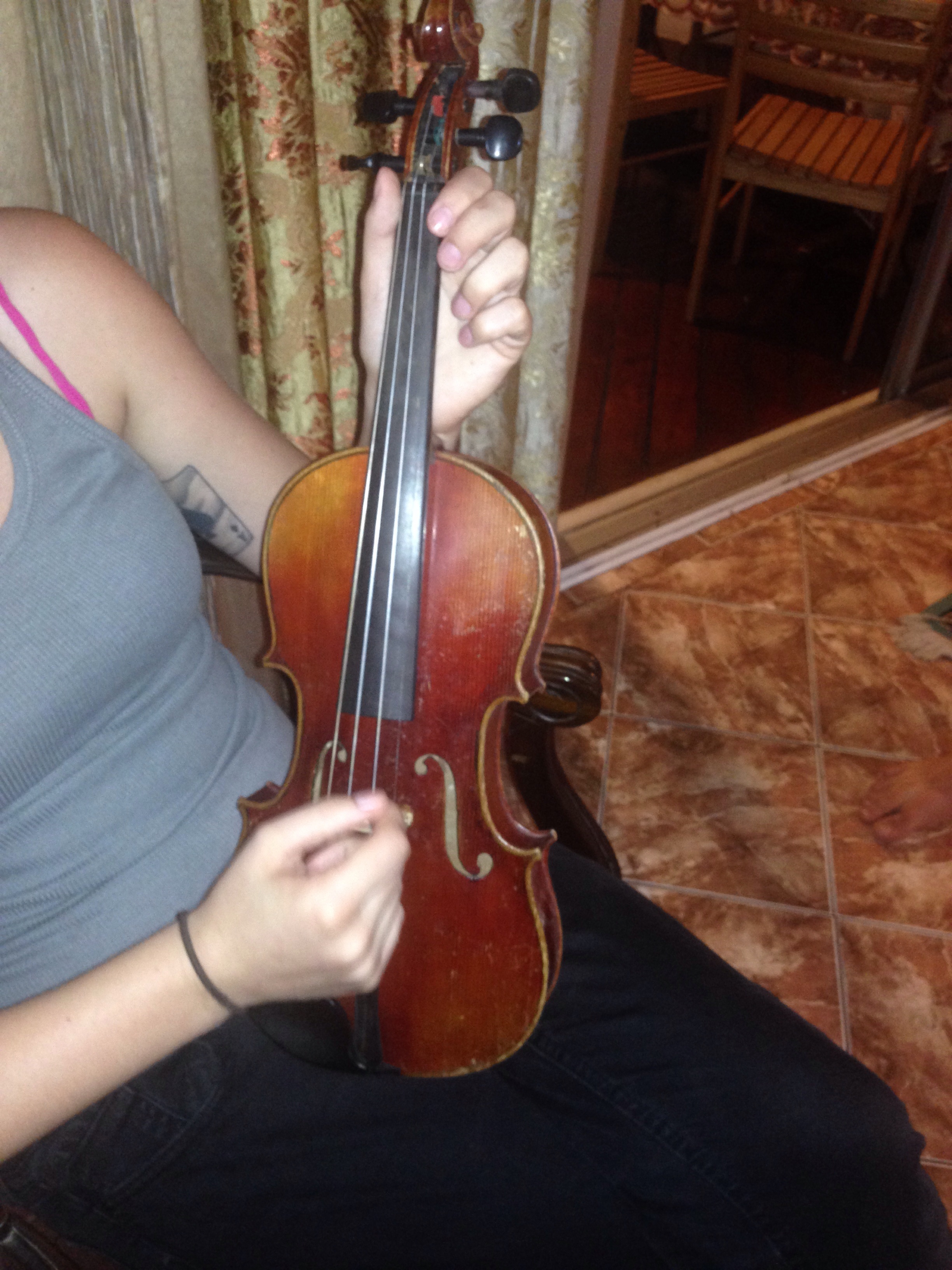
My daughter’s fingers are long, elegant and tapered yet her hand is strong, her movements precise and productive. Her hands “interact” with her “environment”, is the “delicate instrument that… makes it possible for… [her] to knead dough” (Shaw Wilgis, 2014) for superb bread, or to play her violin beautifully (image 2.).
daughter & violin
Image 2. My daughter’s hands & violin, S. Harford Personal image, 2015.

My daughter believes her violin (image 2) is beautiful, and creates beautiful music. So her violin is aesthetically usable (Lidwell, Holden & Butler, 2003). Joseph Curtin (February, 2007) describes his personal aesthetic-usability encounter fifteen years ago, when he put a particular 300-year old Stradivarius violin under his chin and played. Curtin’s experience involved two key human senses, sight and touch. Parts of his body, principally his eyes, skin and hands, engaged to produce music with this “Jackson” – its “aesthetic-usability” marker-nickname (Lidwell, Holden, & Butler, 2003).

Like the hand and violin, encounters between my feet and my red thongs (image 3.) create an aesthetic usability relationship. My red thongs demonstrate the aesthetic usability concept; like designer Romero, at the recent Milan Design Week exhibition of ″exclusive 3D-printed shoes”, says, they are

the old and the new, natural and man-made and the              connection between the human body, the earth, and the            universe — working together to become simultaneously             timeless and forward-looking….intersection of architecture,               art, and design (cited by Designboom, April 2015).
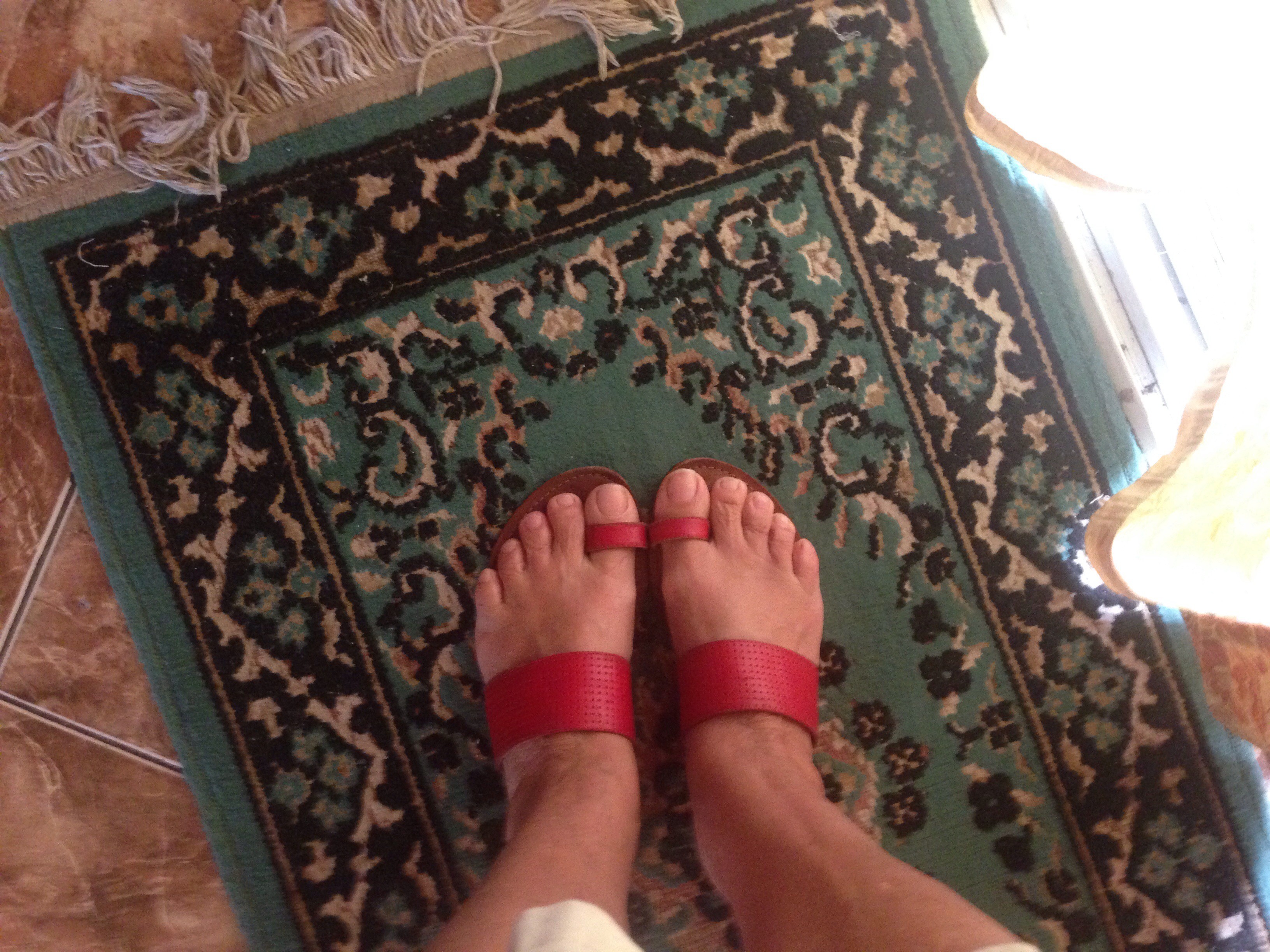
Image 3.
Image 3. my red thongs, S. Harford personal image, 2015.

My two year-old red thongs clearly demonstrate aesthetic-usability: I love the way their leather looks and equally love their comfort. So good to wear, “appealing enough for [me] to buy” (Kurosu & Kashimura, 1995). Yet the conclusions of Lidwell, Holden and Butler (2003) fall short. All three items – the hands and violin, my thongs faithfully retain their aesthetic usability appeal:  their colour and shape, even while they tramp, with me, through brambles and bushes, rocky headlands, and wander, with me, through stony, watery coral reefs at low tide. It’s the whole package – looks and performance – that appeals.

Reference

Curtin, J. (February, 2007). Innovation and creation in the violin-making world: a Q & A with Violonetto. http://josephcurtinstudios.com/article/joseph-curtin-innovation-and-creation-in-the-violin-making-world/
Designboom. (14 April, 2015). United nude + 3D systems present re-inventing shoes during milan design week. [On-line Newsletter.] Retrieved from http://www.designboom.com/design/united-nude-3dsystems-re-inventing-shoes-milan-design-week-04-14-2015/?utm_campaign=monthly&utm_medium=email&utm_source=subscribers
Harford, S. (2015). Image 2 and 3.
Hume, D. (1741-41, 1777). Essays, Moral and Political. Davidhume.org. Retrieved from http://davidhume.org/texts/emp.html
Kurosu, M., & Kashimura, K. (1995). Conference Companion. Design Center, Hitachi Limited.
Lidwell, W., Holden, K., & Butler, J. (2003). Aesthetic-Usability Effect. In universal principals of design. (pp. 18-19). Massachusetts: Rockport.
Man Ray. (1924). Image. J. Paul Getty Museum, Getty Images. Le violon d’Ingres, 1924. Free to use image Retrieved from http://flatrock.org.nz/topics/society_culture/dementia.htm

Man Ray. (1924). Le violon d’Ingres. 1924.J. Paul Getty Museum. Getty Images. (2015). Retrieved from http://www.getty.edu/art/collection/objects/54733/man-ray-le-violon-d%27ingres-ingres%27s-violin-american-1924/

Merivale, A. and Milligan, P. (2015). David Hume. Essays, Moral and Political (1741-42, 1777).
Shaw Wilgis, E. F. Ed.(2014). The Wonder of the Human Hand: Care and Repair of the body’s most marvelous instrument. Baltimore, Maryland, USA: John Hopkins University Press.
3. LP W8 Q2: Aesthetic Usablility

2. LP W8 Q1: Reading Week 9

The Week 9 reading discusses Web pages and harmony, how good and bad online marketers appear on the Web, and the effect of lack of balance between function and form. Evans and Thomas (2004, p. 12) say design balance is “visual distribution of elements in a composition… [and] “physical balance is a functional demand of three-dimensional design” and perhaps interactive, online screen design considers both. This article observes that visuals are considered to be the key website element although text still plays a vital part. A recent example is the profound effect of the Charlie Hedbo cartoons. Spiegelman (cited by Salyer, 6 May, 2015) says while visuals like Charlie Hedbo cartoons “use the same tools, symbolism, irony, metaphor” they create “immediate” impact as they carry a “deceptive directness” and are loaded with “visceral power”.

Image 1. Rickman, 8 January, 2015.


Dillon (July, 1999) says:

images work via a second communicative system,
one fully as expressive as natural language, but
separate and structured independently of it. Others
find visual and verbal meanings more dissimilar than
similar, with the visual lacking a kind of determinacy
or which verbal language seems better suited.

The article says electronic message construction, to considerable extent, relies upon classic design parameters and elements. The medium is complicated as visuals may be “encoded redundantly”, and while concrete concepts in certain “words, sentences and paragraphs” may create visual ideas text occupies a lesser place and abstract text concepts are not easily comprehended.

The article discusses the speed of technological change, saying digital screen design competency is essential, and provides useful information about avenues to “focus, rivet attention, integrate old and new information and ways to navigate” these online communication products. Donald Norman (2002) says: “Aesthetics matter. Attractive things work better”, and the reading uses thirteen headings to describe how to properly understand and implement visual screen design.

The reading obliquely reflects Norman, who says “the field of usability takes root in the cognitive sciences”. The article identifies new and emerging components including personal digital assistants, wireless markup language, accessibility guidelines. The Web’s “long term goals” – such as universal “website usability… semantics… legal, commercial and social issues” are mentioned. The article is impartial and provides no comment about the ethics involved, the validity of the medium, or its possible long-term effects, positive, or negative, on humanity.

Reference

Dillon, G. L. (July, 1999). Art and the semiotics of images: Three questions about visual meaning. University of Washington. Retrieved from http://faculty.washington.edu/dillon/rhethtml/signifiers/sigsave.html
Evans, P. and Thomas, M. A. (2004). Exploring the elements of design. Clifton Park, NY. USA: Delmar Learning.
Norman, D. (2002). Emotion and design: Attractive things work better. Interactions Magazine. [On-line Magazine]. Ix (4),36-42. Retrieved from jnd.org.
Rickman, D. (8 January, 2015). Cartoon. These cartoons are poignant tributes to the victims of the Charlie Hedbo attack. i100 The Independent. [On-line Magazine]. Retrieved from Salyer, K. (6 May 2015). Art Spiegelman: Je Suis CharlieBut I’m Not Pamela Geller. Time Magazine. [On-line magazine]
Salyer, K. (6 May, 2015).Art Spiegelman: Je Suis Charlie – But I’m not Pamela Geller. Time Magazine.[On-line Magazine]
Retrieved from http://time.com/3849465/art-spiegelman-je-suis-charlie-but-im-not-pamela-geller/
Week 9 Reading. (S1, 2015). ECU CCA1108. Retrieved from Learning Portfolio Assessment S1, 2015.
2. LP W8 Q1: Reading Week 9