Image 1. OECD website, 2015. Screenshot. S. Harford, 2015
Image 1,a current OECD website (2015), is “presumed” credible because in using this source I have found it “trustworthy…truthful”. This site may also possibly be “fair and unbiased”, and thus “credible” (Fogg, 2003).
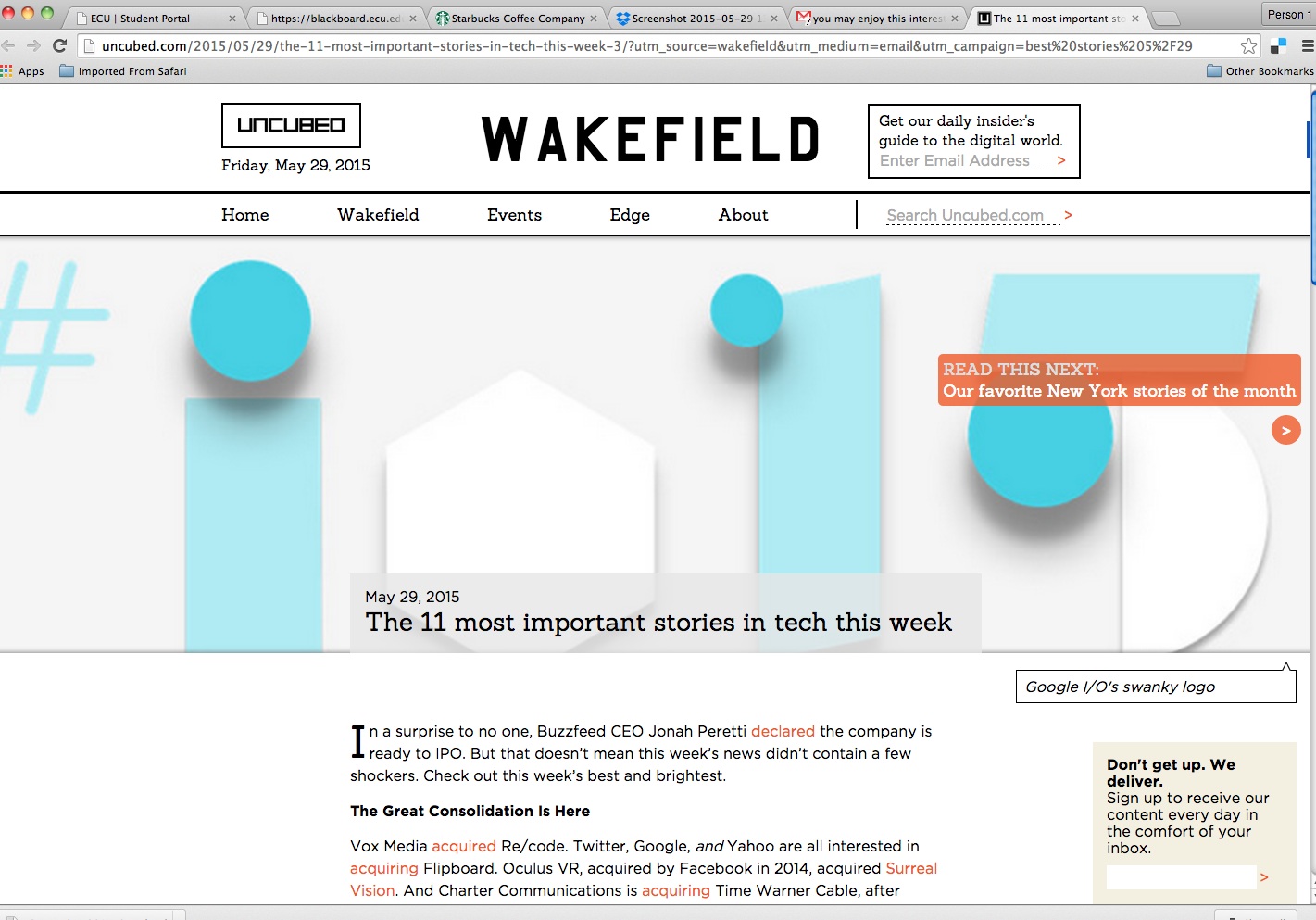
Image 2. WAKEFIELD website, 2015. Screenshot. S. Harford, 2015
Image 2, the current Wakefield website (2015) is categorised “reputed”, and credible for two reasons. First, this site was recommended by a close friend. Secondly, this useful site has “expertly” performed exactly as the friend described (Fogg, 2003).
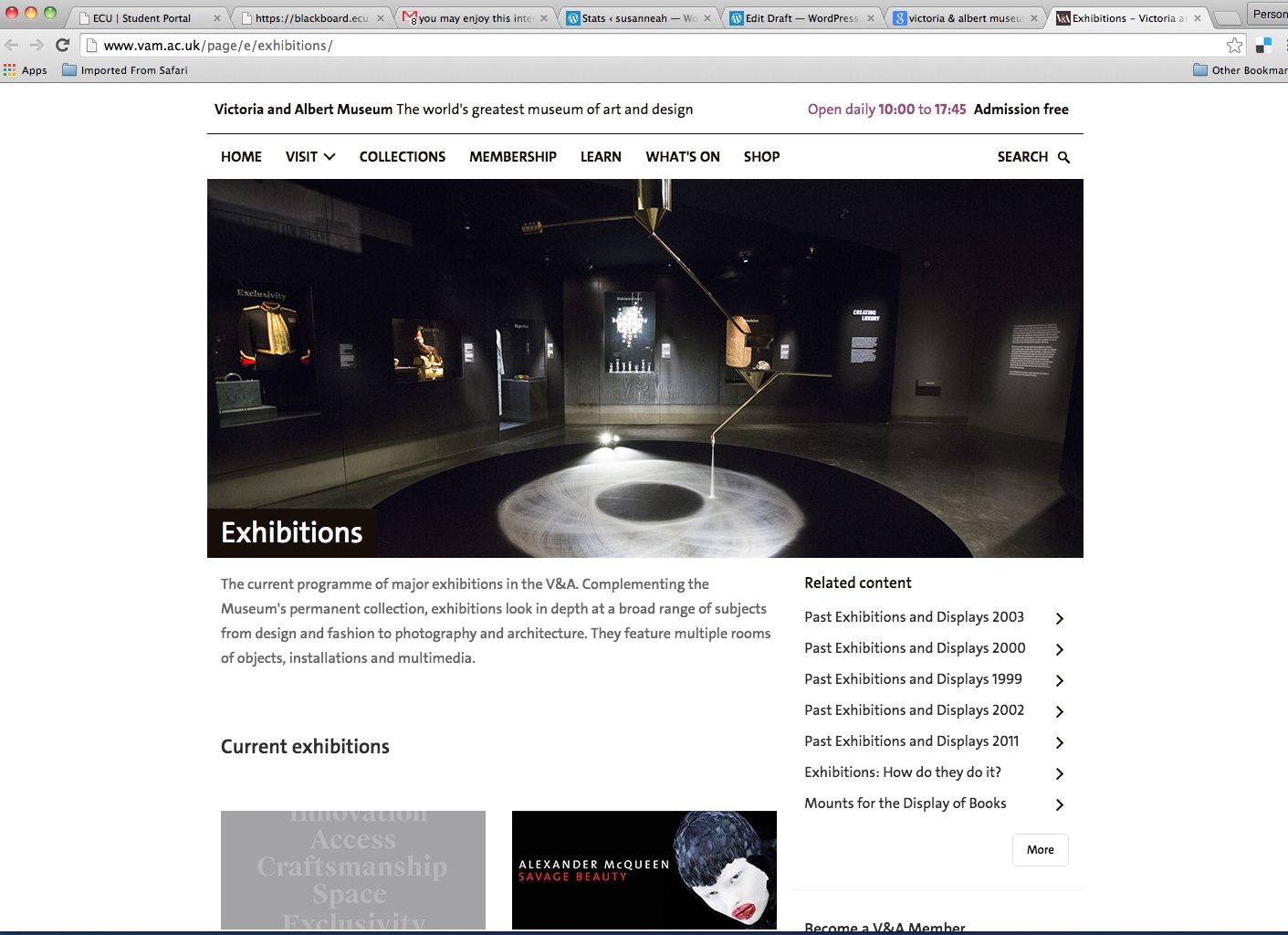
Image 3. website V&A. Screenshot. S. Harford, 2015
Image 3, one current V & A Museum website (2015) of many categorised credible, on the “surface”. For many reasons: first, and key reason: the site oftens changes, is always superbly designed, extremely decorative and interesting. Second, the site “attempts to persuade”, although softly. Third, the site has “convinced” me, previously, that visiting this site will entertain, amuse and inform. Fourth, the site is “competent… professional”. Fifth, this site often has the power to relax, or to “influence” me, so is on my list of most-visited (Fogg, 2003).
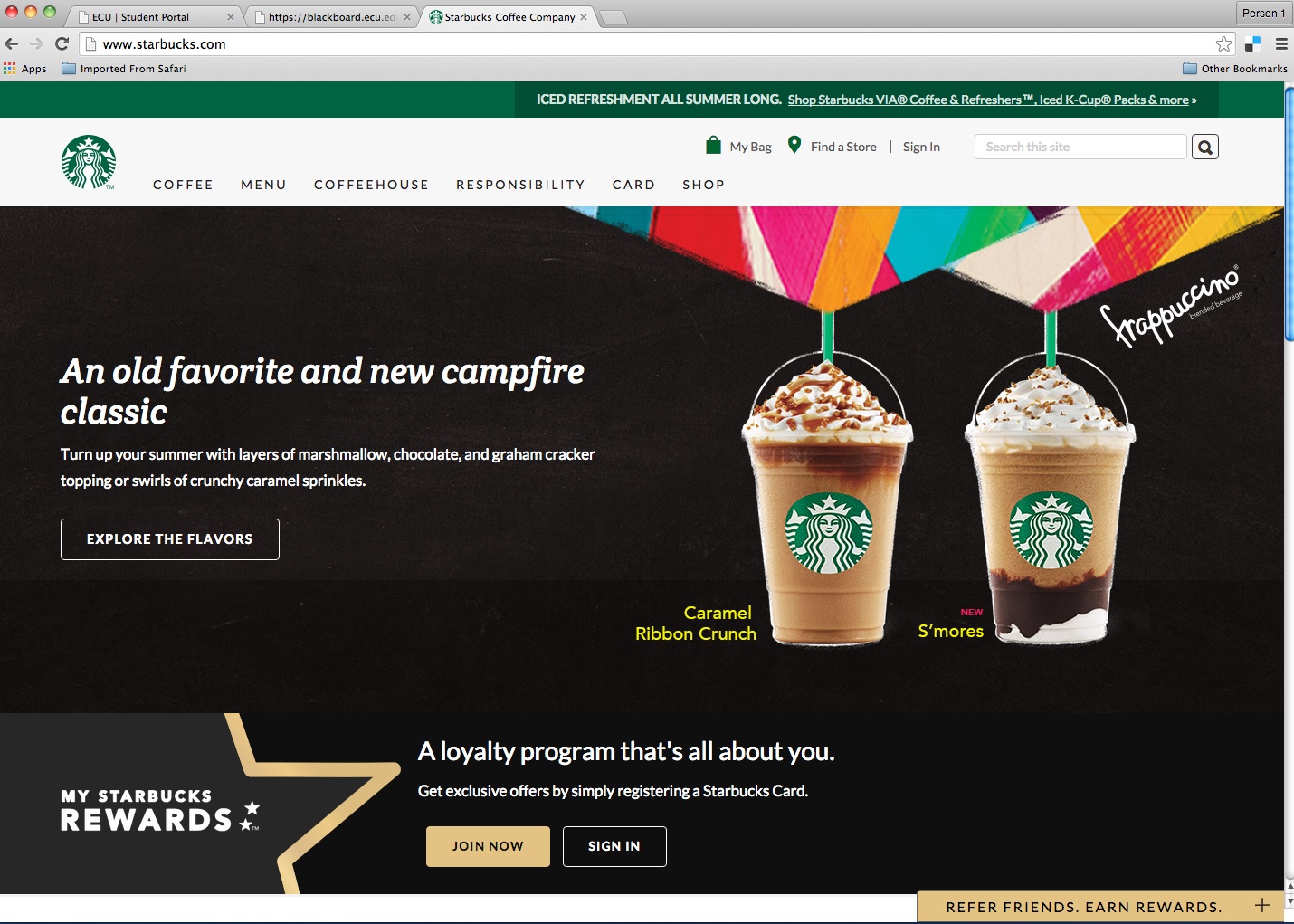
Image 4. Davies, V & A logo. 2015.Image 5. Starbucks website, 2015. Screenshot. S. Harford, 2015.
Image 4, one current Starbucks website (2015) categorised “earned”. My, and others’ experiences in using this website positively changed my perceptions. About Starbucks the institution, how I felt about using Starbucks and whether I support Starbucks’ methods of operation. As Fogg (2003) says, this is a successful site which changed my thoughts about Starbucks, and about the Web. It has:
contradicted my hunches about credibility
generated discussions and arguments about credibility
lead me to form new hypotheses about credibility
Image 6. marino, 2015. starbucks logo deviant art, 2015.
motivated me to more fully investigate credibility
changed the way I analyse Web sites
changed the way I would design Web sites
Reference
Davies, H. (2011). V & A logo. Hannah Davies: Why Not Associates. .Retrieved from https://hannahdavies27.wordpress.com/2011/04/04/why-not-assosiates/
Fogg, B. (2003). Credibility and the World Wide Web. Persuasive Technology: Using computers to change what we think and do. Amsterdam: Kaufmann Publishers.
Wikipedia calls itself “a special kind of website” (2015). When researching many subjects today it is common to find this special website occupying top positions in many Google results. Yet, as as Ducet Rand (2010) says:
the encyclopedia is openly edited by registered users. Wikipedia editors can edit their own and others entries, and some abuse of this editorial power has been unveiled. Content editors have also been criticized for publishing less than accurate content.
This is possibly why, for some years now, ECU has banned the use of Wikipedia, which is also an application. Haque and Ahamed (November, 2006) say:
The usability and expansion of pervasive computing applications depends greatly on the security and reliability provided by the applications… as pervasive devices become incorporated in our day-to-day lives, security will increasingly become a common concern for all users – though for most it will be an afterthought – like many other computing functions.
Haque and Ahamed (November, 2006) continue with an analysis of security:
CIA (Confidentiality, Integrity, Availability) is the term commonly used to describe the required characteristics of security. Confidentiality ensures information is not exposed to any unauthorized user. Integrity indicates information has not been altered or falsified by an unauthorized user.
Wikipedia security has been of concern to many for some time. Kittur, Chi, Pendleton, Suh & Mytkowicz (2006), say the situation is extremely complex. They explain, initially, (until 2004), individuals they describe as “elite users” carried out the majority of the work constructing Wikipedia. At that point a noticeable change occurred as “common users” took over and the “influence of the elite” fell away. Then also, a process of removing more words than contributing commenced, for the first time.
It seems Wikipedia problems may have developed as the “always readily available” Internet developed (Haque & Ahamed, 2006). Wikipedia supplied Haque and Ahamed a vital reference in 2006, when “Wikipedia defines security as a “… platform, designed so that agents (users or programs) can only perform actions that have been allowed. This involves specifying and implementing a security policy””. However, as Haque and Ahamed go on to explain:
security in pervasive computing has been termed pervasive security. Though pervasive security includes all the characteristics and requirements of computer security, it introduces some novel vulnerabilities and security rifts due to a few unique characteristics of pervasive computing.
Haque and Ahamed team the Wikipedia definition with Microsoft’s: “The protection of information assets through the use of technology, processes, and training” – on a vast system with unique, ubiquitous “vulnerabilities”. where Wikipedia itself may be a ubiquitous “mobile or embedded in the environment… security rift” (Haque & Ahamed, 2006).
Haque and Ahamed (2006) discusses the “transparent interaction of these computational devices with the users”, but, given the Wikipedia editorial abuse, Now Wikipedia seems the opposite of the Haque and Ahamed (2006) view in that it now is capable of delivering a unique, ubiquitous type of “virtual reality” information service.
Reference
Doucet Rand. (2010). Mediating at the student-Wikipedia intersection. .Journal of Library Administration. 50 (7-8) 2010. 923-932 doi 10.1080/01930826.2010.488994
Little effort, mental or physical, is needed to use the “virgin polypropylene” Pipee stacking chair (image 1). As it is extraordinarily light (Lifetime Industries website, 2015) this chair fits the “kinematic… performance load” description (Lidwell, Holden and Butler 2003) . The chair design is so familiar, so usable, that the makers can rely entirely on retained, long-term memories. The chair complies with “cognitive… performance load” – and the Lidwell, Holden and Butler “usability” criteria. As this is one of a set of four identical chairs it somehow fits these writers’ “consistency” definition. While touted as durable, ‘recycle’ appears nowhere on chairs or website. Aesthetics appears an alien concept, and Stahel’s (1982) “cradle to cradle” care and thought is probably unheard of .
Image 1. Pipee chair. S. Harford personal image, 2015.Image 2. The Green Dot. S. Harford personal image, 2015.
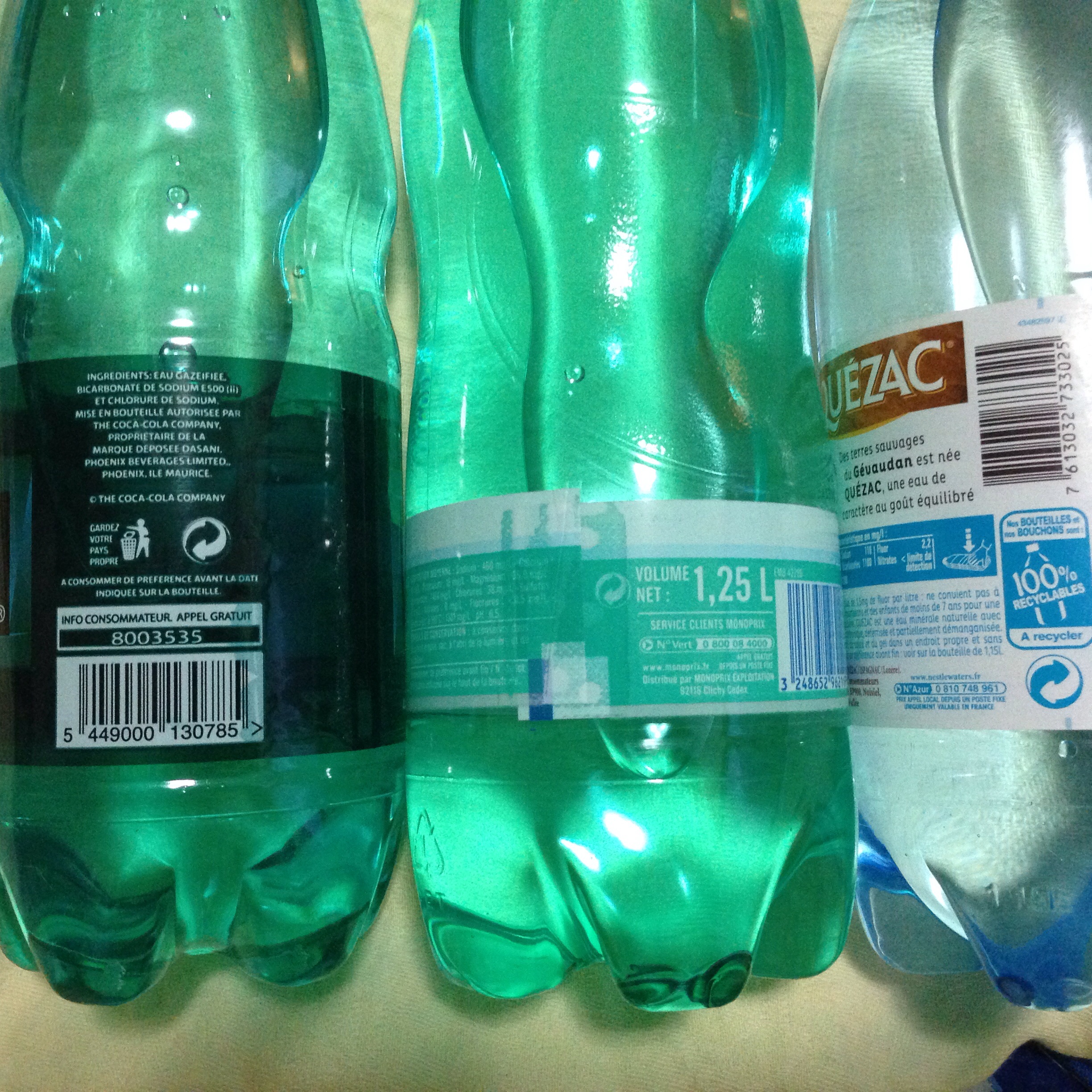
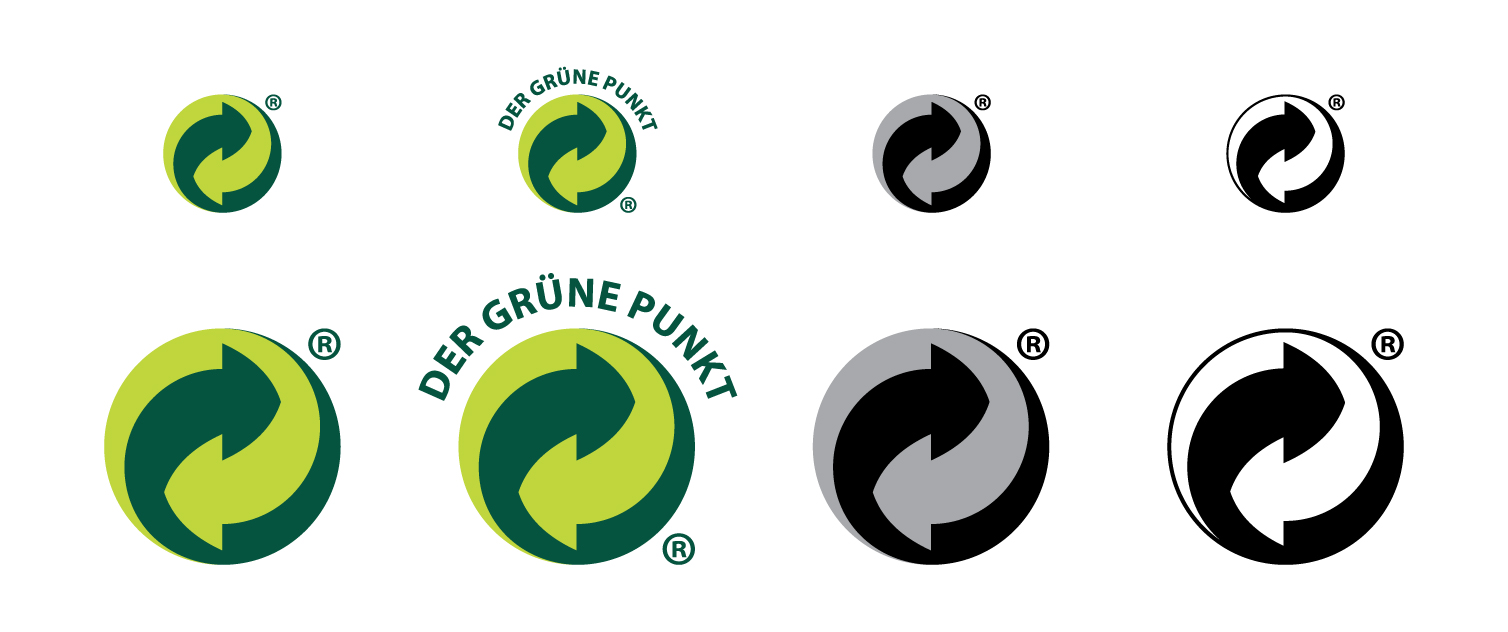
An enigmatic Green Dot Symbol (2015) is in evidence (images 2 & 3) on the backs of three slightly-different-but-same and-performing-the-same plastic bottles of water. Symbols such as the Green Dot function like a logo – they carry a certain message. These messages are always “perceived” – correctly or incorrectly – in a certain way. So this small symbol lightens, (for better or worse), “mental … cognitive… performance load” (Lidwell, Holden & Butler, 2003).
Image 3. The Green Dot Symbol, 2015.
Image 4. Mauritius vongole. S. Harford personal image, 2015.
Image 4 shows is the former house of a most delicious creature. Always recognisable, all the same shape, colour and texture. The seeker’s performance, or cognitive load, is lessened, as, once seen and enjoyed they are forever recognisable. Regarding performance or kinematic load, again little effort is required. Although these creatures may vary slightly in shape, all fit beautifully into the palm of a human hand and can easily be gathered into a bucket, and quickly pried open to eat, raw. Kinematic -performance load can be further reduced if steamed. Then all open obligingly – for ready access to their tasty meat.
When considering whether psychology is necessary in the human world of design it is useful to read the APA, or American Psychological Association (2015) definition of psychology: the study of the mind and behavior… [which] embraces
all aspects of the human experience — from the functions of the
brain to the actions of nations, from child development to care for
the aged. In every conceivable setting from scientific research
centers to mental healthcare services,
“the understanding of behavior”
is the enterprise of psychologists.
Budd says all people already have automatic “psychological shortcuts… to basically avoid thinking” (cited by Richardson Taylor, n.d.). Thus it seems clear psychology has a role in anything – at all – designed for human use. Psychology in design is entrenched, as shown by the APA website (2015), which now has an entire section on Design Psychologists.
Lidwell, Holden and Butler (2003) also say “every major design concept” is based on universal principles of design which “influence [people’s] perception” and “increase [design] appeal”. Davis (cited by Richardson Taylor, n.d.) says:
psychology has a huge impact. Unlike artists, designers
have to make something for effect; an artist can start a
project without a brief, but a designer has to have a
purpose.
The successful designer considers, writer-psychologist Don Norman (2013) says: “the needs of users and the principles of cognitive psychology”. Norman supplies some simple rules:
make things visible, exploit natural relationships that couple
function and control, and make intelligent use of constraints.
The goal: guide the user effortlessly to the right action…
at the right time.
This advice is reinforced by James Digby-Jones, who says: “awareness of psychology can inform good design in very tangible ways” (cited by Richardson Taylor, n.d.).
Whether psychology in design is necessary is irrelevant at this advance stage of psychological control of design. It may not be – in this age of “no commitments… no one idea is inherently better than any other” (Fuller, cited by Crouch, 1991, p. 169).. Furthermore, Lewington says (1 April, 2014), when discussing web design that psychologists have identified trust as a key area in design success. Trust is hard to build and easily eroded. Today, human trust – in psychology’s part in human design – has probably disappeared.
Reference
Crouch, C. (1991). Modernism in art, design & architecture. London: Palgrave Macmillan.
Lidwell, W., Holden, K., & Butler, J. (2003). Aesthetic-Usability Effect. Universal principles of design. Massachusetts: Rockport. Retrieved from Learning Portfolio, S1, 2015.
Norman, D. (2013). The Design of Everyday Things. Revised and expanded edition. New York, NY, USA: Basic Books.
Richardson Taylor, A. (n.d.) The psychology of design explained. Digital Arts Online. [On-line Magazine]. http://www.digitalartsonline.co.uk/features/graphic-design/psychology-of-design-explained/
Lidwell, Holden and Butler (2003) state consistency can be achieved amongst various commodities when the same component, or components, are used in each of the products. Then a component looks the same, or similar, and operates similarly. This strategy is an “elaborate and systematic plan of action” (Princeton University, cited by Butler, 2012) with potential to make commodities easier to identify and use. Then one component and the associated knowledge may be consistently applied to all types of objects, in diverse circumstances. Lidwell, Holden and Butleridentify four types and provide examples: aesthetic, functional, external and internal consistency.
A key to achieving consistency is the aesthetics of an object or image (Crouch, 1999). This is a subjective idea, a vital “intellectual thread” about how objects appear to the viewer or user. Aesthetic consistency is potentially in conflict with “sudden chang[es] in technology” ((Butler, 2012) like “the first successful synthesis of three distinct types of devices”. This might lead designers to load “content into impenetrable shells”. Crouch (1999) says, when designing or creating an item to
understand how… [an audience’s] culture works in order to
communicate successfully to… [that] audience. Unless those
engaged in acts of communication, in this case visual, understand
the expectations of their audience, unless they have carefully
considered who their audience might be, unless they are aware that
they have… created a complex dialogue, then the objects they create
will have resonance for themselves but not necessarily for others.
Conversely, the function of an object or image Crouch (1999) says is based on an objective idea. It is the “practical aspect of an object or building”. These “can be tested [in a practical manner] against a reality”. Crouch also explains that the “designer works primarily in the economic base [of a culture], designing or making objects which can be commodified”. A functionally consistent, commoditiy is emergency housing like that recently designed in New York: “prefabricated walls… to customize or expand dwellings… not site-specific.. easy to move” (Denhoed, May 14, 2015).
Internal consistency, which develops trust (Butler, 2012), is a balanced combination of an object’s aesthetics (or form) and its function, and allows the user to focus on the task. This commonality is then, diversely, extended outwards to other, similar and diverse, systems of external consistency. .Lidwell, Holden and Butler (2003) recommend the use of established standards where available. Usability expert Jakob Neilsen recommends “recognition over recall” for game theory (cited by Minor, 31 January, 2012), and consistency or “modularity” shows in the extraordinary, only 3-component Bosse interior fitments and furniture range (Bosse, Acrchitonic, 2015).
These aims all comply with the modernist aim of simultaneous “uniformity and collaboration… [with] dialogue between the individual and the universal” (Crouch, 1999) as one type of component, and/or commodity, design (similar in aesthetics and function) is applied to a number of items in a system
Lidwell, W., Holden, K., & Butler, J. (2003). Aesthetic-Usability Effect. Universal principles of design. Massachusetts: Rockport. Retrieved from Learning Portfolio Module 2, S1, 2015.
In 1973, the University of Southern California Signal and Image Processing Uni scanned a cropped 512 x 512 pixel image from a current Playboy magazine (Matthews, 11 May, 2015). This (image 1) relied on “aesthetic consistency to establish [its] unique identit[y] that can be recognized” (Lidwell, Holden and Butler, 20013). Matthews (11 May, 2015) says with “a resolution of 100 lines per inch, the resulting image was the perfectly cropped head and shoulders image 512 x 512 in size”. This image was/is consistent and “simplif[ies] usability and ease of learning” (Lidwell, Holden and Butler, 20013). The image has “variety” and “composition” (Evans & Thomas, 2004, p. 5), its details, “colour, focus, textures, reflections and flat regions… [which make] it amenable for testing a wide range of image processing algorithms” (Matthews, 11 May, 2015). In a huge, global marketplace this image, now one of the most viewed in the world, is aesthetically and functionally consistent.
Image 1. The original Lenna test image from the University of Southern California Signal and Image Processing Institute. SIPI image Database – 20150507. (Matthews, 11 May, 2015).
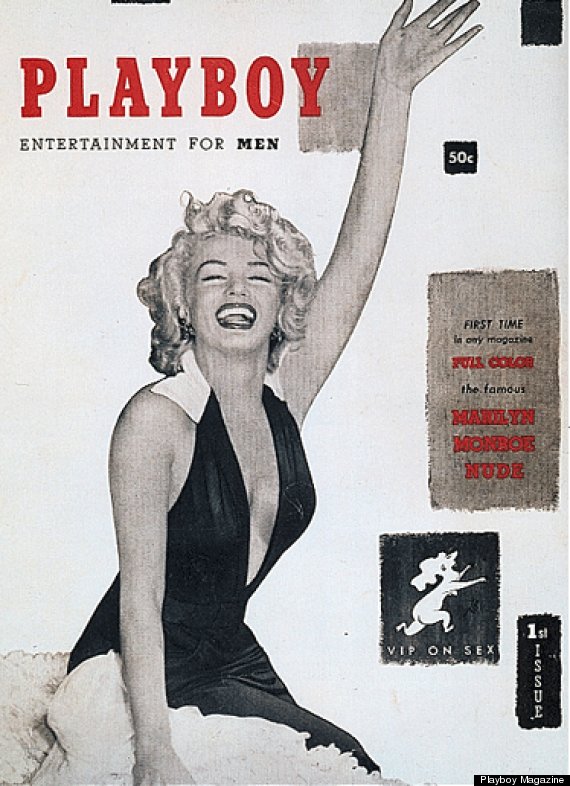
Today many consider this image sexist and offensive. Yet, in its aesthetically consistent original form this image delighted and amused many women. At that time women refuted the novel and functionally consistent Playboy magazine’s sexist underpinnings. What they did accept was that, in an era when relaxed censorship allowed women’s beauty to be celebrated Playboy (Image 2.)
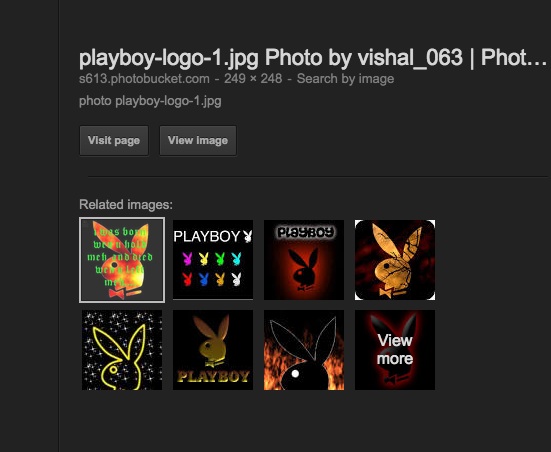
Image 2. Playboy Magazine, December, 1953. Huffington Post, May 23, 2015.Image 3. Playboy logo, Google search, Screen shot, 2015.Image 4. Playboy T-shirts, Brelhan, 12 February, 2009, Pitchfork.
also showcased her rights, her independence, her sexual liberty, and her brains. (personal experience and conversations, 1970s-2015). Playboy’s Bunny “logo” (Image 3, Designboom, 2000), succeeded in signaling fun and personal liberty – aesthetic consistency (Lidwell, Holden & Butler, 2013). Now more than 60 years continuously published, Playboy’s famous logo (Image 4, Brelhan, 12 February, 2009), and magazine, are still successfully functioning consistently (Playboy Enterprises, 2015). From Image 5, through to Image 1, and today, Playboy continues in the: “elaboration of functionally complete objects for the sake of visual pleasure”Trilling (2001). By this process Playboy is still aesthetically consistent in “raising eyebrows, changing history and innovating style” (Playboy Enterprises, 2015).
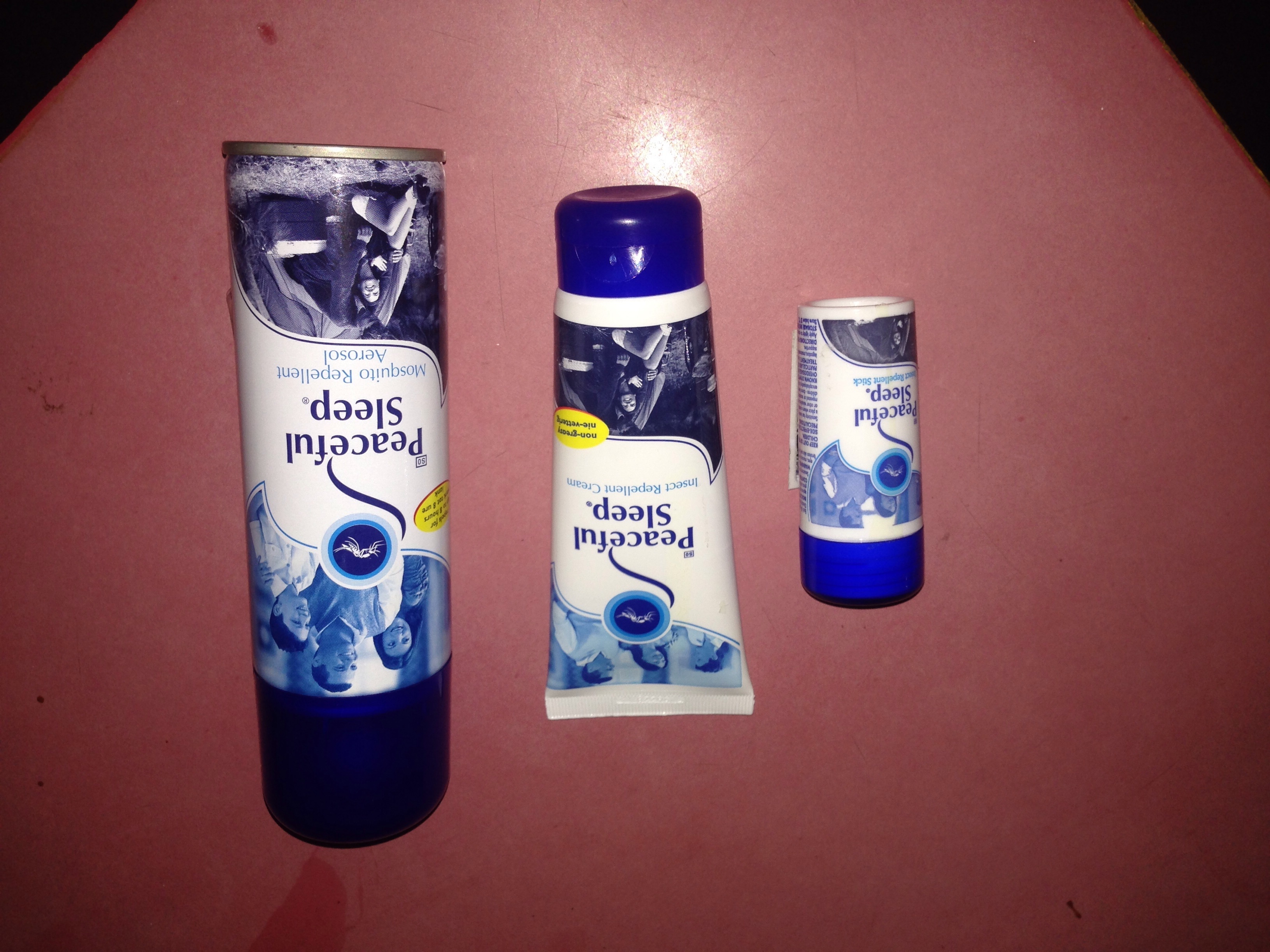
Now, another aesthetically and functionally consistent logo and product. Peaceful Sleep’s (image 4) consistent approach ensures it is an un-forgetable product. Consistent shapes, sizes, and mechanisms (Lidwell, Holden & Butler, 2003) are already long familiar: the roll-on deodorant and shaving stick; squeeze tube sunblock and antiseptic creams, and spray cans of many previous insect repellents. Internally, the consistent creams and sprays look and feel attractive and reliably repel biting insects. – in any environment (Fodor’s Travel, 2015).
Image 4. Peaceful sleep. Personal image, 2015.
Great packaging restful blue and clean white colour contributes to the message. They demonstrate Evans’ and Thomas’ (2004, p. 26): “colour heightens the emotional and psychological dimensions of any visual image”.
Google Search. (2015). Screenshot of Playboy logos. Retrieved from s613photobucket.com
Harford, S. (2015). Image: Peaceful Sleep. Personal Image, 2015.
Huffington Post. (23 August, 2013).Image from: What the first issue of Playboy looked like.[On-line Newspaper]. Retrieved from http://www.huffingtonpost.com/2013/08/23/playboy-first-issue_n_3803465.html
Lidwell, W., Holden, K., & Butler, J. (2003). Aesthetic-Usability Effect. Universal principals of design. (pp. 18-19). Massachusetts: Rockport.










 susanneah