10. LP W12 Q1

While on the Web, Wikipedia memes, (Images 1& 2) and discussion of same (Wikija, 2015) rightly amuse many, the many scholarly articles about  “a lack of credibility” on the Web, (World Wide Web),
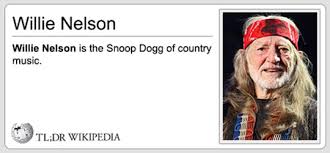
Image 1. Lolz. Wikipedia mem, 2015.


Image 2. Quickmeme,Keanu Reeves image, 2015.
Image 2. Quickmeme, Keanu Reeves image, 2015.

and how this situation might be combated (Ribiero, Carmo, & de Caravalho, 2013) are an entirely different matter. The Oxford English Dictionary defines credibility as “the quality of being trusted and believed in; the quality of being convincing or believable”.

As “flaws and negative external influences” in key information appear on the Web, this quality, previously one of Western society’s most valued and defining characteristics, is  degraded,  The Web is the major mass media medium of this era so this problem affects anyone who wishes to learn or to be informed. This is because the Web is, as Kevin Kelly, founder of Wired magazine, said in 2005:

the largest, most complex, most surprising event on the planet.

Weaving nerves out of glass and radio waves, our species began

wiring up all regions, all processes, all facts and notions into a

grand network. From this embroyonic net was born a

collabororative interface for our civilization, a sensing, cognitive

device with power that exceeded any previous invention.

As Western society’s main communications channel the Web is tremendously important. Yet the stated rationale of Fogg’s (2003) paper is primarily to “persuade”, and the article by Ribiero, Carmo and de Caravalho (2013) appears, fundamentally, only to make the Web more efficient as a marketing machine. A Web cluttered with material biased solely towards  persuasion or marketing is counter-productive for any student – and unlikely to regain credibility.

Reference.

Fogg, J. (2003). Credibility and the World Wide Web. Persuasive Technolgy: Using computers to change what we think and do. Amsterdam: Morgan Kaufman Publishers. Retrieved from Learning Portfolio, S1, 2015.

Kelly, K. (2005). We are the Web. Wired. Issue 13.8. [On-line Magazine]. Retrieved from http://archive.wired.com/wired/archive/13.08/tech.html

Lolzbook. (2015). Meme using Willy Nelson image. Retrieved from http://lolzbook.com/page/1749/

Oxford Dictionaries. (2015). Credibility. Retrieved from http://www.oxforddictionaries.com/definition/english/credibility

Quickmeme. (2015). Meme using Keanu Reeves image. Retrieved from http://www.quickmeme.com/meme/35ficb

Ribiero, A. M., Carmo, C. H. S., & de Caravalho, L. N. G. (2013). Environmental disclosure: does regulation solve the lack of comparability and objectivity? Journal of accounting and organisations. Retrieved from  http://dx.doi.org/10.11606%2Frco.v7i17.56667

Wikja. (2015). Conspiracy Keanu: The Funniest Wiki. Retrieved from http://thefunnyist.wikia.com/wiki/Conspiracy_Keanu

Aside

9. LP W11 A Three design examples

Little effort, mental or physical, is needed to use the  “virgin polypropylene” Pipee stacking chair (image 1). As it is extraordinarily light (Lifetime Industries website, 2015)  this chair fits the “kinematic… performance load” description (Lidwell, Holden and Butler 2003) . The chair design  is so familiar, so usable, that the makers can rely entirely on retained, long-term memories. The chair complies with “cognitive… performance load” – and the Lidwell, Holden and Butler “usability” criteria. As this is one of a set of four identical chairs it somehow fits these writers’ “consistency” definition. While touted as durable, ‘recycle’ appears nowhere on chairs or website. Aesthetics appears an alien concept, and Stahel’s (1982) “cradle to cradle” care and thought is probably unheard of .

Image 1. Pipee chair. S. Harford personal image, 2015.
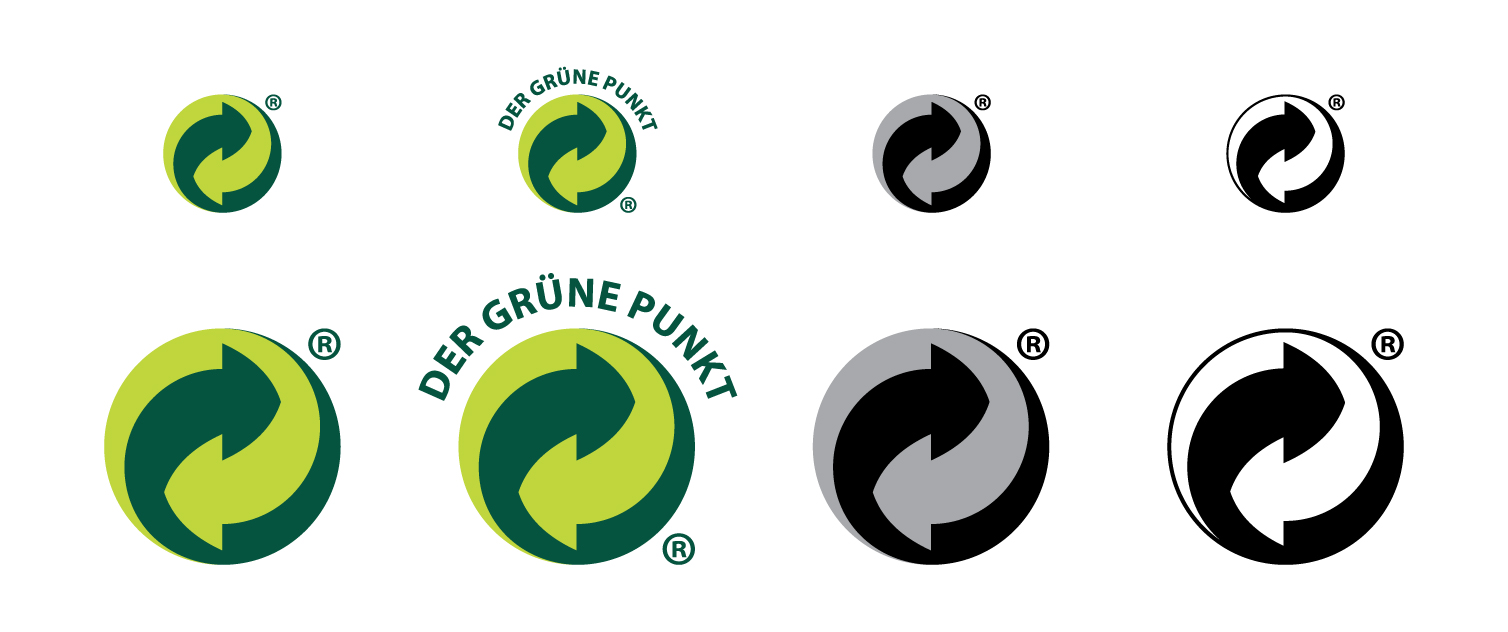
Image 2. The Green Dot. S. Harford personal image, 2015.


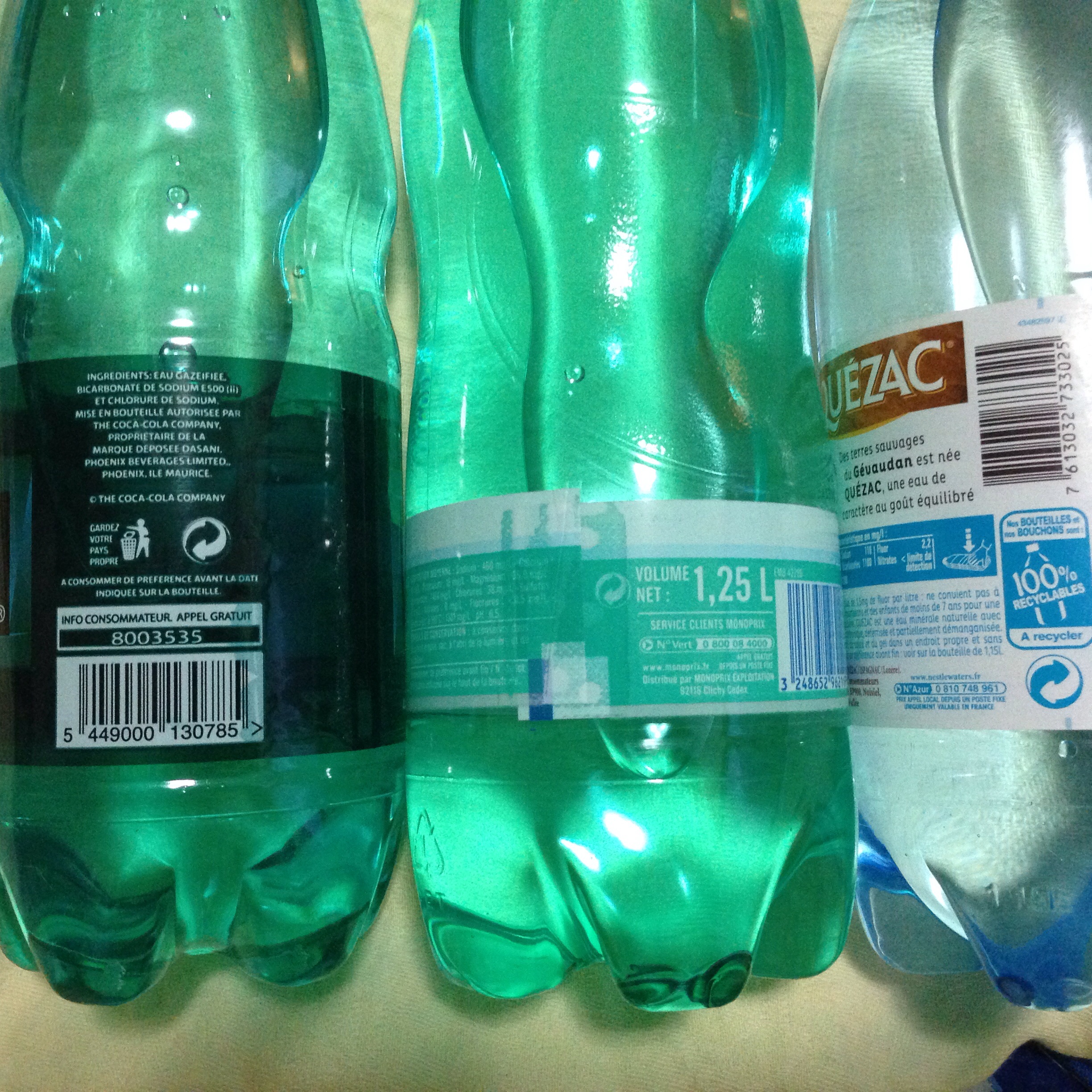
An enigmatic Green Dot Symbol (2015)  is in evidence (images 2 & 3) on the backs of three slightly-different-but-same and-performing-the-same plastic bottles of water. Symbols such as the Green Dot function like a logo – they carry a certain message. These messages are always “perceived” – correctly or incorrectly – in a certain way. So  this small symbol lightens, (for better or worse),  “mental … cognitive…  performance load”  (Lidwell, Holden & Butler, 2003).

Image 3. The Green Dot Symbol, 2015.


Image 3. Mauritius vongole. S. Harford personal image, 2015.
Image 4. Mauritius vongole. S. Harford personal image, 2015.

Image 4 shows is the former house of a most delicious creature. Always recognisable, all the same shape, colour and texture. The seeker’s performance, or cognitive load, is lessened, as, once seen and enjoyed they are forever recognisable. Regarding performance or kinematic load, again little effort is required.  Although these creatures may vary slightly in shape, all fit beautifully into the palm of a human hand and can easily be gathered into a bucket, and quickly pried open to eat, raw. Kinematic -performance load can be further reduced if steamed. Then all open obligingly – for ready access to their tasty  meat.

Reference 

Lifetime Industries. (2015). Pipee Stacking Chair. Website. Retrieved from http://www.lifetime.net.au/detail/pid/18/id/11/pipee-stacking-chairs

Harford, S. (2015). Personal images.

Stahel, W. R. (1982). The 30th. anniversary of Walter R. Stahel’s Prize-winning paper “The Product-Life-Factor”. Retrieved from http://www.product-life.org/en/the-30th-anniversary-of-walter-r-stahel-prize-winning-paper-the-product-life-factor

The Green Dot Symbol. (n.d.). Symbols.com. Retrieved May 25, 2015, from http://www.symbols.com/symbol/2025.

Aside

6. LP W11 Q1: Performance Load

The article (Lidwell, Holden & Butler, 2003) is part of an established discourse of how

complicated tasks are more difficult to carry out successfully than are less complicated

tasks. However, Hall (1996, p. 292) says:

a discourse can be produced by many individuals in

different institutional settings (like families, prisons, hospitals

and asylums). Its integrity or `coherence´ does not depend

on whether or not it issues from one place or from a single

speaker or `subject´. Nevertheless, every discourse constructs

positions from which alone it makes sense.

While Lidwell, Holden and Butler (2003) explain how to “reduce cognitive load by… reduc[ing

and] “chunking information… automating… [and providing aids to assist] memory tasks”, and

so describe  “performance load” there is no consideration for the artistic view of work

(personal experience and conversations, 1957-2015). The previously-established data, for

example,  Miller (1956) “compare[s] results obtained in quite different

experimental situations”, and demonstrates the two types of performance load, cognitive

and kinematic,  discusses a subject that is also of deep enrichment to artisans, artists and

others (personal experience and conversations, 1957-2015). So Lidwell, Holden and Butler (2003) may

have overlooked those defined by the Government of Canada (2015) as:

primarily engaged in creating visual art and craft works… artistic

and cultural objects… made in small quantities, of any material.

The typical labour force is an artist, artisan or craftsperson,

sometimes assisted by other artists, artisans, craftspersons or

apprentices… independent photographers and journalists included.

In addition, while Brockman (5 July, 2015) quotes Coveney, that: “people have to go around

measuring… [work] … there’s a deep relationship between the two” this is not the only

viewpoint. Oxford Dictionaries (2015) defines the noun “”cognitive as “the mental action or process of acquiring knowledge

and understanding through thought, experience, and the senses”, Artistic individuals may want to immerse themselves in deep thought about their

occupation (personal experience and conversations, 1957-2015).


This situation also applies to the second performance factor, “kinematic” (Lidwell, Holden & Butler, 2003). A “plural

noun” defined by Oxford Dictionaries (2015) as “the branch of mechanics concerned with

the motion of objects without reference to the forces which cause the motion”.


Lidwell, Holden & Butler, 2003  provide techniques for kinematic load reduction. This they say

lessens “steps… [of] overall motion… [and automates] tasks”. Artisans and others may enjoy

and gain benefit from the many tasks their industry involves. They may reject the

performance load concept of work (personal experience and conversations, 1957-2015)

as the performance load reduction concept is not a primary concern for “those who

understand that their very nature is that of an artist” (McManus, 2014).

Reference

Brockman, (7 May, 2015). Popper versus Bacon. A conversation with Peter Coveney Edge. [On-line Magazine]. Retrieved from http://edge.org/
Government of Canada. (2015). Independent Visual Artists and Artisans Definition.Canadian Industry Statistics. Retrieved from https://strategis.ic.gc.ca/app/scr/sbms/sbb/cis/definition.html?code=711511&lang=eng
Hall, S. (1996). The West and the Rest. Formations of Modernity. Modernity: An introduction to modern societies. Hoboken, New Jersey, USA: John Wiley and Sons.
Lidwell, W., Holden, K., & Butler, J. (2003). Aesthetic-Usability Effect. Universal principles of design. Massachusetts: Rockport. Retrieved from Learning Portfolio Module 2, S1, 2015.
McManus, R. (2014). The Artisan Soul: Crafting your life into a work of art. New York, NY, USA: Harper One.
Miller, G. A. (Mar 1956). The magical number seven, plus or minus two: some limits on our capacity for processing information. Psychological Review. 63(2) 81-97. Retrieved from http://dx.doi.org/10.1037/h0043158
Oxford Dictionaries. (2015). Cognitive. Retrieved from http://www.oxforddictionaries.com/definition/english/cognition
Oxford Dictionaries. (2015). Kinematic. Retrieved from http://www.oxforddictionaries.com/definition/english/kinematics
6. LP W11 Q1: Performance Load

2. LP W8 Q1: Reading Week 9

The Week 9 reading discusses Web pages and harmony, how good and bad online marketers appear on the Web, and the effect of lack of balance between function and form. Evans and Thomas (2004, p. 12) say design balance is “visual distribution of elements in a composition… [and] “physical balance is a functional demand of three-dimensional design” and perhaps interactive, online screen design considers both. This article observes that visuals are considered to be the key website element although text still plays a vital part. A recent example is the profound effect of the Charlie Hedbo cartoons. Spiegelman (cited by Salyer, 6 May, 2015) says while visuals like Charlie Hedbo cartoons “use the same tools, symbolism, irony, metaphor” they create “immediate” impact as they carry a “deceptive directness” and are loaded with “visceral power”.

Image 1. Rickman, 8 January, 2015.


Dillon (July, 1999) says:

images work via a second communicative system,
one fully as expressive as natural language, but
separate and structured independently of it. Others
find visual and verbal meanings more dissimilar than
similar, with the visual lacking a kind of determinacy
or which verbal language seems better suited.

The article says electronic message construction, to considerable extent, relies upon classic design parameters and elements. The medium is complicated as visuals may be “encoded redundantly”, and while concrete concepts in certain “words, sentences and paragraphs” may create visual ideas text occupies a lesser place and abstract text concepts are not easily comprehended.

The article discusses the speed of technological change, saying digital screen design competency is essential, and provides useful information about avenues to “focus, rivet attention, integrate old and new information and ways to navigate” these online communication products. Donald Norman (2002) says: “Aesthetics matter. Attractive things work better”, and the reading uses thirteen headings to describe how to properly understand and implement visual screen design.

The reading obliquely reflects Norman, who says “the field of usability takes root in the cognitive sciences”. The article identifies new and emerging components including personal digital assistants, wireless markup language, accessibility guidelines. The Web’s “long term goals” – such as universal “website usability… semantics… legal, commercial and social issues” are mentioned. The article is impartial and provides no comment about the ethics involved, the validity of the medium, or its possible long-term effects, positive, or negative, on humanity.

Reference

Dillon, G. L. (July, 1999). Art and the semiotics of images: Three questions about visual meaning. University of Washington. Retrieved from http://faculty.washington.edu/dillon/rhethtml/signifiers/sigsave.html
Evans, P. and Thomas, M. A. (2004). Exploring the elements of design. Clifton Park, NY. USA: Delmar Learning.
Norman, D. (2002). Emotion and design: Attractive things work better. Interactions Magazine. [On-line Magazine]. Ix (4),36-42. Retrieved from jnd.org.
Rickman, D. (8 January, 2015). Cartoon. These cartoons are poignant tributes to the victims of the Charlie Hedbo attack. i100 The Independent. [On-line Magazine]. Retrieved from Salyer, K. (6 May 2015). Art Spiegelman: Je Suis CharlieBut I’m Not Pamela Geller. Time Magazine. [On-line magazine]
Salyer, K. (6 May, 2015).Art Spiegelman: Je Suis Charlie – But I’m not Pamela Geller. Time Magazine.[On-line Magazine]
Retrieved from http://time.com/3849465/art-spiegelman-je-suis-charlie-but-im-not-pamela-geller/
Week 9 Reading. (S1, 2015). ECU CCA1108. Retrieved from Learning Portfolio Assessment S1, 2015.
2. LP W8 Q1: Reading Week 9