8. LP W11 Q3 Design and Psychology


 When considering whether psychology is necessary in the human world of design it is useful to read the APA, or American Psychological Association (2015) definition of psychology: the study of the mind and behavior… [which] embraces

all aspects of the human experience — from the functions of the

brain to the actions of nations, from child development to care for

the aged. In every conceivable setting from scientific research

centers to mental healthcare services,

“the understanding of behavior”

is the enterprise of psychologists.

Budd says all people already have automatic “psychological shortcuts… to basically avoid thinking” (cited by Richardson Taylor, n.d.). Thus it seems clear psychology has a role in anything – at all – designed for human use. Psychology in design is entrenched, as shown by the APA website (2015), which now has an entire section on Design Psychologists.

Lidwell, Holden and Butler (2003) also say “every major design concept” is based on universal principles of design which “influence [people’s] perception” and “increase [design] appeal”. Davis (cited by Richardson Taylor, n.d.) says:

psychology has a huge impact. Unlike artists, designers

have to make something for effect; an artist can start a

project without a brief, but a designer has to have a

purpose.

The successful designer considers, writer-psychologist Don Norman (2013) says: “the needs of users and the principles of cognitive psychology”. Norman supplies some simple rules:

make things visible, exploit natural relationships that couple

function and control, and make intelligent use of constraints.

The goal: guide the user effortlessly to the right action…

at the right time.

This advice is reinforced by James Digby-Jones, who says: “awareness of psychology can inform good design in very tangible ways” (cited by Richardson Taylor, n.d.).

Whether  psychology in design is necessary is irrelevant at this advance stage of psychological control of design. It may not be – in this age of “no commitments… no one idea is inherently better than any other” (Fuller, cited by Crouch, 1991, p. 169).. Furthermore, Lewington says (1 April, 2014), when discussing web design that psychologists  have identified trust as a key area in design success. Trust is hard to build and easily eroded. Today, human trust – in psychology’s part in human design – has probably  disappeared.

Reference

Crouch, C. (1991). Modernism in art, design & architecture. London: Palgrave Macmillan

American Psychological Association. (2015) Definition. Website. Retrieved from        http://www.apa.org/support/about/apa/psychology.aspx#answer.

Lewington, H. (1 April, 2014). The importance of psychology in web design. Issue 24, Net magazine. [On-line Magazine]. Retrieved from http://www.creativebloq.com/web-design/importance-psychology-7135530

Lidwell, W., Holden, K., & Butler, J. (2003). Aesthetic-Usability Effect. Universal principles of design. Massachusetts: Rockport. Retrieved from Learning Portfolio, S1, 2015.

Norman, D. (2013). The Design of Everyday Things. Revised and expanded edition. New York, NY, USA: Basic Books.

Richardson Taylor, A. (n.d.) The psychology of design explained. Digital Arts Online. [On-line Magazine]. http://www.digitalartsonline.co.uk/features/graphic-design/psychology-of-design-explained/

8. LP W11 Q3 Design and Psychology

3. LP W8 Q2: Aesthetic Usablility

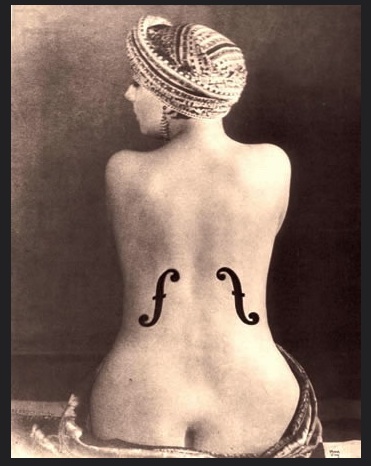
In a surreal, human body-inhuman machine, “aesthetic usability“ encounter (Lidwell, Holden & Butler, 2003), Man Ray’s 1924 visual image transforms “Kiki’s body into a musical instrument“ (Image 1).

Image 1
Image 1. Man Ray, 1924, J. Paul Getty Museum, Getty Images, 2015.

A normal, everyday encounter is the human hand playing a violin. Katz calls the human hand “a beautiful tool” (cited by Shaw Wilgis, 2014, p.15) and today, as always ”beauty is no quality in things themselves: It exists merely in the mind which contemplates them; and each mind perceives a different beauty” (Hume, 1792, davidhume.org). In this cyber/robotics-dominated era hands (image 1) are sublimely beautiful and useful – still.

The human hand fits the aesthetic-usability criteria (Lidwell, Holden & Butler, 2003). Katz says: “there is something poetic about the human hand. The beautiful synergy is of its form and function is indeed the “visible part of the brain”, and Shaw Wilgis (2014) describes the hand as “more sophisticated, more varied, and more productive than any other part of our body”.

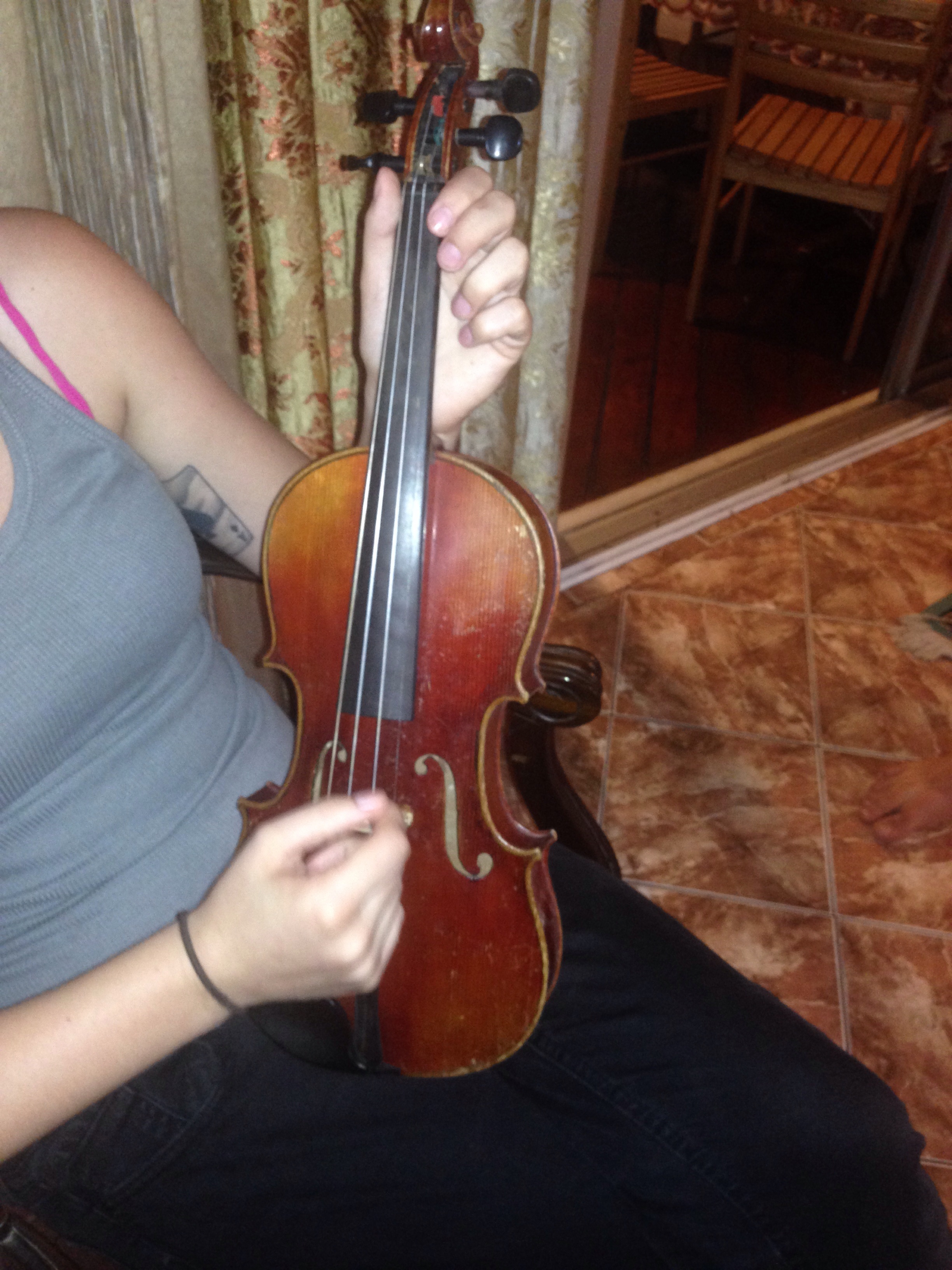
My daughter’s fingers are long, elegant and tapered yet her hand is strong, her movements precise and productive. Her hands “interact” with her “environment”, is the “delicate instrument that… makes it possible for… [her] to knead dough” (Shaw Wilgis, 2014) for superb bread, or to play her violin beautifully (image 2.).

daughter & violin
Image 2. My daughter’s hands & violin, S. Harford Personal image, 2015.

My daughter believes her violin (image 2) is beautiful, and creates beautiful music. So her violin is aesthetically usable (Lidwell, Holden & Butler, 2003). Joseph Curtin (February, 2007) describes his personal aesthetic-usability encounter fifteen years ago, when he put a particular 300-year old Stradivarius violin under his chin and played. Curtin’s experience involved two key human senses, sight and touch. Parts of his body, principally his eyes, skin and hands, engaged to produce music with this “Jackson” – its “aesthetic-usability” marker-nickname (Lidwell, Holden, & Butler, 2003).

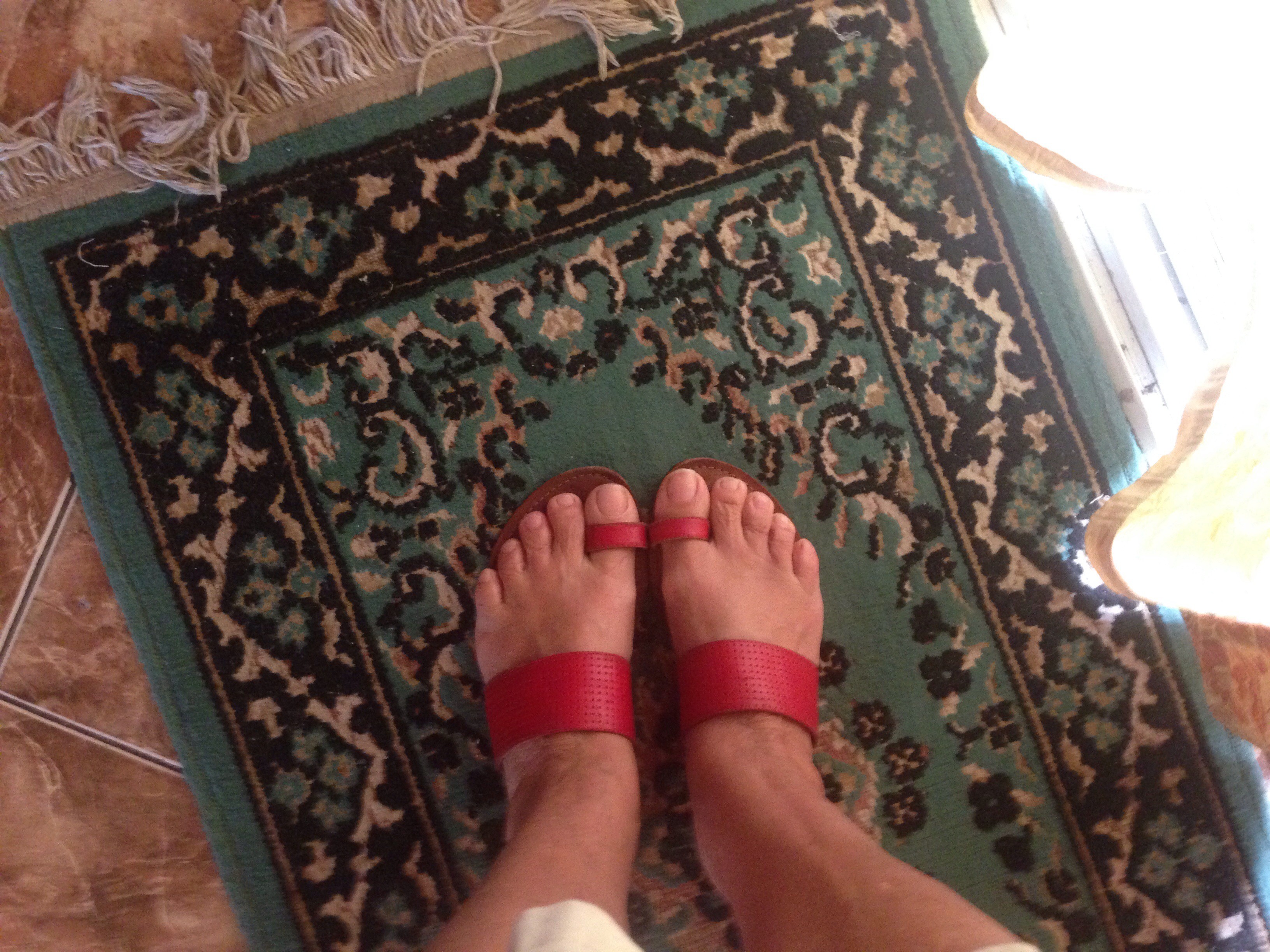
Like the hand and violin, encounters between my feet and my red thongs (image 3.) create an aesthetic usability relationship. My red thongs demonstrate the aesthetic usability concept; like designer Romero, at the recent Milan Design Week exhibition of ″exclusive 3D-printed shoes”, says, they are

the old and the new, natural and man-made and the              connection between the human body, the earth, and the            universe — working together to become simultaneously             timeless and forward-looking….intersection of architecture,               art, and design (cited by Designboom, April 2015).

Image 3.
Image 3. my red thongs, S. Harford personal image, 2015.

My two year-old red thongs clearly demonstrate aesthetic-usability: I love the way their leather looks and equally love their comfort. So good to wear, “appealing enough for [me] to buy” (Kurosu & Kashimura, 1995). Yet the conclusions of Lidwell, Holden and Butler (2003) fall short. All three items – the hands and violin, my thongs faithfully retain their aesthetic usability appeal:  their colour and shape, even while they tramp, with me, through brambles and bushes, rocky headlands, and wander, with me, through stony, watery coral reefs at low tide. It’s the whole package – looks and performance – that appeals.

Reference

Curtin, J. (February, 2007). Innovation and creation in the violin-making world: a Q & A with Violonetto. http://josephcurtinstudios.com/article/joseph-curtin-innovation-and-creation-in-the-violin-making-world/
Designboom. (14 April, 2015). United nude + 3D systems present re-inventing shoes during milan design week. [On-line Newsletter.] Retrieved from http://www.designboom.com/design/united-nude-3dsystems-re-inventing-shoes-milan-design-week-04-14-2015/?utm_campaign=monthly&utm_medium=email&utm_source=subscribers
Harford, S. (2015). Image 2 and 3.
Hume, D. (1741-41, 1777). Essays, Moral and Political. Davidhume.org. Retrieved from http://davidhume.org/texts/emp.html
Kurosu, M., & Kashimura, K. (1995). Conference Companion. Design Center, Hitachi Limited.
Lidwell, W., Holden, K., & Butler, J. (2003). Aesthetic-Usability Effect. In universal principals of design. (pp. 18-19). Massachusetts: Rockport.
Man Ray. (1924). Image. J. Paul Getty Museum, Getty Images. Le violon d’Ingres, 1924. Free to use image Retrieved from http://flatrock.org.nz/topics/society_culture/dementia.htm

Man Ray. (1924). Le violon d’Ingres. 1924.J. Paul Getty Museum. Getty Images. (2015). Retrieved from http://www.getty.edu/art/collection/objects/54733/man-ray-le-violon-d%27ingres-ingres%27s-violin-american-1924/

Merivale, A. and Milligan, P. (2015). David Hume. Essays, Moral and Political (1741-42, 1777).
Shaw Wilgis, E. F. Ed.(2014). The Wonder of the Human Hand: Care and Repair of the body’s most marvelous instrument. Baltimore, Maryland, USA: John Hopkins University Press.
3. LP W8 Q2: Aesthetic Usablility