NOTES: CMM3119. Case Studies in Communication. Body Culture. Dr Rod Giblett. ECU Mt. Lawley. Assessment: Journal. Week One

Lecture. Introduction: Reading, Preface, Giblett,  The body of nature and culture: 24th February 2009

“O my body! I dare not desert the likes of you in other men and women, nor the likes of the parts of you,

I believe the likes of your are to stand or fall with the likes of the soul, (and that they are the soul,)”
Walt Whitman, “I Sing the Body Electric,” -. 129 – 130
In the Western World the feminine ‘way in which we live’ (Giblett, p. 1) is bound up in conditioning. From the earliest age, the feminine is taught certain postures and attitudes, which forever colour her view  – of herself as an entity, and her view of her body.

It is very difficult work indeed  – to move from a thus-entrenched feminine position of ‘mastery’ (p. 1)

The Western feminine world has not been, until recently, so much concerned with ‘the natural environment’ as the wholly artificial ‘cultural environment’ (p. 1)

Certainly the world of the feminine is ‘linked and intertwined’, the cultural conditioning taking the lead. This is the guiding, (or misguiding)  factor. This has historically,  irrevocably distorted any chance of a ‘natural’ attitude to the relationship between the ‘body and the earth’ (p. 1).

For many years, this cultural distortion has been a major factor in the deterioration of the ‘eco-health’ of the planet. (p. 1)

Artificial meaning is imposed, upon the feminine, via the feminine body; how the media and the society desire, design, portray and comprehend the feminine place in western society.

As from the beginning of, and throughout their lives,  girls, then ladies are ‘positioned’ by propaganda, overt and covert.

It is refreshing to consider the feminine role in Western society with only the proposition of the relationship between the ‘nature of the body and … the nature of the environment in which bodies are positioned’ (p. 1).

Until these matters are addressed, considered, properly understood, and then balanced out there is little chance of  fulfilling which Giblett terms “mak[ing] ecologically sustainable the relationship between human beings/bodies [female] and ecosystems/ecology’. (p. 1)

End first page

In this ultra-important conditioning of the feminine process, metaphor figures heavily, aligned with and locked into the prevailing current aesthetics.

The female is taught her body is at all times a metaphor of her value. (Nussbaum VIP). ‘narcissistic defeats’ (2004, p. 184). This is a further matter of the body, outside those Giblett lists – namely, the body as machine, the body as landscape, the body as land, and the land as body; the body as ‘cyborg’ (or cybernetic organism); and disease and illness as an invading army to be fought and defeated on the battlefield of the body’. (Giblett, p. 2)

The feminine must deal with what Nussbaum terms ‘the audience’ (p. 191) ‘intensification of the painful experience’. ‘Primitive shame’ the demand for perfection and the consequent inability to tolerate any lack of control or imperfection’ (p. 192)

Nussbaum says ‘the immediate family is one very powerful agent of shame-development, whether healthy or unhealthy. But the surrounding society is another’ (p. 193).

For example, Nussbaum discusses the drive to return to the branding of the face used in previous eras – this is to revive the ‘shaming’ of an offender in a way that ‘express[es] and reinforce[es] shared moral values’ (p. 175). Branding bring about a ‘visible signs of social ostracism and disapproval’ (p. 174).

To this today’s Western societies have ‘diametrically opposed views’  – one: ‘the shaming of those who are different is a pernicious aspect of social custom, which should not be sanctified by building it into our legal practices’ (p. 174).

The face is ‘the part of the human body in which human dignity primarily is thought to reside’ (p. 174). The ‘public gaze’ (p. 175).

The relationship between shame and several related emotions, including disgust, guilt, anger, and depression’. (p. 176).

In recent times in Western society the feminine relationship to the society she lives in is dictated by her body through her body.

When young the girl is instructed via the media where her own worth is tied to what she looks like and when older, to how much conspicuous consumption she can wear or exhibit on her body.

When considering the dress of other times and other people …. the diversity of costume worldwide seemed far more surprising than it does now’ (Leventon, 2008, Introduction).

Leventon, M. (2008). What People Wore When: A complete illustrated History of
Costume from ancient times to the Nineteenth Century for every level of society. New York: St Martin’s Griffin.

Brainy Quote Words definition of the word ‘body’
1. The material organized substance of an animal, whether living or dead, as distringuished from the spirit, or vital principle; the physical person.
2. The trunk, or main part, of a person or animal, as distinguished from the limbs and head; the main, central, or principal part, as of a tree, army, country, etc.
3. The real, as opposed to the symbolical; the substance, as opposed to the shadow.
4. A person; a human being; — frequently in composition; as anybody, nobody.
5. Any mass or portion of matter; any substance distinct from others; as, a metallic body; a moving body; an aeriform body.
6. Amount; quantity; extent.
Also gives the following quotes
From C.S. Lewis “You don’t have a soul. You are a Soul. You have a body.”

Hermann Hess
“As a body everyone is single, as a soul never.”

Ludwig Wittgenstein
“The human body is the best picture of the human soul.”

Buddha
“An insincere and evil friend is more to be feared than a wild beast; a wild beast may wound your body, but an evil friend will would your mind.”

http://www.brainyquote.com/words/bo/body137867.html

Word body came from Old English – bodil, thru to Middle English – bodi
Different to many other languages, French – (corps), Norwegian (legeme)
Italian (addome, corpo), Latin (corpus corporis)

Ancient Greeks and Romans admired both the body shape and the spirit of the Celts as in the famous
sculpture of the “Dying Celt” – the Dying Gaul
http://mythagora.com/encyctxt/enca.html

Nussbaum, M.C. (2004)  Hiding from Humanity: Disgust, shame and the Law. Princeton: Princeton

Page 3 of 3 Susanne Harford student number 10043898
Most of my CMM3119 unit work has been pilfered. Here’s a little. 2009

Diir and Cotillard and Eiffel

CMM3119. Case Studies in Communication. Body Culture. Semester 1, 2009. Dr Rod Giblett. ECU Mt. Lawley.
Journal

Week Four

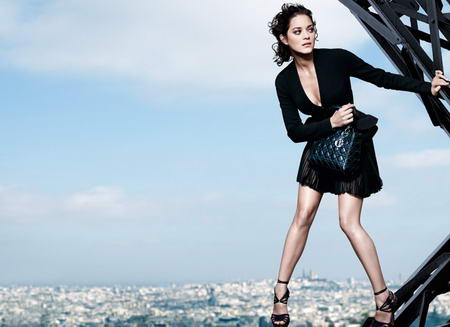
Marion Cotillard’s Dior Ad

This ‘season’s contemporary fashion image (fashion by Dior, using famous tragic new, young artiste – played Edith Piaf), above, seems to me to recreate a situation; it is a metaphor; a direct, although warped, circumstance arising out of an historic basis, namely the famale part of the tradition of human roles of gatherer = female ( as versus hunter = male). In this image the female has her ‘dilly’ bag protecting her body (in particular the reproductive organs and the area where the ovaries are housed), she appears to be apprehensive, in danger in a precarious and dangerous situation (out on a limb), has put herself in danger while she is actively seeking ‘something’ …. ? – another ‘essential’ commodity by Dior, or running from the dinosaur/bird of prey – whilst stealing it’s eggs for her offspring?

The female historically identifies and scavenges all and any useful or edible matter they can find, often at great risk to themselves (this still happens when the need is great, – see refugee camps, overcrowded India, remote communities in New Guinea). In this process a huge (generally unwritten bank/store of knowledge is developed, and handed down, generation to generation – still).

This drive is primarily motivated by the wellbeing and safety of the family, especially the children – how to feed, clothe and shelter them – and herself – so that she can continue to maintain them. In affluent, modern societies this very strong drive, which was idling has been deliberately warped, and the media has the major part in this, into empty compulsive consumption patterns, particurlarly for ‘designer’ and ‘brand-name’ goods

This has been able to be effected, as in our time when there are few direct threats in the lives of middle-class and working –class western citiizens, the hunter/gatherer drive/s have not gone away – how can they – the major impetus of preotection of the young human being so closely linked to the primary drive of procreation. In addition, there is a great deal of leisure and very little danger, so there is constant needs to be met – recreation and stimulation

So in modern society, we see a situation today where the male = hunter drive is still primarily positive. The drive is now channelled into activities external to the male, outward-looking. The goals set are generally attainable with hard work , which the drive provides the impetus for. The re-directed drive allows the opportunity to develop a secure personal position, ensure an asset base to provide for his, and his partner’s old age, and thus maintain his self-esteem, and enhance his position within his community and society, no matter how old he gets.

In the female, however, there is a deliberate warping (via the media) and opposite occurs, a negative situation has developed. The female = gatherer drive is turned into a narsissistic, inward-looking, preoccupation with attempting an impossible goal, that of maintaining a depreciating asset, the woman’s youth and beauty.

Baudrillard explores the ‘silent’ protest of the masses to ‘culture’ and it seems to me possible that NOW – women are – albeit slowly – turning this empty use around, still locked into their conspicuous consumption, yet they now form a silent protest against the society and those that cause them to become these empty vessels .

Try to find the article on the current, (fairly young) woman feminist (not lesbian) who tries to find patterns in society that show these things – Canadian. The New Yorker magazine (month?) 2008

http://www.ecologypapers.com/list.html
Modern Society’s Contempt for the Natural World
[ send me this paper ]
This 5 page report discusses the ways in which contemporary society has evolved to have an attitude of contempt regarding the natural world. The writer argues that such an attitude is the basis for adverse conditions now faced by humanity. Bibliography lists 5 sources.
Filename: Conature.wps

Below are quotes from

Stuttles, G. D. (1968). The Social Order of the Slum: Ethnicity and territory in the inner
city. Chicago: University of Chicago Press

‘Implicit in this concept of natural man is the conviction that moral restraints and ideal standards of behavior have little real power in a situation in which they contradict man’s natural impulses’ (p. 104)

‘dwelling unit as a woman’s world’ (p. 76). ‘separation of male and female world’ (p. 76).
‘Males almost never take an opportunity to introduce into [a household] furnishings or upkeep any sign identifiable as their own’ (p. 76)

‘Clothing, grooming and personal display add another area in which [people of the slums] can look for and find ethnic differences’ (p. 67).

Giblett chapter 1 – ‘active and passive’ (also preface 2008) – female passively absorbs all the messages, addiction, the female actively acts out the necessary traditional ‘gatherer’ functions gone mad. In this way the masculine in our society disarms the feminine.
Baudrillard speculates this is positive in a way, and inevitable, age-old ritual. Gane, M. (1993). Baudrillard Live: Selected interviews. New York: Routledge

In today’s societies those families who form the ‘upper’ class, are invisible, the masses no longer ‘see’, there is no interface now to know how this most powerful part of the culture works and lives. Deliberately obscuring this, and superimposed onto the class system is the cult of fame, with individuals generally chosen from the working or middle class, who have been formed into today’s popular culture royalty, to distract the masses into falsely believing this group are the most powerful and influential group, when they are (unwitting – or complicit?) puppets of those above. (Berman?)

Gane interviewing Baudrillard ‘Fashion is a grand game, a beautiful game. But there is really no history of fashion, it is a recurrent circulation of forms.’ ‘Increasingly, art has become fashion in the profound sense of the term.’ ‘It is more a survival among the remnants than anything else’. (1993, p. 95)

Page 3 of 4 Susanne Harford student number 10043898. Baudrillard,, Gane, Berman,

Most of my CMM3119 unit work has been pilfered. Here’s a little. 2009