Solidarity, transgender, 2016

We need Solidarity: while I did not get to know the transgender world it is perceivable.  Though a dark, very dark, mirror I have owned most of my adult life. As one of those termed ‘woMAN’,  ‘feMALE. This life,  gone now  almost, has also been spent in total refutation of demeaning describers,  of misogynic branding; in the stand against ‘face value’. And In dancing the suicide fox-trop when young, final waltz when old.

Nick Adams, Director of Programs, Transgender Media at GLAAD, states: “forty-one percent of transgender people report attempting suicide—not thinking about suicide, but attempting suicide”. I wonder if these awful statistics also appear in women’s lives. If they too bear witness to  ‘attempts at suicide’. As an adult I’ve always known suicide as such a ‘life’ option.

From this perspective, Adams’ rationale is unshakeable. He continues: “it’s because we live in a culture which makes it seem like it’s nearly impossible to be a happy, successful transgender person”. Our culture makes many, many woMen extremely depressed and unhappy. Our culture  is not a proper life,  does not provide proper life skills, opportunities and support in this wilderness – that is modern life.

Adams’ goes onto state the importance of education about the problems transgender people face, that: “transgender people are just like everyone else. We can be your coworkers, we can be your friends, we can be your neighbors”. Transgender people are everyone else.

As I think about how difficult the environment transgender people must occupy, still I  see strong comparisons in my life as woMAN. Especially dark times, many. Then, and inevitably, my suicide impulses were strongly fostered by outside influences, attitudes and environments.

Yet this might all change, if we pull together. Adams quotes Transparent creator Jill Soloway, who says, “anytime someone makes a break for freedom to be their true self, it can be a challenge, but it’s also incredibly exciting.”

So, to me it seems entirely logical when Adams says he looks “forward to the day when people say, ‘I’m transgender,’ and people go, ‘So? What else is interesting about you?'” That day will come. It will take time and it will take – Solidarity. Perhaps the only option is to delete the term ‘gender’? To eradicate that polarising BRAND entirely?

WoMen are too. So, Solidarity TO ALL: Peace, goodwill, prosperity, health, wealth & happiness….  lots and lots of laughter, together. old Susanne xs
 

Solidarity, transgender, 2016

12. LP W12 Q3 Salient points: the Internet, democracy & the people

In order to properly answer the LP Week 12 Question 3 task it seemed necessary to first reflect on, describe, and then consider again the context of this complicated question. The result is a preamble posted in Forum 3.2, Discussion Board, dated Friday, 29 May, 2015.

List of Points that may affect credibility. If the Web in the future:

  • presents issues of exchange, or as (North, March, 1993) says: “the problem of creating institutions that can credibly commit the players to solve problems of exchange”
  • accepts the need for “liberal” and “participatory… democracy” (The Democracy Barometer, 2011)
  • supports “’democracy…[as]  a complex phenomenon, where minimalist measurement” is never enough (The Democracy Barometer, 2011)
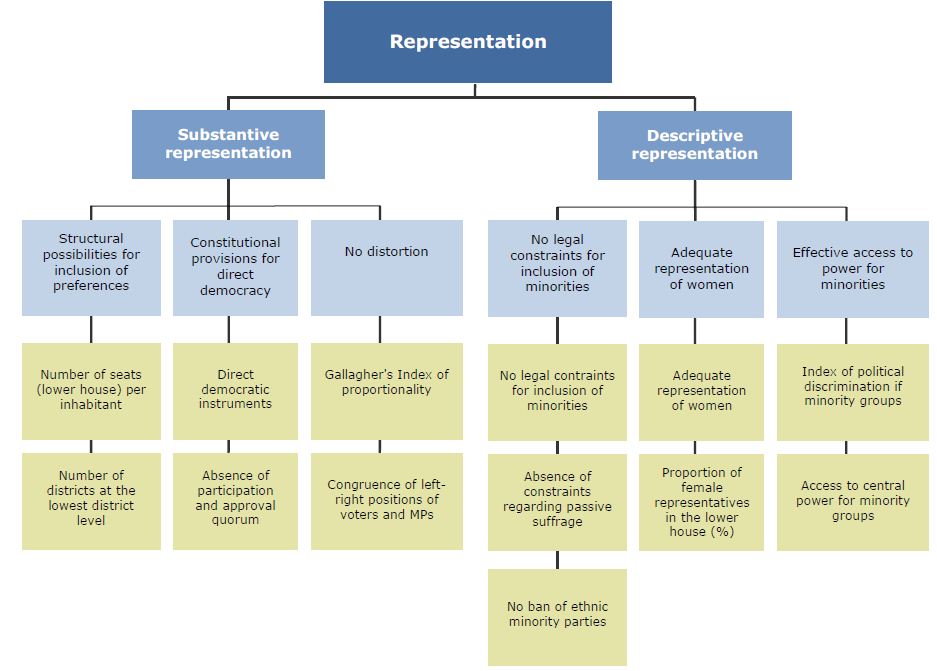
  • encourages and supports free and open public discussion about the development of democracy, such as in  Image 1, below, (The Democracy Barometer, 2011)
  • incorporates the demands for mass media communication accountability, (as is again being demanded of journalism), and “to take Citizen Demands into account: the complaints and wishes of citizens” (van der Wurff & Schoenbach, 20 June, 2014)
  • radically changes so the overall, fundamental ethos and operation of certain parts of the Internet are sheltered and away from persuasion and marketing
  • makes parts of the Internet “ad-free” environments (Webb, December, 2006)
  • commits to expend effort to understand, and incorporates and fully presents the populace’s most salient issues, and to support the people’s hierarchy of these issues
  • transparently presents important outcomes and welcomes discussion of matters such as those emanating from lack of ” trust in government”,  the “electoral process and democracy” (Hollander, 24 July 2014)
  • makes other, effective, channels of public, local and global communication available, free of charge, bias, and oppression
  • ensures equal, fair and widespread presentation of all types of websites – such as minority-owned, woman-owned and alternative.
Image 1. democracy barometer. 2014.

 Reference

Fogg, B. J. (2003). Credibility and the World Wide Web: Persuasive technology: Using computers to change what we think and do. Amsterdam: Morgan Kaufman Publishers.

Giddens, A. (1991). Modernity and Self: Identity: Self and society in the late modern age. Cambridge: Polity Press.

Hollander, B, A, (24 July, 2014). The Surprised Loser. The Role of Electoral Expectations and News Media Exposure in Satisfaction with Democracy. College of Journalism and Mass Communication, University of Georgia, 120 Hooper Street, Athens, GA 30602, USA. Journalism & Mass Communication Quarterly.  91(4), 651-668 doi: 10.1177/1077699014543380

Howard, P. N., & Smith, S. (2007 June) Channeling Diversity in the Public Spectrum: Who Qualifies to Bid for Which FCC Licenses?. 84 (2), 215-230. doi:10.1177/107769900708400202

Mayer, K. U. (19 November, 2004). Whose Lives? How history, societies, and institutions define and shape life courses. Research in Human Development, 1(3), 2004 161-187. doi 10.1207/s15427617rhd0103_3

North, D. C. (March, 1993). Institutions and credible commitment. Journal of Institutional and Theoretical Economics (JITE) / Zeitschrift für die gesamte Staatswissenschaft, 149(1). Retrieved from http://www.jstor.org/stable/40751576

OECD Statistics Portal. (2015). Definition of non-profit. OECD Glossary of Terms. Retrieved from https://stats.oecd.org/glossary/detail.asp?ID=1822

The Business Directory. (2015). Organization. Retrieved from http://www.businessdictionary.com/definition/organization.html#ixzz3bQuExgCa

The Business Directory. (2015). Website. Retrieved from http://www.businessdictionary.com/definition/website.html

The Democracy Barometer. (2011). Retrieved from http://www.democracybarometer.org/Images/img_feb13/RE_en.JPG

The Democracy Barometer. (2014). Retrieved from http://www.democracybarometer.org/

van der Wurff, R. & Schoenbach, K. (20 June, 2014). Civic and citizen demands of news media and journalists: What does the audience expect from good journalism? School of Communication Research, University of Amsterdam. Journalism & Mass Communication Quarterly. Doi 10.1177/1077699014538974

Webb, S. M. (December, 2006). The narrative of core traditional values in Reiman magazines. Journalism & Mass Communication Quarterly, 83(4), 865-882 doi 10.1177/107769900608300409

Aside

10. LP W12 Q1

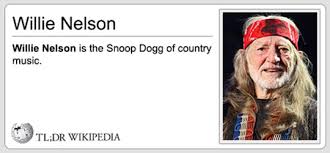
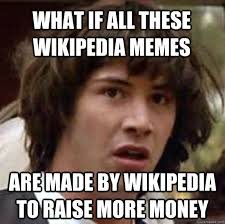
While on the Web, Wikipedia memes, (Images 1& 2) and discussion of same (Wikija, 2015) rightly amuse many, the many scholarly articles about  “a lack of credibility” on the Web, (World Wide Web),

Image 1. Lolz. Wikipedia mem, 2015.


Image 2. Quickmeme,Keanu Reeves image, 2015.
Image 2. Quickmeme, Keanu Reeves image, 2015.

and how this situation might be combated (Ribiero, Carmo, & de Caravalho, 2013) are an entirely different matter. The Oxford English Dictionary defines credibility as “the quality of being trusted and believed in; the quality of being convincing or believable”.

As “flaws and negative external influences” in key information appear on the Web, this quality, previously one of Western society’s most valued and defining characteristics, is  degraded,  The Web is the major mass media medium of this era so this problem affects anyone who wishes to learn or to be informed. This is because the Web is, as Kevin Kelly, founder of Wired magazine, said in 2005:

the largest, most complex, most surprising event on the planet.

Weaving nerves out of glass and radio waves, our species began

wiring up all regions, all processes, all facts and notions into a

grand network. From this embroyonic net was born a

collabororative interface for our civilization, a sensing, cognitive

device with power that exceeded any previous invention.

As Western society’s main communications channel the Web is tremendously important. Yet the stated rationale of Fogg’s (2003) paper is primarily to “persuade”, and the article by Ribiero, Carmo and de Caravalho (2013) appears, fundamentally, only to make the Web more efficient as a marketing machine. A Web cluttered with material biased solely towards  persuasion or marketing is counter-productive for any student – and unlikely to regain credibility.

Reference.

Fogg, J. (2003). Credibility and the World Wide Web. Persuasive Technolgy: Using computers to change what we think and do. Amsterdam: Morgan Kaufman Publishers. Retrieved from Learning Portfolio, S1, 2015.

Kelly, K. (2005). We are the Web. Wired. Issue 13.8. [On-line Magazine]. Retrieved from http://archive.wired.com/wired/archive/13.08/tech.html

Lolzbook. (2015). Meme using Willy Nelson image. Retrieved from http://lolzbook.com/page/1749/

Oxford Dictionaries. (2015). Credibility. Retrieved from http://www.oxforddictionaries.com/definition/english/credibility

Quickmeme. (2015). Meme using Keanu Reeves image. Retrieved from http://www.quickmeme.com/meme/35ficb

Ribiero, A. M., Carmo, C. H. S., & de Caravalho, L. N. G. (2013). Environmental disclosure: does regulation solve the lack of comparability and objectivity? Journal of accounting and organisations. Retrieved from  http://dx.doi.org/10.11606%2Frco.v7i17.56667

Wikja. (2015). Conspiracy Keanu: The Funniest Wiki. Retrieved from http://thefunnyist.wikia.com/wiki/Conspiracy_Keanu

Aside